
Middletown leaders cite library use and medical advice as cell‑phone policy gains traction
Get AI-powered insights, summaries, and transcripts
Subscribe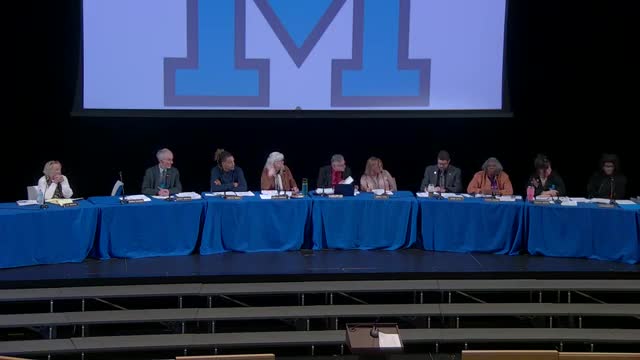
Summary
Superintendent and medical advisor highlighted increased library circulation and pediatric support for the district's phone‑free school policy during the Oct. 14 meeting.
Middletown school officials and a district medical advisor described early benefits of a districtwide cell‑phone policy at the Board of Education meeting Oct. 14, saying staff have noticed increased library usage and better classroom engagement since enforcement began.
Middletown High School student representative Sal, speaking during student communications, told the board, “Cell phones are being put in the under pouches and the policy of a phone free school is being strictly upheld.” The superintendent and medical advisor said they have observed corresponding gains in student focus and library use.
Superintendent Dr. Vasquez Matos said the high school’s library has seen a marked rise in circulation since the policy was enforced. “Last year at this time, we had 266 books checked out. This year, we have 2,572 unique checkouts and over 700 with book renewals included,” she told the board, attributing the increase in part to reduced in‑school phone usage.
Dr. Robert O’Callaghan, the district’s medical advisor, spoke to the board in support of the policy and cited clinical and public‑health reasons for limiting phone use in school. “Based on the science ... eliminating mobile phones from the environment of school has beneficial effects on academics, on social interaction, on decreasing violent behavior ... and improvement of mood,” he said. He noted stronger effects when a policy is applied universally rather than only during classes.
Board members and staff described classroom and school events where students participated without visible phones, including a Hispanic Heritage Month assembly with live music and salsa dancing at the high school where administrators said they saw virtually no phones in use.
The superintendent said the district has tried to frame enforcement as part of school culture rather than a punitive measure. “This is not something as punitive, but actually now part of the culture of the school,” she said, adding that staff across schools are enforcing the rules and that students have responded positively.
Dr. O’Callaghan acknowledged enforcement will be difficult at first and urged unity: “You've got to get through the difficult part until it is the new norm and our children will benefit from it.” He said most medical exceptions are rare and that anxiety alone is not a reason for staff to allow phone access during the school day.
The board did not vote on any new phone rules during the meeting; members said they will continue to support consistent enforcement and public education about the policy’s aims.