Get Full Government Meeting Transcripts, Videos, & Alerts Forever!
Get email alerts on the Manure Separation And Digester topic
No spam. Unsubscribe anytime.
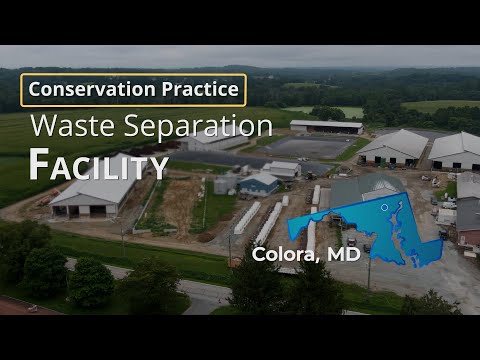
NRCS official: Manure separation system removes solids, reduces phosphorus and feeds farm digester in Palora, Md.
Summary
Robert Weaver of the U.S. Department of Agriculture NRCS described a farm's manure separation facility that removes solids before an anaerobic digester; the farm said it enrolled in the EQIP program and NRCS helped fund the housing structure and compost barn.
Robert Weaver, district conservationist for the U.S. Department of Agriculture Natural Resources Conservation Service (NRCS), described a farm-level manure separation system in Palora, Md., that removes solids from dairy manure before the remaining liquid is fed to an anaerobic digester to produce methane.
Weaver said the separation equipment “takes the manure generated from the cow herd and removes the solid waste that's in it and only leaves the liquid fraction of it left that can feed into the digester. So it's removing the solids.” He added that the practice benefits water quality by helping remove phosphorus from farm runoff.
A farm operator in Palora said the operation is a flush dairy and that the farm milks “about 800 gals right now. We have a sand separation system and a manure separation system, then we put it through a digester to make methane gas.” The operator said the farm was eligible for the Environmental Quality Incentives Program, or EQIP, and that NRCS helped with funding; EQIP covered the structure that houses the separators and the compost barn, the operator said.
Weaver summarized the environmental purpose of the facility: “The waste separation facility that we see here is helping protect the bay by removing phosphorus and getting that material contained and taken off farm.” The transcript does not specify which bay beyond the speaker's reference to “the bay.”
No formal actions, motions, or votes are recorded in the provided transcript excerpt; the remarks are described as explanatory comments about the facility and the farm's use of NRCS assistance.