Get Full Government Meeting Transcripts, Videos, & Alerts Forever!
Get email alerts on the State Legislation topic
No spam. Unsubscribe anytime.
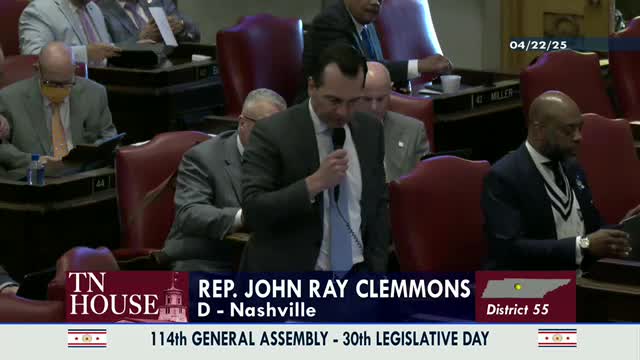
Tennessee House finishes session after votes on Shelby County oversight, DEI limits, smuggling, fentanyl and education task force
Summary
The Tennessee House ended its first regular session after voting on a package of high-profile bills including a Shelby County school oversight measure, limits on government DEI offices, a human-smuggling statute, a fentanyl-focused criminal bill and an education task force to study federal funding changes.
The Tennessee House ended its first regular session after lengthy floor debate and votes on multiple high-profile measures, including an oversight measure for Memphis-Shelby County schools, a bill restricting government diversity-equity-inclusion offices, a new human-smuggling statute, a fentanyl-focused criminal measure, and a task force to study potential federal education deregulation.
Lawmakers debated the Memphis oversight bill most extensively, with supporters calling it a targeted oversight tool and opponents calling it a state takeover of a local school system. Representative Charlie White, sponsor of the oversight bill, said the measure would create an appointed oversight board to work with the local board and “have authority, oversight authority over the budget, over contracts, and over properties,” arguing the goal was to address persistently low academic performance and deferred maintenance in the district. Opponents repeatedly objected that the measure would replace locally elected decision-making and shift significant budget and governance authority away from residents and elected officials.
The chamber also passed legislation limiting or eliminating state and local DEI offices and policies. Representative Chris Mayberry, sponsor of the DEI bill, described it as “pro-equality and not anti-diversity,” saying the intent is to bar identity-based hiring goals and ideological programs in state agencies, local governments and public higher-education institutions. Opponents said the bill would chill longstanding inclusion efforts and weaken protections for veterans, people with disabilities and other groups; multiple lawmakers described the debate as one of the session’s most charged and emotional.
On criminal-law measures, the House approved a smuggling/harboring bill aimed at human smuggling and related offenses. Chairman Karen Todd, sponsor, said it creates an offense for “human smuggling who, for the purpose of commercial advantage or private financial gain,” and sets penalties aimed at criminal enterprises that move people for profit while preserving limited statutory exemptions for licensed attorneys and specified health-care settings. During the debate members asked how the measure would affect churches, health-care providers and family members; Todd said the statute’s core requirement is that the offense must be tied to commercial advantage or private financial gain.
The House also approved a separate criminal-justice bill targeting fentanyl-related offenses and expanding prosecutors’ and courts’ tools to address trafficking and repeat illicit sellers. Leader John Lambert described that measure succinctly as “the Fentanyl bill,” and said it pairs criminal penalties with courts’ ability to move defendants into treatment programs where appropriate. Supporters said the bill is intended to create pathways into treatment after an initial period and to target traffickers; critics warned about mandatory custody periods and pressure on local jails and county budgets.
Lawmakers unanimously approved a bill creating a state task force to inventory federal education funding and regulatory requirements and to report recommendations ahead of the next legislative session. Backers said the task force is meant to prepare Tennessee policymakers for potential federal deregulation or changes, by identifying which programs, staff and funding streams would need state replacement if federal supports were reduced or eliminated. Critics said the proposal could presage an effort to withdraw from federal funding rather than maintaining it.
Roll-call votes, as recorded on the floor, show the House approved each of these measures; several produced long, recorded debates and close procedural votes earlier in the day. The session adjourned under House Joint Resolution 707, and the House and Senate committees completed the notifications required for adjournment.
The votes and final outcomes recorded on the floor (official journals and the clerk’s desk remain the authoritative source) show the bills were approved by the chamber after the debates summarized above.