Get Full Government Meeting Transcripts, Videos, & Alerts Forever!
Get email alerts on the City Budget topic
No spam. Unsubscribe anytime.
Mayor Renee Nichols submits $1.117 billion fiscal 2026 budget focused on core services, housing and public safety
Summary
Mayor Renee Nichols presented a $1.117 billion proposed fiscal year 2026 city budget that emphasizes maintaining core services, targeted investments in housing and homelessness, public safety training classes, and infrastructure while limiting new personnel and restoring reserves.
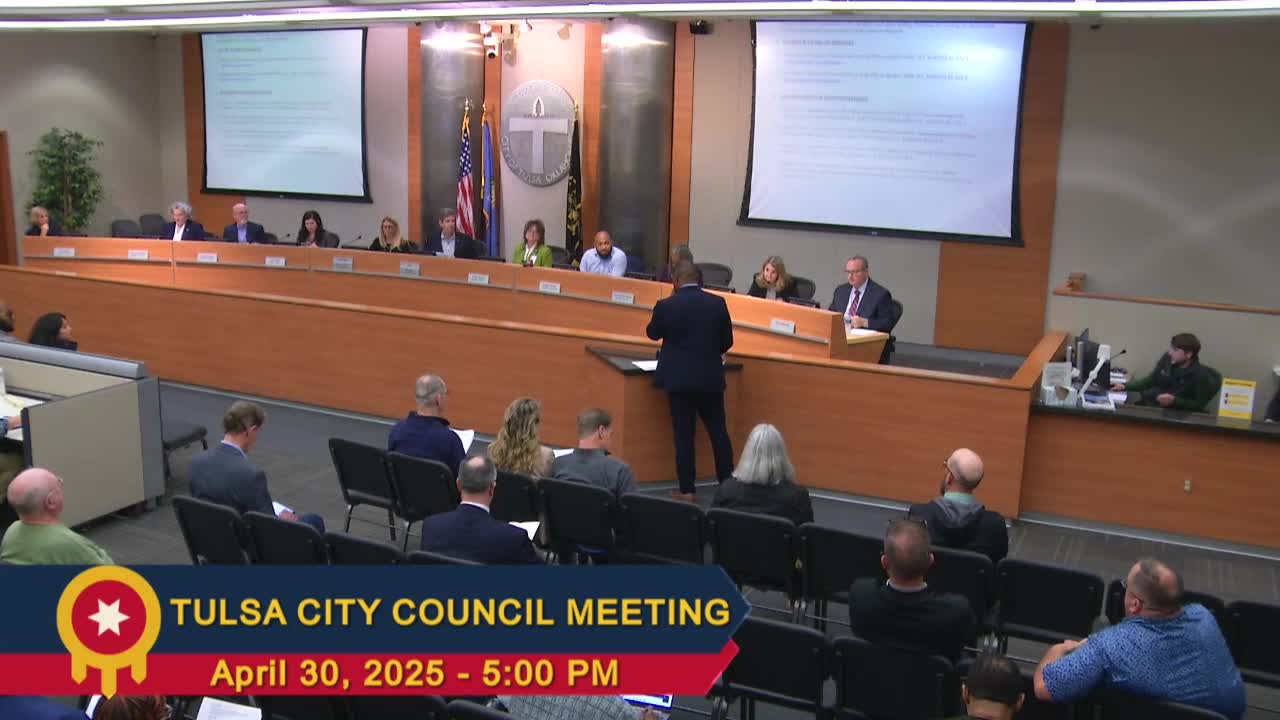
Mayor Renee Nichols presented the City of Tulsa's proposed fiscal year 2026 budget to the City Council, describing a $1.117 billion plan that prioritizes essential services, housing and homelessness initiatives, public safety and infrastructure.
In his presentation, Nichols said the budget "is not flashy" and does not add extensive new personnel, but seeks to "protect the personnel we have" and invest where the city will get measurable outcomes. He told the council the proposal is intended to bring the city's spending closer to revenue projections after several years of deficit spending.
The mayor said sales-tax receipts have come in lower than expected, that the city has added 267 employees over the last three years and that cost pressures from inflation and other factors require adjustments. The general fund in the proposal is budgeted at $419 million, he said, with roughly 60% of that supporting public safety. Nichols said the city is increasing its general fund emergency operating reserve from 8.29% to 10% and expects the rainy day fund to hold about $28.8 million at the end of FY26.
Nichols outlined targeted budget items: approximately $1 million for right-of-way cleanup and $500,000 for a crew cleanup program tied to encampment reductions; initial allocations from a five-year, $75 million housing capital package to support a housing grant fund, infrastructure, investment and acquisition funds; funding for two plan examiner positions and reestablishing a residential fast-track permitting program; funding for two police academies (55 cadets) and a fire class of 24 new firefighters; continued support for alternative response models that co-deploy mental health clinicians with 9-1-1; and funding to begin construction of the city's new animal shelter.
He also said the budget shifts certain previously grant-funded staff into the general fund where federal grant support is expiring, including a municipal court supervisor and a public defender, and brings the Financial Empowerment Center into the general fund after prior grant funding. Nichols said capital funding of nearly $60 million over four years is included for wastewater and other infrastructure to support housing and economic development, and one-time Vision 2025 funding will support planning for the Route 66 centennial.
Nichols named several city staff during his remarks, including Mike Miller and Jared Moore of the finance team, and thanked council staff and department heads for work on the budget. He closed by formally submitting the budget for council consideration and said he looked forward to collaboration over the coming weeks.
The council did not take public comment on the mayor's presentation that night; the mayor noted public hearings on the budget will be held at later meetings.