Norwood schools propose $65.3 million FY26 budget to staff new middle school and expand special-education supports
Loading...
Summary
School officials proposed a $65.29 million FY26 operating budget, a 6.7% increase driven by contractual salary costs, transportation, and staffing for the district's new middle school and added special-education and behavioral supports.
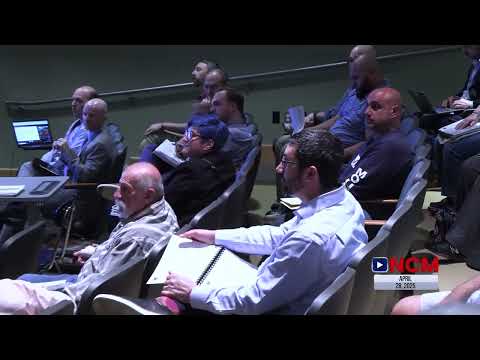
School leaders presented the Norwood Public Schools' FY26 operating budget at the same information session, outlining staffing and program changes to support the opening of the district's new middle school and expanded student supports.
Tim Lawson, introduced as a representative of the schools, said the budget reflects months of review and community input and emphasized safety as a top priority: "One of the primary things that I heard from almost everyone was safety. Safety, safety, safety," he said. Assistant Superintendent for Finance and Operations Sean Manny walked the audience through position changes, transportation costs and federal grant support.
The school proposal calls for a $65,292,117 operating budget for FY26, a 6.7 percent increase from the prior year. School staff numbers were shown as roughly 577.3 FTEs in the final proposal. Officials said 6.6 FTEs are new to the budget to staff the new middle school; additional staff and classroom teachers will move from existing elementary schools to the new building.
Manny detailed the staffing mix: certified additions for the middle school include one special-education teacher, an assistant principal, art and music teachers, a school counselor and an English-language-learning teacher. Separately, about a dozen elementary classroom teachers and roughly the same number of support staff will transfer to the middle school as it opens; those transfers largely do not increase the district's overall headcount because they are reallocations of existing positions.
Transportation was flagged as a significant cost driver. Manny said the district's yellow-bus contract is expected to rise in the next bid cycle and that the district will add two to three buses to move fifth graders to the middle school. "You typically see a large increase in that first year of a contract bid," he said, noting recruitment difficulties for in-house bus drivers and the need to increase pay for drivers and monitors.
Special-education and "high-needs" students were a central focus. Officials reported special education enrollments at about 24 percent of students and described a broader "high-needs" category (including English-language learners and economically disadvantaged students) representing a larger share of the student body. Manny said the district expects roughly $11.9 million in gross out-of-district tuition costs but will receive an estimated $4.5 million in circuit-breaker reimbursement from the state, reducing the net budget impact to about $6.0 million for tuition.
District staff said federal and state grants (Title I, II, III and IDEA) fund approximately 27 FTEs and that the schools will pursue expanded Medicaid (MassHealth) claiming to move two positions onto that revenue source. The superintendent and finance staff said they had reduced some program requests (for example, scaling back a high-school Latin course and some elementary library hours) to lower the overall increase after initial proposals.
Officials did not take votes during the information session; they said warrant articles and any ballot or town-meeting actions would be presented at later information sessions before voters and town-meeting members consider them.
No final contract approvals or funding votes were conducted in the session; school leaders encouraged attendees to review the full budget book and attend subsequent information sessions and the May 12 town meeting.