Norwood details FY26 town budget; finance director cautions against long-term use of free cash
Loading...
Summary
Town finance officials presented a FY26 general government budget overview, outlining reserves, debt, and revenue assumptions and warning that repeatedly using one-time "free cash" to cover ongoing operations would harm the town's fiscal position.
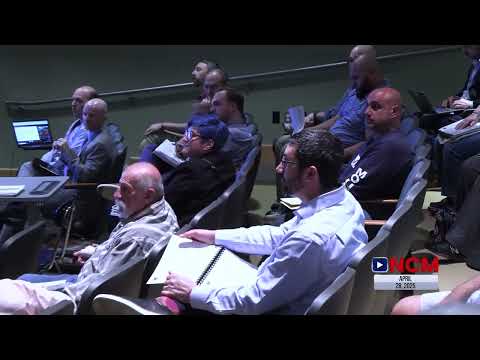
Norwood officials presented a budget overview and municipal finance primer at an information session ahead of the May 12 annual and special town meetings, stressing that the town's short-term surpluses should not replace structural budget solutions.
The presentation, led by Finance Director and Treasurer Jeffrey O'Neil and introduced by Assistant General Manager Michael Rosen, reviewed reserve accounts, debt obligations and revenue drivers that will shape the FY26 general government budget. "Free cash in general, it's a one-time revenue source," O'Neil said, adding that long-term reliance on that source would be problematic: "Long term use, yes" would affect the town's finances.
O'Neil told attendees the town's stabilization fund — the primary reserve often compared to a savings account — holds about $12 million, roughly 7 percent of general fund expenditures. He said last year's certified free cash was $29 million, of which roughly $9 million was appropriated at the fall town meeting and about $20 million remained unspent and available for other uses once certified. O'Neil described free cash as useful for short-term smoothing and capital buys but not for sustaining recurring operating costs.
The finance director gave a detailed accounting of debt and tax drivers. Total outstanding debt was presented at about $208 million, with roughly 30 percent of that tied to the general fund and the remainder associated with enterprise projects and other non-tax sources. O'Neil noted two debt exclusions related to school construction that are paid outside the Proposition 2bd levy limit, and he described the town's AA+ bond rating as one notch below AAA.
On revenues, O'Neil reviewed property-tax rules under Proposition 2bd (a 2.5 percent annual levy growth cap plus new growth), the town's conservative $900,000 estimate for new growth, and major revenue lines including motor vehicle excise, building permits and state aid such as Chapter 70 school funding. He described how enterprise funds (electric, water/sewer, broadband) are self-supporting and pay indirect charges to the general fund for shared services such as billing and finance.
Officials also described reserve and contingency accounts: a finance commission reserve fund of $150,000 for unforeseen emergency expenses; and revolving funds for self-supporting activities such as school cafeteria and recreation programs. O'Neil said the town had reduced one capital item (road construction) in the FY26 proposal and that, overall, operating costs are driven largely by labor and contractual obligations such as step increases and cost-of-living adjustments.
Public safety repeatedly surfaced during questions. A resident and the fire chief said call volume has risen and the department has relied heavily on mutual aid; the chief said, "We've had 98 mutual aids into the town since the first of the year," and described using mutual aid and existing staff to manage higher ambulance demand. HR Director Lisa (last name not specified) said the town has added active recruiting efforts to bring in trained firefighter-paramedics.
Assistant General Manager Michael Rosen closed the session by reminding attendees of two more information sessions that week (town-meeting 101 and land-use overview) and the May 12 town meeting schedule.
Where possible, officials provided figures and constraints rather than policy decisions; no formal votes or motions were taken at the information session.