Get Full Government Meeting Transcripts, Videos, & Alerts Forever!
Get email alerts on the Holocaust Remembrance topic
No spam. Unsubscribe anytime.
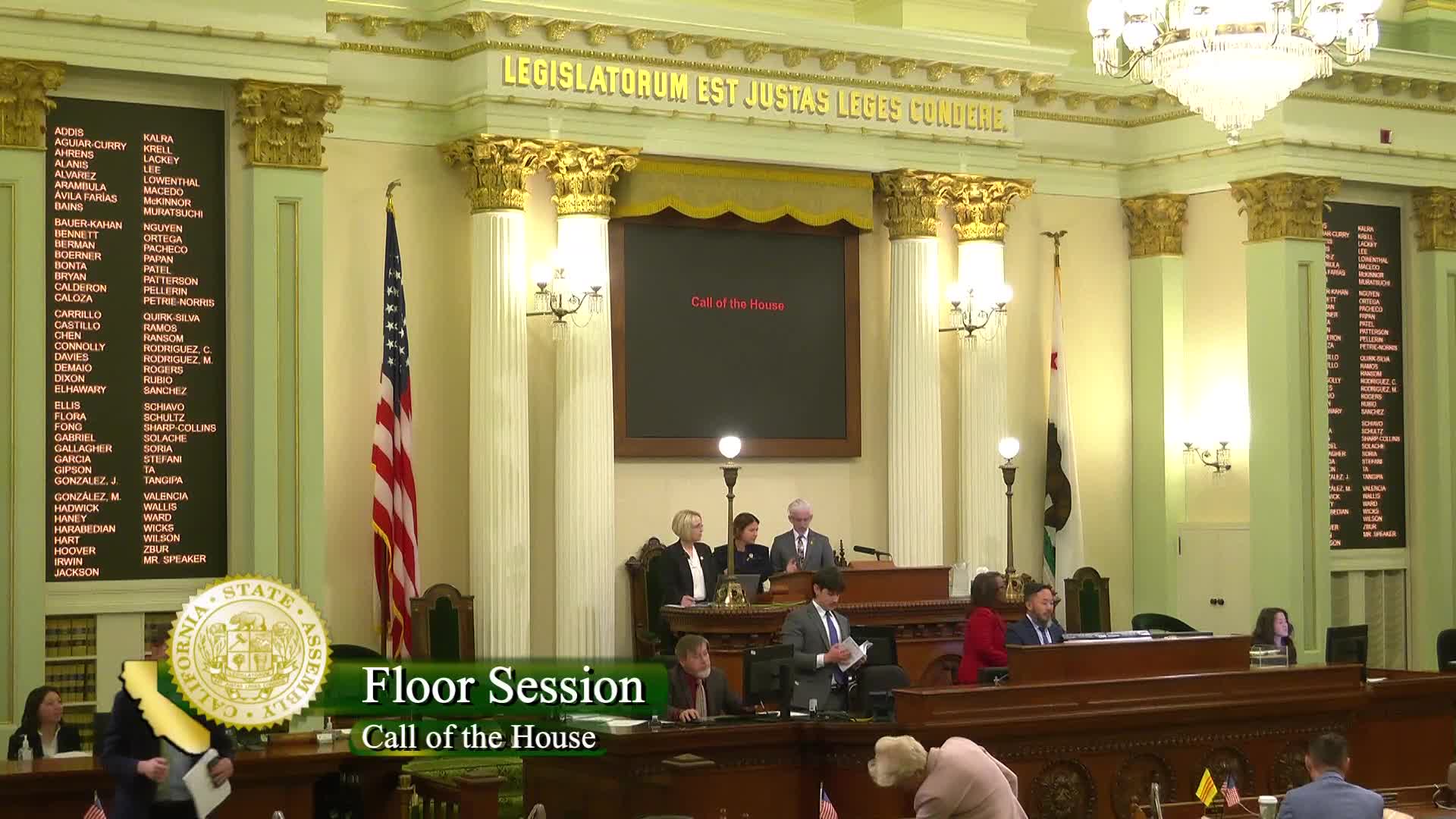
Assembly adopts ACR 59, holds Holocaust Remembrance Day observance
Summary
The California State Assembly observed Yom HaShoah on April 20, 2025, heard multiple personal testimonies and legislative remarks, and adopted Assembly Concurrent Resolution 59 (ACR 59) commemorating Holocaust Remembrance Day.
The California State Assembly observed Holocaust Remembrance Day (Yom HaShoah) on April 20, 2025, adopted Assembly Concurrent Resolution 59 (ACR 59) and heard extended remarks from members representing several legislative caucuses and Holocaust survivors and descendants.
ACR 59, presented by Assemblymember [Addis], passed by voice vote and was adopted on the Assembly floor. The resolution recognizes the approximately 6,000,000 Jews murdered in the Holocaust, honors survivors and their descendants, and calls for continued education and vigilance against antisemitism.
Assemblymember [Addis], introducing the resolution on behalf of the California Legislative Jewish Caucus, said the day “commemorates the approximately 6,000,000 Jews, including over 1,000,000 Jewish children and countless others who were brutally murdered by the Nazis and their collaborators.” Addis noted the shrinking population of survivors and urged preservation of their stories. Assemblymember Lowenthal described the observance as “cathartic,” connecting the day’s remembrance to present concerns about rising antisemitism. Several members from caucuses representing LGBTQ, Asian Pacific Islander, Native American, Latino and Black communities spoke in support of the resolution and highlighted the Holocaust’s impacts on other targeted groups, including LGBTQ people and Roma.
Speakers described the Holocaust as a process that began with rhetoric and incremental measures that enabled systematic persecution. Multiple members emphasized the responsibility of public officials and educators to teach the Holocaust’s history. Assemblymember Lowenthal and others cited recent spikes in antisemitic incidents and expressed concern for Jewish students and institutions; one member referenced a figure cited on the floor that antisemitic acts had increased 360% in the prior 18 months (as stated on the floor).
Following legislative remarks, the Assembly introduced and honored Holocaust survivors and descendants in the gallery. The clerk read the biographies of honorees escorted by members, and the Assembly recognized several individuals, including Eva Perlman, Ilana Shai, Gerald Shamas and others for their public education efforts.
The Assembly also opened the chamber with a prayer and the pledge of allegiance, and members were invited to distribute educational materials and a brochure of honorees’ biographies on their desks. The resolution’s adoption was followed by a brief ceremony honoring the invited survivors and descendants.
The observance and resolution underscore the Assembly’s intent to preserve survivor testimony and to call attention to contemporary antisemitism and related forms of hate through education and public remembrance.