Get Full Government Meeting Transcripts, Videos, & Alerts Forever!
Get email alerts on the Lakeville State Hospital topic
No spam. Unsubscribe anytime.
Developer seeks state brownfield funding and nonprofit partners for Lakeville State Hospital redevelopment
Summary
Rhino Capital updated the Lakeville Select Board on efforts to secure MassDevelopment Brownfields funding and other state resources to remediate the former state hospital site, noting the landfill parcel and remediation costs as primary hurdles.
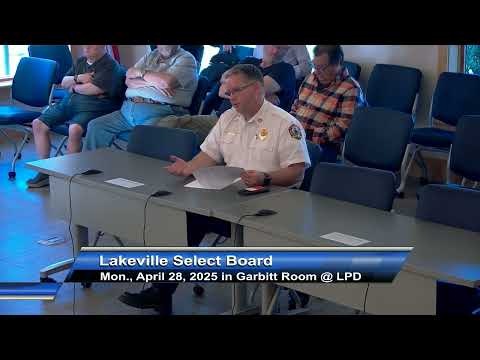
Rhino Capital told the Lakeville Select Board on April 28 that the redevelopment plan for the former Lakeville State Hospital remains financially constrained by cleanup costs and a landfill on the property, and the developer is pursuing state remediation funding and nonprofit partnerships to move the project forward.
John O’Leary of Rhino Capital summarized the three-part master plan submitted previously: a 90‑unit senior living campus near Main Street (assisted living, independent living and memory care), a 200‑unit multifamily project permitted under Chapter 40B, and a 68‑unit active‑adult cottage community with a clubhouse. Rhino proposes a wastewater treatment plant to serve all 458 units.
O’Leary told the board the package requires heavy upfront capital to remediate and demolish existing hospital buildings and remove the onsite landfill. Rhino submitted an Expression of Interest to the state’s Community One‑Stop for Growth and MassDevelopment’s Brownfields Redevelopment Fund and received generally positive feedback. The developer said the Brownfields program strongly favors applicants that own or control the site at application time; that condition means the municipality or an eligible nonprofit would likely need to be the applicant.
Rhino said it is pursuing two paths: (1) work with a nonprofit housing organization that could apply as the eligible entity for remediation funding, and (2) explore whether a ground lease (where the town retains fee ownership while Rhino holds a long‑term lease) would be accepted by MassDevelopment as demonstrating sufficient site control. O’Leary said MassDevelopment indicated some flexibility around the “owned or controlled” requirement and that priority projects can receive substantially larger remediation awards (MassDevelopment advertises up to $750,000 but has made awards up to $2 million for priority projects).
Select Board members asked for clarification about ownership, liability and whether the town would be asked to take fee ownership of the landfill parcel. Board members noted past hesitation about municipal ownership due to potential long‑term environmental liability. Rhino said the landfill is a separately assessed parcel and that MassDevelopment’s Brownfields program is a promising route; Rhino also said it is pursuing nonprofit partners and the ground‑lease option in parallel.
The developer asked only to update the board at this stage and said Rhino will return with more detailed proposals if nonprofit partners or program eligibility pathways materialize. Rhino stressed that the landfill remediation is the critical first step to enable further demolition and construction.