Panel warns of repeated changes to national monuments; panelists urge a stable process
This article was created by AI summarizing key points discussed. AI makes mistakes, so for full details and context, please refer to the video of the full meeting. Please report any errors so we can fix them. Report an error »
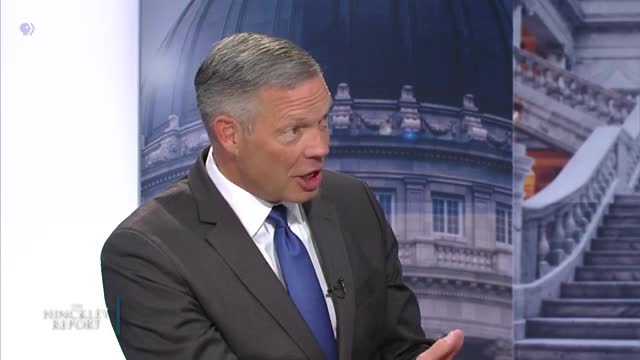
The Trump administration's reported consideration of shrinking some national monuments, including Bears Ears and Grand Staircase-Escalante, prompted a panel discussion on the Hinckley Report about the Antiquities Act and the instability of repeatedly changing monument boundaries.
Jay Evenson briefed viewers on the history: presidents have used the Antiquities Act of 1906 to protect archeological and natural sites without immediate congressional approval; recent administrations have expanded or reduced monuments, producing what Evenson called a "yo-yo" of policy.
"All this to me says we need to change the way we do this, and this goes back to the antiquities act of 1906," Evenson said. He explained the act's original purpose was to prevent theft of artifacts and to protect ancient sites.
Senator Mike McKell said the changes have economic and state interests and argued the issue needs a consistent national approach. "We need consistency, not not only for local communities, state, but but industry," McKell said. He also framed some monument debates as national-security and resource issues, saying the U.S. cannot rely on foreign suppliers for some resources.
Panelists noted prior instances: the monuments were reduced under one administration and expanded under another; proposed future changes may spur congressional proposals to require faster congressional ratification or limits on unilateral presidential resizing.
The discussion did not report formal federal action during the broadcast; rather, panelists said they expect renewed debate and possible congressional responses to limit swings in monument policy.
Jay Evenson briefed viewers on the history: presidents have used the Antiquities Act of 1906 to protect archeological and natural sites without immediate congressional approval; recent administrations have expanded or reduced monuments, producing what Evenson called a "yo-yo" of policy.
"All this to me says we need to change the way we do this, and this goes back to the antiquities act of 1906," Evenson said. He explained the act's original purpose was to prevent theft of artifacts and to protect ancient sites.
Senator Mike McKell said the changes have economic and state interests and argued the issue needs a consistent national approach. "We need consistency, not not only for local communities, state, but but industry," McKell said. He also framed some monument debates as national-security and resource issues, saying the U.S. cannot rely on foreign suppliers for some resources.
Panelists noted prior instances: the monuments were reduced under one administration and expanded under another; proposed future changes may spur congressional proposals to require faster congressional ratification or limits on unilateral presidential resizing.
The discussion did not report formal federal action during the broadcast; rather, panelists said they expect renewed debate and possible congressional responses to limit swings in monument policy.
Don't Miss a Word: See the Full Meeting!
Go beyond summaries. Unlock every video, transcript, and key insight with a Founder Membership.
✓
Get instant access to full meeting videos
✓
Search and clip any phrase from complete transcripts
✓
Receive AI-powered summaries & custom alerts
✓
Enjoy lifetime, unrestricted access to government data
30-day money-back guarantee
