Get Full Government Meeting Transcripts, Videos, & Alerts Forever!
Get email alerts on the Deepfakes topic
No spam. Unsubscribe anytime.
Michigan House approves bills criminalizing nonconsensual explicit deepfakes; 104-1 votes on each bill
Summary
The Michigan House passed House Bills 4047 and 4048, measures that create civil and criminal penalties for creating or distributing nonconsensual explicit deepfake images and amend criminal procedure; both bills passed 104-1 and were given immediate effect.
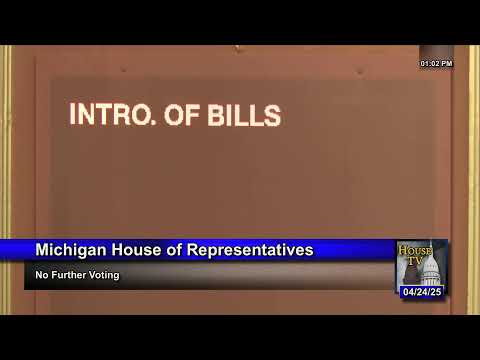
The Michigan House of Representatives passed two bills addressing nonconsensual explicit deepfakes, approving House Bill 4047 and House Bill 4048 by votes of 104 to 1 and ordering both measures to take immediate effect.
Supporters said the package targets an invasive use of artificial intelligence that has harmed private citizens. Representative Sernigloo, who spoke to the floor at length, said, “This bill package specifically seeks to address one of the most dangerous and invasive uses of AI, nonconsensual explicit deepfakes,” and urged colleagues to protect people who have been exploited by increasingly accessible digital tools.
The bills and debate House Bill 4047, introduced on third reading as calendar item 3 by Representative Beuerlein, was presented as creating civil liability and criminal penalties for the nonconsensual creation or dissemination of explicit deepfake images. During third reading, Representative Cara offered an amendment (identified as Amendment No. 1) intended to alter the bill’s language on consent. Cara said the amendment would ensure that a defendant could assert verbal consent as a defense, not only written consent: “they also deserve verbal consent as a defense.” The clerk opened the roll for the amendment; the amendment was not adopted.
After debate, the clerk reported final passage on House Bill 4047: 104 aye votes and 1 nay. The majority floor leader moved for immediate effect; the motion for immediate effect was ordered.
House Bill 4048, introduced on third reading as calendar item 4 by Representative Sernigloo, would amend the Code of Criminal Procedure to implement related penalties and procedures. There were no amendments to HB4048 on third reading. The clerk announced the final vote as 104 ayes and 1 nay; the majority floor leader again moved for immediate effect and the motion was ordered.
What the record shows and what it does not The transcript records proponents’ arguments about the scope and harms of nonconsensual explicit deepfakes, including references to incidents and research about the prevalence of pornographic deepfakes. It also records a specific amendment attempt to broaden the consent defense to include verbal consent, which failed on the floor. The transcript shows vote tallies (104–1 for each bill) and that immediate effect was ordered; it does not include the bills’ final statutory language details, penalty amounts, or the names of individual members who voted yea or nay.
Votes at a glance House Bill 4047 (as introduced by Representative Beuerlein) — Passage: 104–1; amendment to add explicit verbal-consent defense was offered by Representative Cara and failed; immediate effect ordered. House Bill 4048 (as introduced by Representative Sernigloo) — Passage: 104–1; no amendments on third reading; immediate effect ordered.
Next steps and implementation The House record shows both bills passed and were given immediate effect on the House floor. The transcript does not specify the exact statutory text adopted, penalty levels, or implementation timetables; those details must be confirmed in the enrolled bills or the enacted statutes published following signature (or other finalizing actions).