Get Full Government Meeting Transcripts, Videos, & Alerts Forever!
Get email alerts on the Developmental Services Budget topic
No spam. Unsubscribe anytime.
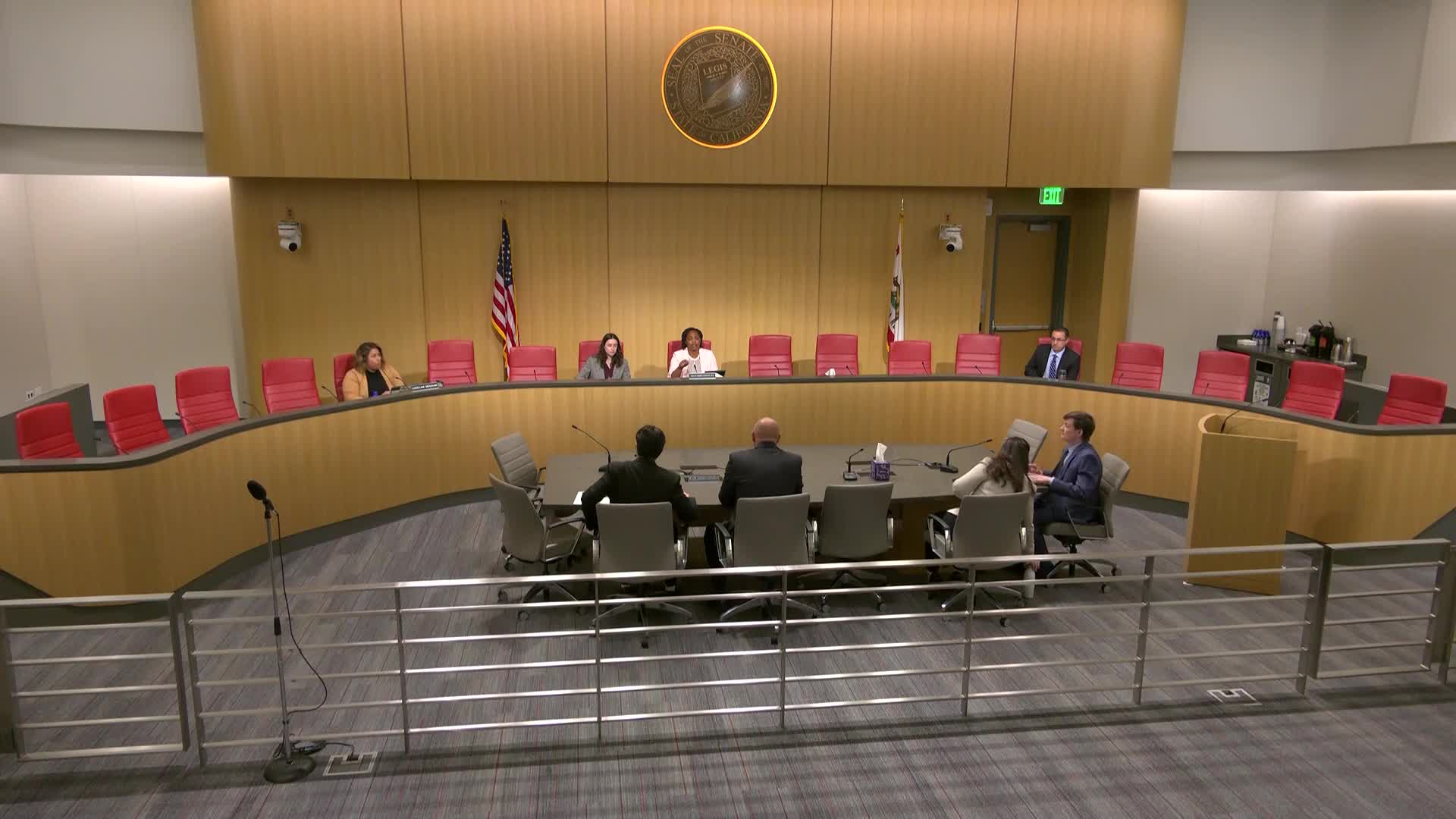
Department of Developmental Services outlines $19 billion budget request, warns federal Medicaid uncertainty could affect programs
Summary
Department of Developmental Services Director Pete Chervinko told the subcommittee the governor's proposed 2025–26 budget requests about $19 billion for developmental services, driven by caseload growth and full-yearing provider rate reform, while warning that federal Medicaid uncertainty is a major risk.
Department of Developmental Services Director Pete Chervinko told Budget Subcommittee No. 3 that the governor's Jan. 10 proposed budget requests about $19,000,000,000 for developmental services in 2025–26, an increase of roughly $3.2 billion from the current fiscal year.
Chervinko said the increase is driven in large part by an estimated caseload increase and the full-year cost of implementing provider rate reform. "Our budget for next year, as proposed in the Jan 10 governor's budget, is just about $19,000,000,000—that's an increase of $3,200,000,000 over the current fiscal year," he said. He identified a roughly $2.6 billion request to cover an anticipated estimated caseload increase of 40,000 people and "an additional almost $410,000,000 to, full year annualize the cost of service provider rate reform." (Pete Chervinko, Director, Department of Developmental Services.)
Chervinko told the panel the department plans two small budget change proposals: staffing to comply with the Public Records Act changes that affect regional centers, and converting two limited-term positions to permanent to implement federal electronic visit verification (EVV). He said the department expects to revisit the Public Records Act BCP in the May Revision because initial estimates likely overstated the needed staffing.
Oversight, quality incentives and IT projects
Corina Hendren of the Legislative Analyst's Office (LAO) told the committee the LAO's March 5 analysis raises two core oversight issues: the quality incentive portion of rate reform and the department's Lowest IT project. Hendren said the statewide provider directory—a prerequisite for the quality incentive payments—could be used to identify service gaps once tied to regional center service areas. She urged the legislature to ask DDS about plans to build the directory's analytic functions and about how one-time incentive data will inform future ongoing quality metrics.
Chervinko described the provider directory as the state's first attempt to consolidate and deduplicate vendor data currently held in 21 regional centers' independent databases. He said about 65% of providers' information is validated and warned the department will eventually "block" certain billing system logins if providers do not validate their entries in the directory. He also described plans to tie service codes and workforce linguistic characteristics to the directory to identify service deserts and workforce gaps.
On IT modernization, LAO and the department said Lowest is intended to integrate regional centers' case management and fiscal systems. LAO recommended updated IT planning documents so the legislature can assess whether the latest stakeholder feedback has materially changed project scope.
Federal funding risk and policy priorities
Chervinko emphasized the system's reliance on federal Medicaid funding—he said Medicaid provided about $6.5 billion, roughly 37% of total funding as proposed—and described federal fiscal uncertainty as a major risk. "We are watching very carefully what happens at the federal level," he said, and said DDS will prioritize protecting the Lanterman Act entitlement, strengthening services to young children, and modernizing technology used for case management and fiscal control.
Oversight and next steps
LAO asked the department four specific oversight questions about how quality incentive measures will be developed, what data are needed for individual-level outcomes, how equity concerns will be addressed so metrics do not incentivize providers to serve only easier-to-serve consumers, and what technical assistance will be offered to providers that fail to meet metrics.
Committee members pressed the department about implementation timelines for DSP University, bilingual pay differentials, and the end of the hold-harmless period for providers whose historical rates exceed new model rates. Chervinko said DSP University is expected in "late summer" and bilingual pay differential rollout statewide is anticipated in the August–September timeframe; he reiterated that hold harmless ends June 30, 2026, and providers presently in hold harmless will move to the rate-model rates when it sunsets.
Ending
The department said it will continue to refine BCPs in the May Revision and provide the committee with follow-up materials on the provider directory, Lowest project planning materials, and quality-incentive monitoring details upon request.