Get Full Government Meeting Transcripts, Videos, & Alerts Forever!
Get email alerts on the Prior Authorization topic
No spam. Unsubscribe anytime.
SB 306 would cut prior‑authorization red tape by exempting services approved 90% of the time, sponsors say
Summary
SB 306 would require health plans to stop requiring prior authorization for services or prescriptions that a plan approves at least 90% of the time, with proposed amendments to limit the change to in‑network providers and electronically submitted requests.
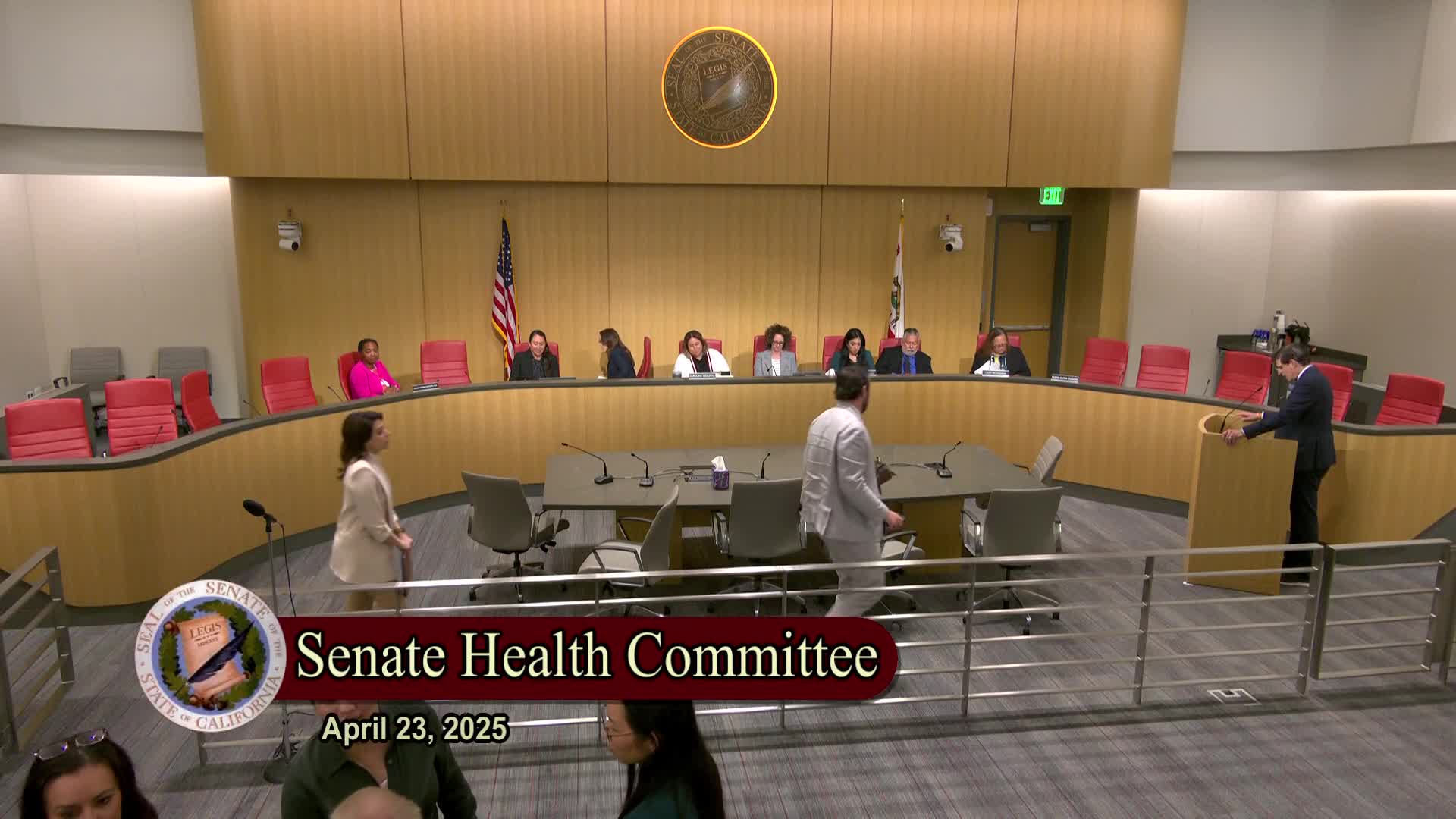
The Senate Health Committee heard SB 306, a bill to curb prior‑authorization delays that many physicians and advocates say slow needed care. The bill would require health plans to remove prior authorization and prior notification requirements for any service or prescription that a plan approved more than 90% of the time in the prior calendar year.
Senator Becker, the author, said the measure is intended to free clinicians from administrative tasks that research shows consume clinician time and slow treatment. “If you’re approving it anyway, don’t make patients and providers jump through hoops,” Becker said.
The California Medical Association and broad provider groups supported the measure as part of a package of prior‑authorization reforms. CMA’s George Sorey described prior authorization as an administrative roadblock that increases physician burnout and causes treatment delays, citing surveys that doctors spend many hours per week on prior‑authorization paperwork. Other medical societies, hospitals, patient‑advocacy groups and pharmacy organizations registered support.
Insurers and PBM representatives opposed or said they were “oppose unless amended,” saying prior authorization protects appropriate use and overall system stewardship. They urged refinements: limiting the rule to in‑network providers, raising the approval threshold, excluding certain high‑complexity services, and creating a process for rescinding an exemption if fraud or safety problems appear. The author signaled willingness to accept committee amendments that focus the bill on in‑network providers who submit requests electronically, and to continue negotiations on technical details and rural‑provider access.
Committee members praised the measure as a potential patient‑care improvement and urged continued talks with insurers to refine rules for small providers and specialty services. No final roll‑call was taken during the hearing; the author asked for an aye vote when the committee is in quorum.