Get Full Government Meeting Transcripts, Videos, & Alerts Forever!
Get email alerts on the Geothermal Permitting topic
No spam. Unsubscribe anytime.
Assembly committee advances bill letting counties permit larger geothermal projects, with labor talks ongoing
Summary
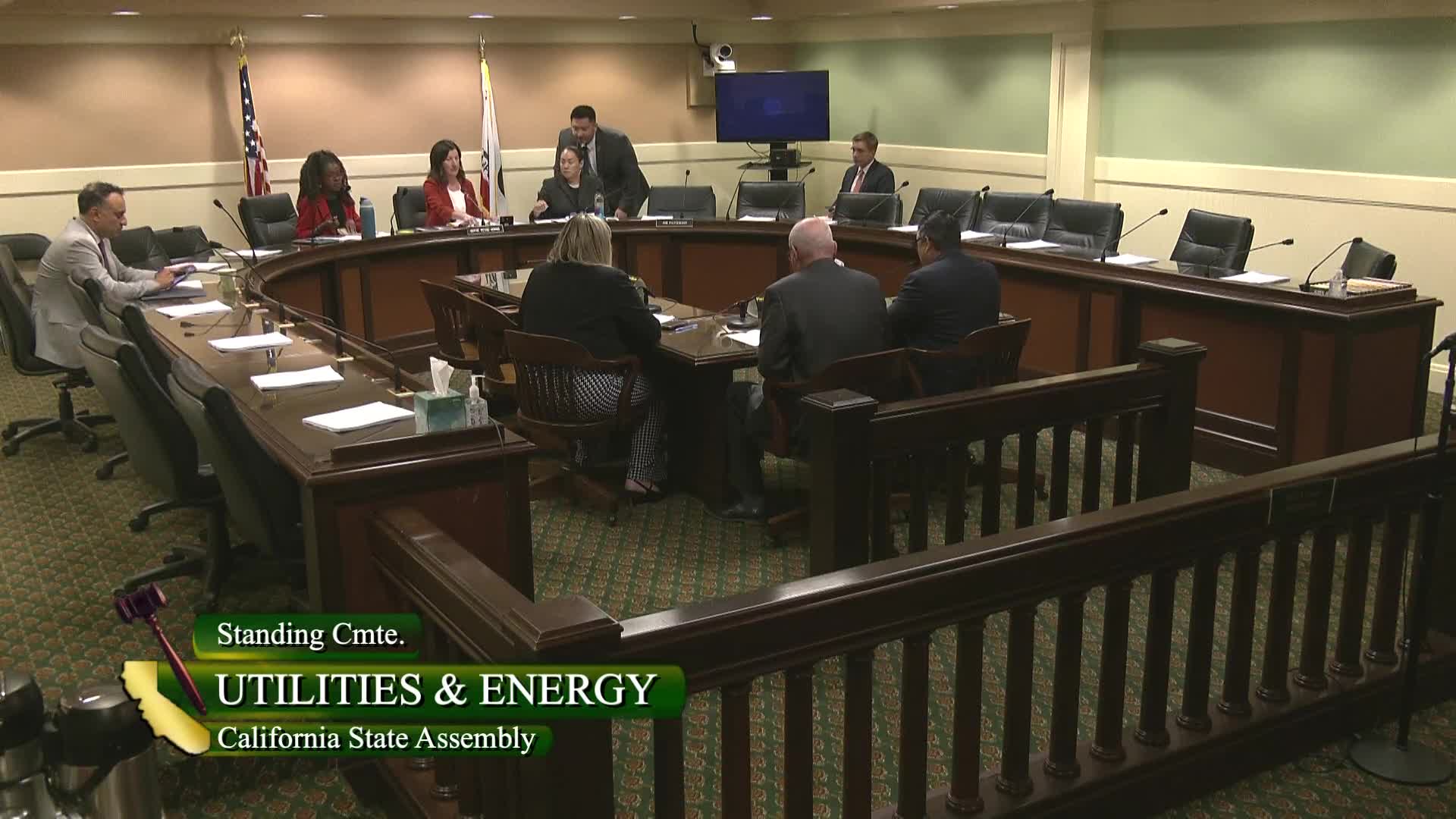
The Assembly Committee on Utilities and Energy advanced AB 10 16, a measure to allow local permitting of larger geothermal plants in counties that have a geothermal plan, with supporters citing jobs and opponents raising labor-standards concerns.
The Assembly Committee on Utilities and Energy on Tuesday advanced AB 10 16, a bill that would expand the capacity of geothermal power plants counties can permit locally and create a temporary pilot intended to speed project approvals in geothermal-rich regions such as Imperial County.
Supporters told the committee the bill would create jobs and local revenue in economically distressed areas. Backers said the measure would keep full environmental review under CEQA and provide local control over siting decisions.
Assembly members heard detailed testimony from Imperial County officials, who said the county has decades of permitting experience and planning in place. Ryan Kelly, Imperial County supervisor, told the committee the county has permitted more than 20 geothermal projects and is preparing a 51,000-acre specific plan and programmatic EIR to streamline clean-energy and critical-mineral development. Barry Bean, Imperial County deputy CEO of natural resources, said permitting delays at the California Energy Commission had stalled projects and that local permitting could unlock investment.
Kelly and Bean cited regional economic harms, saying Imperial County’s unemployment and poverty rates are substantially above state averages. Bean said recent permitting delays led a major developer to pause projects and presented estimates that property-tax revenues from projects could have generated hundreds of millions of dollars over 30 years for local school, health and community college districts.
Labor organizations and the building trades registered opposition, saying projects approved through the California Energy Commission are subject to workforce standards that require trained, skilled craft labor, standards they fear could be relaxed if permitting reverts to counties. Scott Wish, representing the California State Pipe Trades Council and allied unions, said the concern is not returning local permitting but ensuring labor standards remain in place. Mike Monaghan for the State Building Trades echoed that point and said unions want to continue negotiations with the author’s office.
Assembly members noted those labor concerns and heard the bill sponsor commit to continued discussions with unions to preserve local hiring and training priorities. Committee member questions also pressed the author on how county-level review would safeguard environmental protections and community engagement.
The committee moved AB 10 16 to the Natural Resources Committee with a commitment to take amendments there. The motion was made by Assemblymember Herbedian and seconded by Assemblymember Wallace; the final roll-call vote was recorded in committee as passed (yes: 15; no: 0).