Get Full Government Meeting Transcripts, Videos, & Alerts Forever!
Get email alerts on the City Budget topic
No spam. Unsubscribe anytime.
Beaumont reviews $72.4 million FY2026 draft budget, council raises long‑term sustainability concerns
Summary
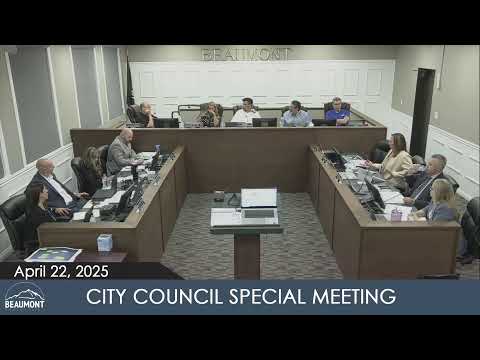
Beaumont — City staff on April 22 presented a draft fiscal year 2026 general fund budget totaling $72.4 million and a five‑year capital improvement plan that together would add 27 full‑time positions and $6.24 million in general‑fund enhancement requests.
Beaumont — City staff on April 22 presented a draft fiscal year 2026 general fund budget totaling $72.4 million and a five‑year capital improvement plan that together would add 27 full‑time positions and $6.24 million in general‑fund enhancement requests.
The initial draft shows $72,400,000 in projected general‑fund revenues for FY2026 and $65,700,000 in expenditures, leaving an unprogrammed balance of about $6.7 million before enhancement requests. Staff said a one‑time $6.2 million sales‑tax audit correction received in the current year was not budgeted to recur and was excluded from ongoing projections. After the requested enhancements, staff reported an unprogrammed balance of roughly $405,000.
Why it matters: the budget forecast keeps the city balanced through the late 2020s but projects structural deficits beginning in fiscal year 2030, driven by planned debt service and possible changes to sales‑tax allocation. Councilmembers said they support staffing the organization to meet growth but asked staff to weigh the long‑term sustainability of new personnel and to prioritize which hires could be delayed.
Key revenue and spending points - Total projected general‑fund revenues: $72.4 million. Staff emphasized that sales taxes remain the largest revenue source (about 38% of the general fund) but noted conservatism in ongoing sales‑tax projections because of volatility and the $6.2 million one‑time audit receipt. - Other taxes (motor‑vehicle in lieu, utility users tax, transient occupancy tax) account for about 18%; property taxes about 14%; transfers in about 11%. - Expenditures before enhancements: $65.7 million. Personnel costs make up roughly 53% of that total; operating costs about 44%; capital 3% and contingency less than 1%.
Enhancement requests (highlights) Staff grouped enhancement requests by department; together they total approximately $6.24 million in the general fund and request 27 new FTE. Highlights discussed at the workshop included: - City Clerk: a deputy city clerk position to provide backup and succession planning and to ensure compliance with elections and public‑records requirements. - Administration: a customer service supervisor to oversee a growing utility billing and customer‑service workload. - Human Resources: an additional HR risk analyst and employee morale items such as a city picnic and benefits fair support. - Communications: a communications specialist (to bring photo/video work in‑house) and a digital marquee outside City Hall. - Finance: three positions (purchasing manager, buyer, and an additional accountant) and an updated cost‑allocation plan to improve grant billing and internal service allocations. - Information Technology: a management analyst and a part‑time GIS technician to support rising GIS and IT work across departments. - Community Development: an administrative assistant shared across planning, building and code enforcement. - Community Enhancement/Code Enforcement: one additional community enhancement officer to respond to growth in complaints and code cases. - Police/Public Safety: requests include a third lieutenant to improve coverage, an additional PACT (Probation/AB 109) officer (county‑reimbursed), two dispatchers to reduce overtime, evidence storage upgrades and software for traffic analysis. - Recreation, Parks, Public Works and Facilities: staffing additions and equipment requests (generators, light towers, maintenance vehicles, a boom lift) to support events, parks, and facility maintenance as the city grows. - Wastewater (enterprise fund): one certified Grade 3 operator for operations and capital items; staff also discussed refinancing 2019 wastewater bonds to produce net present value savings and possibly fund a solar project at the treatment plant with refinancing proceeds. - Transit (enterprise fund): a full‑time transit supervisor to add day‑to‑day operational oversight; the transit yard project remains an active CIP item.
Council reaction and direction Councilmembers generally praised staff work but repeatedly stressed caution about ongoing personnel costs. Councilmember Martinez said he was "very pro employee" but added that "the concern I have is the sustainability of those positions," urging the council to avoid hiring too quickly if forecasts change. Other members proposed modest adjustments or staged hiring to preserve a larger cushion.
Staff noted available reserves and special funds that could be used in a downturn: the city’s available reserve buckets total about $15 million overall, with an available reserve percentage reported near 9.2 percent after current allocations. Staff also pointed to the self‑insurance fund balance (litigation settlement proceeds) as a contingency source if needed; actuarial analysis presented at the workshop indicated the city’s outstanding liabilities would be covered at typical confidence levels without fully depleting that fund.
Next steps Staff said the draft budget will return for formal adoption at the June 3 council meeting and that departments can return in May with additional detail if the council requests it. Councilmembers asked staff to identify a small number (2–4) of positions that could be delayed one year if council seeks a larger short‑term cushion. Otherwise, there was informal consensus to proceed with the budget as presented and to return with requested details, including departmental breakdowns of personnel costs and public‑safety staffing by function.
Ending note Staff closed the workshop by thanking departments for the cross‑city coordination behind the draft budget and by reminding council that the June 3 meeting is the public hearing and adoption date for FY2026.