Get Full Government Meeting Transcripts, Videos, & Alerts Forever!
Get email alerts on the Public Safety And Infrastructure topic
No spam. Unsubscribe anytime.
Temple Israel wins permission for 6-foot Broad Street fence with landscaping conditions
Summary
Columbus City Council zoning committee approved a request from Temple Israel to install a 6-foot perimeter fence along East Broad Street for security, requiring a stamped landscape plan and screening conditions after neighbors raised concerns about rear-yard impacts.
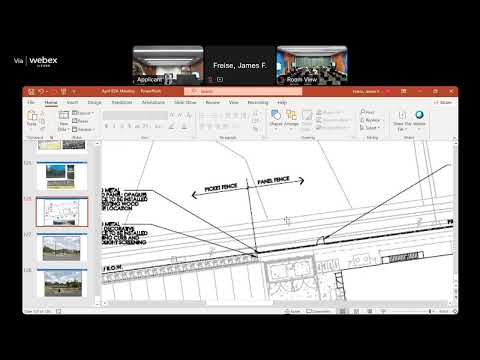
Columbus City Council zoning committee on April 22 approved a request by Temple Israel to install a six-foot perimeter fence along East Broad Street, with conditions requiring the synagogue to submit a stamped landscape and screening plan that city staff sign off on.
The committee’s vote followed testimony from the synagogue’s attorney, David Hodge, and planning staff, and objections from nearby resident Britney Newmark, who said she is concerned the new fencing and the replacement of an existing wooden rear fence with metal would damage landscaping and alter the character of her backyard.
The synagogue told the committee it sought the higher fence after completing a security assessment and receiving a state grant of $100,000 aimed at improving security at the site. Attorney David Hodge said the synagogue worked with traffic management and planning staff on sight-line and access issues and proposed metal perimeter fencing softened by the planting shown on the site plan. Hodge said the fencing design is typical aluminum-style, not an opaque industrial barrier, and that the congregation will meet directly with adjacent homeowners to respond to aesthetic concerns.
Neighbor Britney Newmark said the rear fence has been wooden and that construction replacing it with metal would likely damage mature plantings and reduce the yard’s visual character. Newmark said previous construction had damaged her property and requested the synagogue replace the fence without removing the existing wooden fence or otherwise avoid harm to her garden.
Planning staff recommended approval only after the synagogue supplied a revised landscape plan that showed screening and plantings intended to meet the Columbus Citywide planning (C2P2) design guidelines. Staff asked for the landscape plan to be stamped and for the front-fence materials and planting schedule to be made part of the approval. Traffic staff required that any gates meet driveway-vision and setback standards so vehicle movements off Broad Street would not interfere with pedestrian areas.
The committee’s approval included two conditions: (1) the synagogue must submit a stamped landscape plan showing the proposed street-edge planting and screening as shown in the packet, and (2) the fence composition and locations must match the submitted, stamped drawings. Committee members emphasized that the approval covers the Broad Street frontage height increase from the code baseline and that planting/screening and sight-line conditions must be satisfied before final building permits are issued.
The committee did not order the synagogue to change privately owned fences on adjacent properties; staff and the synagogue said Temple Israel would meet directly with neighbors to address property-line and construction concerns. The committee noted that neighbors retain the right to pursue property-line or damage claims through the city’s property and code processes after permits are issued.
The vote concluded the item; the synagogue’s representatives said they would coordinate directly with neighbors and the city to finalize details required by the conditions of approval.
Temple Israel also confirmed it intends to maintain gate operations consistent with traffic management guidance—gates will be fob-operated for routine access and monitored by staff or security on high-attendance days to avoid obstructing the sidewalk or public right of way.
Why it matters: The case highlights a growing tension between institutional security needs and adjacent residential privacy and aesthetics. The committee tied approval to a visible mitigation package—landscape buffering and documented fence materials—rather than granting an unconditional waiver of the screening rule.
Provenance: First discussion of the fence and grant appears in the transcript where the synagogue’s attorney explains the grant and security assessment; neighbor testimony and the committee’s conditions appear later in the same agenda block.