Get Full Government Meeting Transcripts, Videos, & Alerts Forever!
Get email alerts on the Immigration Policy topic
No spam. Unsubscribe anytime.
Senate passes bill restricting local sharing of personal data with federal immigration authorities
Summary
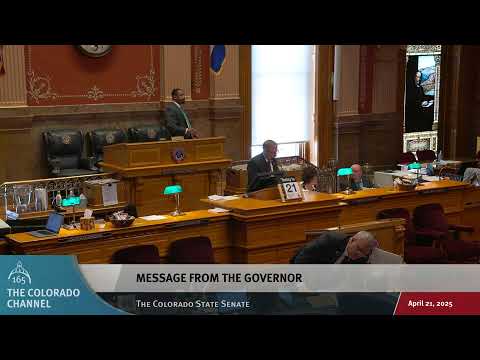
The Colorado Senate on April 21 approved Senate Bill 276, a measure that restricts how local governments and certain institutions share personally identifying information with federal immigration authorities and that requires new privacy and institutional policies; the vote was 22–13.
DENVER — The Colorado Senate on April 21 passed Senate Bill 276, a sprawling measure that limits when and how state and local agencies and institutions may share personally identifying information with federal immigration enforcement and that sets new privacy, reporting and institutional‑policy requirements.
The 35‑member Senate approved the bill 22–13. Supporters said the measure extends existing state privacy protections and creates guardrails for hospitals, courts, schools and local jails; opponents warned it could create legal and public‑safety conflicts with federal immigration law.
Senator Chris Gonzales, the bill’s lead sponsor, framed the measure as grounded in constitutional protections and existing state privacy law. “Section 1 of the bill is a legislative declaration that reminds us, that grounds us in the United States Constitution, the fourth, fifth, sixth, tenth, and fourteenth amendments,” Senator Gonzales said on the floor as she described the bill’s provisions and the sections that eliminate outdated affidavit requirements and extend data protections.
The bill’s main provisions, as explained by supporters on the floor, include: - Removing or updating several state affidavit requirements and procedural provisions described by the sponsors as outdated. - Extending the scope of Colorado’s data‑privacy protections to local jurisdictions and limiting disclosure of personally identifying information without a judge‑issued warrant or other lawful authorization. - Requiring that health care, child‑care and educational institutions adopt policies describing how they will respond to federal immigration enforcement operations, and clarifying protections for court users and dependency proceedings. - Prohibiting local officers from detaining individuals solely on the basis of an immigration detainer or ICE hold absent a judicial warrant; forbidding officers from compelling private citizens to perform arrests for immigration purposes. - Creating civil penalties for willful, intentional violations of the privacy provisions in narrowly defined circumstances, with some penalties directed to the state’s Immigrant Legal Defense Fund.
Supporters said the bill would protect victims and witnesses who might otherwise avoid reporting crimes or participating in court proceedings because of immigration enforcement concerns. “We heard from attorneys who work alongside our courts and family law proceedings about ensuring those proceedings are safe for Coloradans to engage in,” Senator Gonzales said.
Opponents raised constitutional and practical concerns. Minority Leader Menard argued the late in‑session third‑reading amendments were material and that the chamber should allow more time for review under the Senate’s rule 25(k). He also said the measure risked conflicting with federal immigration law and could produce legal challenges. “The rule is what protects the rights of the minority,” he said on the floor when urging the body to delay consideration.
Senator Kevin Lundin and other critics emphasized potential effects on public safety, local budgets and the mechanics of law enforcement cooperation with federal authorities. Lundin said resources would be diverted from road and bridge maintenance toward reporting and new compliance obligations and warned the bill “majors on the minors.” Minority senators listed a set of legal and operational objections during floor debate.
Senators who supported the bill repeatedly said they had negotiated multiple third‑reading amendments to address concerns from law enforcement, the courts and the executive branch. Senator Julie Weisman, a co‑sponsor who led floor amendment negotiations, told colleagues the amendments clarified that authorized law‑enforcement activities and warranted criminal authorizations would continue to be allowed where authorized by law.
The bill drew passionate public and floor remarks about immigration enforcement and U.S. history from both proponents and opponents. Several lawmakers invoked personal immigration histories and civic values in arguing their positions. Following floor debate, the Senate adopted multiple third‑reading amendments before taking the final, recorded vote.
Votes at a glance: - Final passage (Senate Bill 276): 22 yes, 13 no; outcome: approved. No‑vote senators recorded on the floor included Senator Kirk Meyer, Senator Rich, Senator Frizzell, the minority leader, Senator Simpson, Senator Liston, Senator Pelton B., Senator Bright, Senator Carson, Senator Pelton R., Senator Catlin and Senator Baisley (the transcript listed those names during the final vote call). The final tally and roll call were announced from the floor.
What happens next: The bill, having passed the Senate, will move to the House. Supporters said portions of the measure are intended to preserve access to services and to protect victims and witnesses; opponents signaled possible legal challenges on federal preemption grounds.
Speakers quoted in this story are those who spoke on the Senate floor during the bill’s debate and are identified in the official Senate record.