Get Full Government Meeting Transcripts, Videos, & Alerts Forever!
Get email alerts on the Land Use Variance topic
No spam. Unsubscribe anytime.
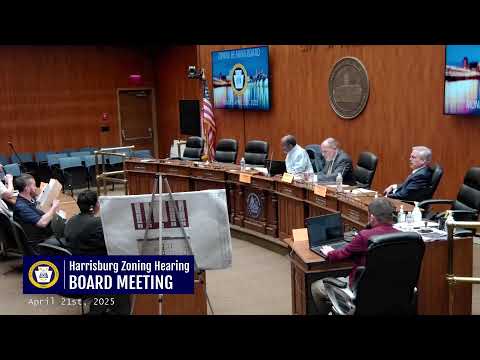
Harrisburg zoning board approves variance allowing nightclub at 236 North Second Street
Summary
The Harrisburg Zoning Hearing Board approved a variance allowing nightclub/dancehall use at 236 North Second Street after testimony on historic use, soundproofing and neighborhood outreach.
The Harrisburg Zoning Hearing Board approved a variance allowing nightclub and dance-hall uses at 236 North Second Street after hearing testimony that the building previously hosted live-music uses and contains significant soundproofing.
The decision came April 17 when Claude Phipps, acting as the hearing officer, said, “So based off of the testimony, all the information provided by planning bureau and by the applicants, I’m gonna approve this request.” Phipps served as hearing officer after the board appointed him at the start of the session.
The planning director, Jeffrey Knight, told the board the applicants sought relief because nightclub or dance-hall uses are prohibited within 500 feet of a dwelling unit under current zoning. Knight said the planning bureau’s review showed past uses at the site and noted downtown Harrisburg’s density of dwelling units makes a strict application of the 500-foot rule effectively preclude these uses in the downtown center. Knight said the planning commission recommended approval with conditions, including a pre-hearing community meeting and documentation of soundproofing measures; applicants presented evidence those steps were taken.
Attorney Eric Hume, representing the applicants, and principal Craig Dunkel described the building as masonry and concrete with existing interior soundproofing from prior nightclub uses. Hume said retaining a conforming non-nightclub use would require substantial, potentially near-million-dollar alterations. Consultant Justin Hershey, an audio/acoustics engineer, explained planned acoustic treatments and said his testing recreated 105 dBA in the room and showed no transmission at a neighboring doorway with planned mitigation in place.
Neighborhood support was presented. Mark Santana, president of the Capital Area Neighbors (CANS), said his group received advance notices, attended a site visit on April 16, and did not receive opposition from membership. The applicants submitted several letters of support in the record.
The board admitted applicant exhibits, including proof of publication (Patriot-News notices April 6 and April 13, 2025), posted hearing notice (March 26, 2025), application materials, and planning bureau and planning commission reports. Phipps said the written decision will be issued within 45 days and may be emailed to counsel.
The hearing officer’s approval was made on the record at the meeting and was described as “in accordance with the application and everything that was presented and represented here today.”
A written decision with formal conditions will follow.