Get Full Government Meeting Transcripts, Videos, & Alerts Forever!
Get email alerts on the Rose Quarter Project topic
No spam. Unsubscribe anytime.
Albina Vision Trust urges full Rose Quarter package; opponents press for alternatives and narrower scope
Summary
Representatives of Albina Vision Trust and No More Freeways appeared before the Transportation and Infrastructure Committee on Monday to present competing views on Rose Quarter infrastructure, with Albina Vision Trust urging support for an integrated cover-and-redevelopment package and opponents urging a fuller evaluation of alternatives and narrower highway scope.
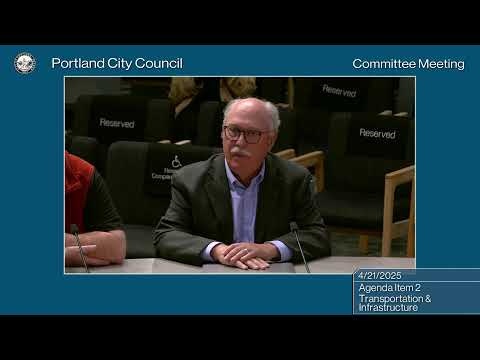
Representatives of Albina Vision Trust and the advocacy group No More Freeways presented competing perspectives Monday as the Transportation and Infrastructure Committee opened a public hearing on Rose Quarter infrastructure improvements.
Albina Vision Trust executive director Wynta (spelled in the record as presented) told the committee the organization has worked for nearly a decade to shape a plan that would "restitch Albina" and address harms caused when I-5 divided the neighborhood. "We have brought together community, political, and technical expertise to embrace the fact that there will be change to deliver better outcomes for all of Portland," Wynta said, and she asked councilors to "stand with us" in delivering a reconnected district that draws on more than $488 million in federal Reconnecting Communities and Neighborhoods funding awarded to projects in the area.
JT Flowers, director of government affairs for Albina Vision Trust, said the federal funds target highway covers and neighborhood reconnection and argued the project bundles climate, community and economic goals. "Our 94-acre footprint makes us the largest restorative redevelopment in the entire United States," Flowers said, and he urged council support for the full package of covers integrated with other investments.
Opponents from No More Freeways, represented by Chris Smith and Joe Courtright, urged caution. Smith said the group's legal strategy seeks an environmental impact statement that evaluates alternatives including pricing and transit, and he called for "lids not lanes." Courtright, an urban policy researcher, presented public-record cross-sections and an Arup independent cover assessment that he said show the ODOT design is wider than needed and would allow substantially more lanes if restriped. "Arup ... said ODOT has designed a roadway that is at least 40 feet wider than it needs to be," Courtright said, and he warned that design choices have tripled or quadrupled cost estimates since the project's initial planning.
Committee members asked technical and fiscal questions and pressed for further briefings. Councilor Smith said she favored the cover concept but requested ODOT appear to explain engineering and financing; other members asked PBOT to return with additional detail about how city priorities and obligations intersect with the state-led project. Several councilors raised concerns about the potential for widening to induce additional traffic and the risk that covers could be delayed or unfunded while widening proceeds.
No formal action was taken. Chair Clark said the committee would invite ODOT and PBOT to return to clarify details, and she signaled further briefings on the Rose Quarter and other major projects.