Get Full Government Meeting Transcripts, Videos, & Alerts Forever!
Get email alerts on the Stamp Immersion topic
No spam. Unsubscribe anytime.
Minnetonka reports strong STAMP proficiency gains in immersion programs; district outlines elementary, middle and high-school results
Summary
District assessment staff presented STAMP language-proficiency results showing significant gains in listening and reading for Chinese and Spanish immersion cohorts and recommended targeted work on writing and speaking for specific programs.
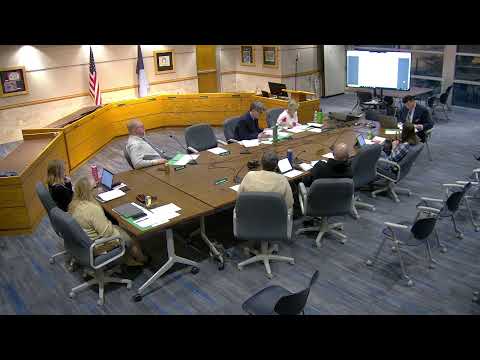
Minnetonka Public School District staff reviewed results from the STAMP language-proficiency assessment for immersion and world-language students at multiple grade bands and described district- and building-level trends.
Matt Riga, director of research and assessment, reviewed the STAMP 1–9 proficiency scale (novice 1–3, intermediate 4–6, advanced 7–9) and said the district has seen expanded participation and growing performance. He reported that the district now offers the bilingual-seal pathway in 15 languages and that many juniors and seniors take the optional STAMP test as they pursue higher-level seals. Riga said Chinese immersion cohorts showed “really strong increases in all areas for both eighth and tenth grade cohorts,” with notable advances in reading and listening. For Spanish immersion Riga reported tenth graders at advanced-mid ranges for reading and listening; he said strong STAMP scores correlate with higher AP outcomes when students approach intermediate-high or advanced levels prior to AP testing.
Riga highlighted that the listening subtest in some cohorts is outpacing national growth targets by two sublevels and that overall the district “continues to outpace the national targets by a significant amount” on several measures. He recommended monitoring speaking and continuing focus on writing at the secondary level where writing historically lagged. Riga described how national-target comparisons were developed with district curriculum staff and a review of similar immersion programs nationwide.
Elementary STAMP results were presented to show increases for several third-grade cohorts; district staff said Scenic Heights and other buildings produced notable gains while some individual building cohorts (Excelsior) had earlier declines they attributed to class- or cohort-level circumstances such as long-term substitutes. District staff noted the STAMP speaking scoring is still pending for some schools because vendor scoring can take up to 12 business days; conversation touched on whether to add the writing subtest at upper elementary grades for future administrations.
Administrators and board members discussed COVID-era score dips and subsequent rebounds, differences between receptive (listening/reading) and productive (speaking/writing) skills, and potential survey or assessment refinements to differentiate students participating in experiential high-school programs. Riga recommended focusing on writing for Chinese immersion and on reading/speaking for Spanish immersion, and he suggested continued use and review of IPA assessments during upcoming immersion program reviews.
The presentation was informational; no formal board action occurred at the study session.