Get Full Government Meeting Transcripts, Videos, & Alerts Forever!
Get email alerts on the Flooding topic
No spam. Unsubscribe anytime.
Chester County and partners release Brandywine Watershed flood study, recommend 16 structural projects and nonstructural preparedness steps
Summary
A multi‑jurisdictional Brandywine Watershed flood study, funded in part by Chester County and federal/state partners, identified 16 structural projects (including upgrades to Barnstone Dam and 10 bridge projects), four low‑head dam removals and a suite of nonstructural recommendations such as improved early warning, buyouts and ordinance changes.
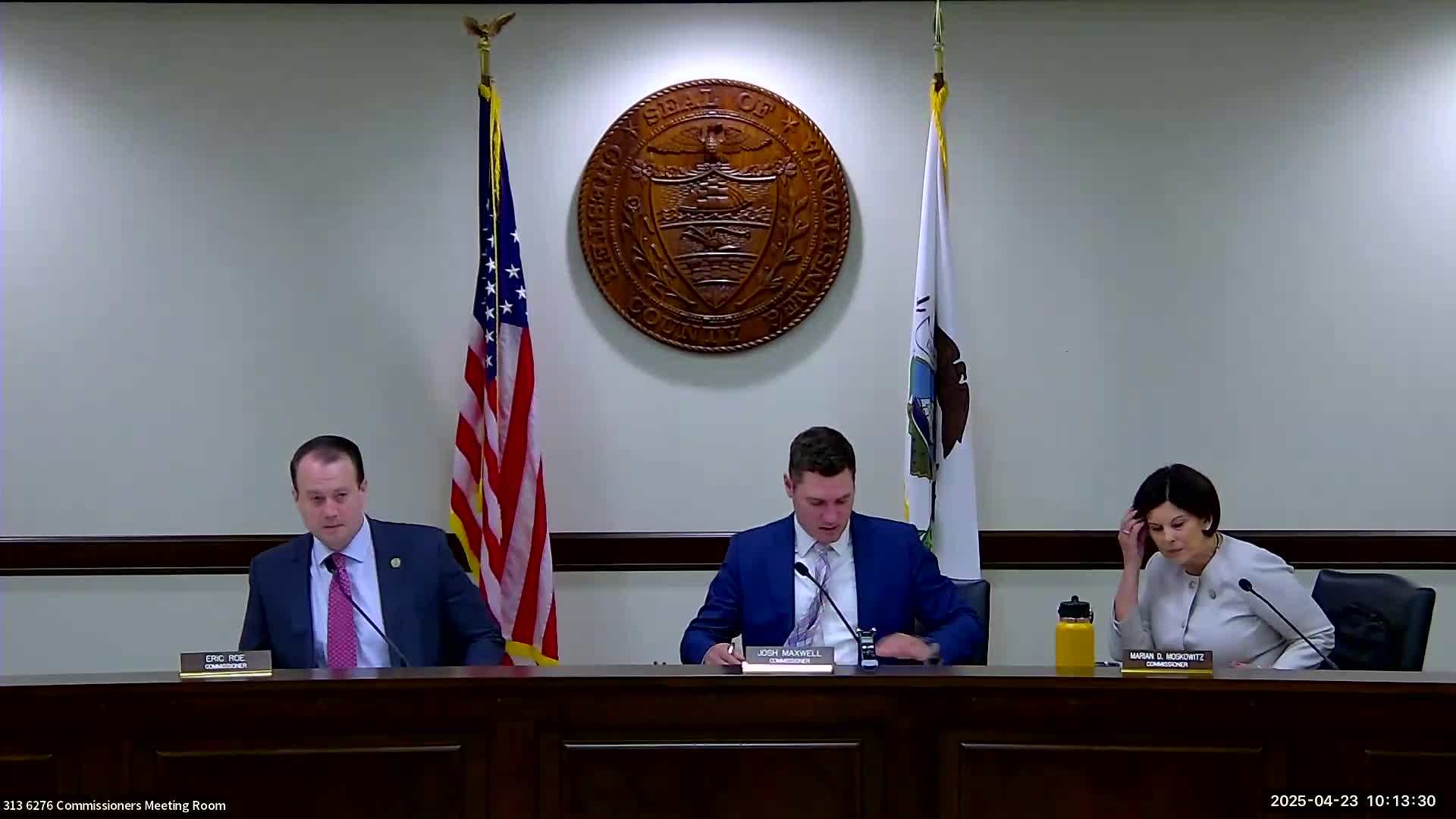
Chester County officials and partners presented a completed Brandywine Watershed flood study Wednesday that recommends a mix of structural projects and nonstructural measures to reduce flood risk across the bi‑state watershed.
The study, led by the Chester County Water Resources Authority with the Brandywine Conservancy and the University of Delaware Water Resources Center, identifies 16 structural projects distributed across the watershed, including a recommended upgrade to Barnstone Dam (a county‑owned facility), 10 bridge upgrades or replacements, four low‑head dam removals and one major floodplain restoration project. Kate Huddlemeier, Water Resources Planner for the county, said the study also produced a menu of nonstructural actions that can be implemented quickly, such as emergency preparedness improvements, expanded early‑warning systems, public education on flood insurance and targeted voluntary buyouts.
“The work led us to a suite of structural and nonstructural recommendations,” Huddlemeier said. “Structural solutions take significant time and investment. Nonstructural recommendations are things we can hit the ground running with immediately.”
Suna Bien, executive director of the Chester County Water Resources Authority, told commissioners the project began after flooding tied to Hurricane Ida in 2021 and became a bi‑state effort involving Delaware County and New Castle County, among others. Bien and Huddlemeier highlighted technical support from multiple academic and research partners and said FEMA and PEMA were among public funders of the work. "We know that flooding in the Brandywine Watershed is a bigger and broader issue than Hurricane Ida alone," Huddlemeier said, noting that resident outreach found 95% of surveyed households expressed concern about increased flood frequency and intensity.
County staff and consultants said next steps include coordinated outreach to municipal owners of bridges and other infrastructure, discussions with PennDOT and engagement with railroad companies where tracks and bridges were identified as concerns. The Brandywine Conservancy is already pursuing grant funding for work on Barnstone Dam, Huddlemeier said, and county staff said they would coordinate planning and design work for the county‑owned portions.
Commissioners asked about the mechanics of moving from recommendation to project funding. Bien said the study’s authors will begin outreach to the affected municipalities and to state and federal partners and that some partners were already seeking grant funds for priority projects. "We are working on printed copies of the executive summary and the full report," Huddlemeier added; the study materials will also be posted online at brandywine.org/floodstudy.
Why it matters: The Brandywine is the largest watershed in Chester County and includes communities with historically flood‑prone neighborhoods. The study offers both long‑term infrastructure options and near‑term actions intended to increase preparedness, reduce property loss and help vulnerable residents recover more quickly.
The Water Resources Authority and Brandywine Conservancy asked municipalities and county departments to expect follow‑up meetings to coordinate design work, funding applications and ordinance updates.
Sources: Presentation to the Chester County Board of Commissioners by Suna Bien (Executive Director, Chester County Water Resources Authority), Kate Huddlemeier (Water Resources Planner), and Grant Acosta (Director of Community Services, Brandywine Conservancy).