Get Full Government Meeting Transcripts, Videos, & Alerts Forever!
Get email alerts on the Legislation Votes topic
No spam. Unsubscribe anytime.
Colorado Senate adopts package of bills on workers—comp choice, child welfare, schools and health; key votes at a glance
Summary
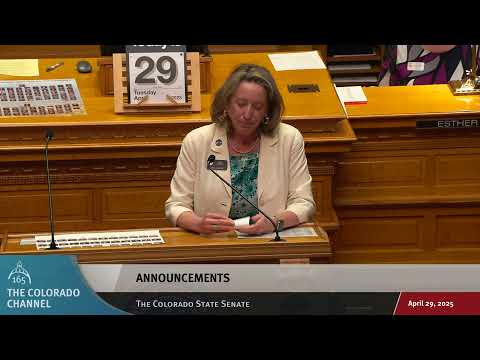
DENVER — The Colorado Senate on April 29, 2025 voted on a large package of bills covering workers' compensation access to care, child‑welfare placement planning, school communications and health coverage rules, approving multiple measures after floor debate and several third‑reading amendments.
DENVER — The Colorado Senate on April 29, 2025 voted on a large package of bills covering workers' compensation access to care, child-welfare placement planning, school communications and health coverage rules, approving multiple measures after floor debate and several third‑reading amendments.
Three items drew extended debate: a workers' compensation bill to expand injured workers' choice of treating physician (House Bill 1,300); a child‑welfare bill creating individualized placement transition plans (House Bill 10,97); and legislation on health coverage for obesity and diabetes treatments (Senate Bill 48). Other measures adopted included criminal‑law changes, a drug‑donation program, and bills altering building‑code and battery disposal rules.
Why it matters: Several bills change how state and local governments interact with health-care providers, schools and employers. The workers' compensation bill prompted sustained discussion of costs for employers and municipalities; the child‑welfare measure implements new procedural safeguards and timelines for placement transitions; the health package provoked debate over required insurer coverage and potential state and employer costs.
Key outcomes (selected)
- House Bill 1,300 (workers' compensation: claimant choice of treating physician) — Passed. The bill drew prolonged floor debate and amendments before final passage. Opponents said opening statutory provider lists to broad choice could raise premiums for employers and local governments; supporters argued for patient choice within the state-approved physician roster. Senator John Kipp moved the bill. Critics, including Senator Mark Liston, warned of higher municipal costs, citing an estimate that the City of Colorado Springs' premiums could rise from about $9.8 million to nearly $13 million under the sponsor's changes. The Senate ultimately approved the measure and ordered it enacted.
- House Bill 10,97 (placement transition plans for children in out‑of‑home care) — Passed. The Senate adopted multiple third‑reading amendments that softened mandatory meeting requirements to require receiving staff to elicit party input and added required notice timelines (including a 48‑hour notice amendment adopted in committee). Sponsor Senator Michaelson Janae said the changes were intended to protect children and give counties needed flexibility. The bill passed on final reading.
- House Bill 12,50 (materials about gun‑violence prevention offered to parents K–12) — Complex floor action. An early amendment vote on the measure failed (15 ayes, 17 noes), but after further amendments and floor debate the Senate later passed the final bill on third reading (21 ayes, 11 noes). Several senators sought to limit or clarify the content and stakeholder engagement with schools before implementation; proponents said the bill makes material available by permission and does not mandate classroom instruction.
- Senate Bill 48 (Diabetes Prevention and Obesity Treatment Act) — Amended and passed. The Senate amended the bill in appropriations to remove Colorado Medicaid (CHP+ and Medicaid) from the mandatory coverage provisions and to make coverage for GLP‑1 medications permissive for employers (the appropriation language requires large‑group plans to be offered the option, rather than mandating GLP‑1 coverage in all plans). Sponsor Senator Michaelson Janae said the changes removed state fiscal exposure; opponents continued to raise concerns about premium impacts for employers and state employee plans.
- Senate Bill 288 (criminal law: nonconsensual disclosure of intimate digital depictions) — Passed on third reading with broad support (31 yes, 0 no; 4 excused). Sponsor Senator Rodriguez moved the bill's third reading and final passage.
- Senate Bill 284 (allowing nonprofit youth services organizations to present on school campuses) — Passed (20 yes, 12 no; 3 excused). The measure drew recorded nay votes as senators debated parental control and school engagement.
- Senate Bill 289 (drug‑donation program) — Passed after adoption of a third‑reading amendment (L008). The amendment, which clarified REMS drug numbering and added a manufacturer liability provision, was adopted unanimously (32 yes on the amendment); the bill then passed on final reading (29 yes, 3 no; 3 excused).
Procedural notes and contested floor moments
- A number of bills were amended on the floor (third‑reading amendments) and received recorded roll‑call tallies. The Senate also passed a large consent calendar of bills (including several appropriations and program‑implementation items) with committee reports adopted by voice vote.
- The Senate adopted a conference committee report on House Bill 11,54 (communication services for people with disabilities) and repassed the bill.
What legislators said
- On the workers' compensation choice bill, Senator Mark Liston (opponent) said during floor debate that, for one large municipality, “the costs will explode to almost $13,000,000,” arguing the change would sharply increase premiums for cities, counties and special districts.
- Sponsor Senator Michaelson Janae (on the obesity/diabetes coverage bill): after floor amendments she told the chamber the bill had been narrowed so it would not require Colorado Medicaid or CHP+ to cover the newly described services and therefore would not create a direct appropriation for those programs.
Votes at a glance (selected bills recorded on the transcript)
- SB 288 (nonconsensual disclosure of intimate digital depictions): Passed, third reading — 31 yes, 0 no, 4 excused. (Moved by Sen. Rodriguez.) - HB 1183 (working group to study calorimetric field drug tests): Passed, third reading — recorded as 23 yes, 9 no, 0 absent, 3 excused. (Moved by Sen. Doherty.) - SB 284 (nonprofit youth services in schools): Passed, third reading — 20 yes, 12 no, 0 absent, 3 excused. (Moved by Sen. Exum.) - SB 289 (drug donation program): Amendment L008 adopted (32 yes on amendment), bill passed on final reading — 29 yes, 3 no, 0 absent, 3 excused. (Moved by Sen. Cutter.) - HB12 50 (materials about gun‑violence prevention to parents): Early amendment vote failed (15 yes, 17 no). After additional amendments and debate the bill passed on final reading — 21 yes, 11 no, 0 absent, 3 excused. (Moved by Sen. Cutter.)
Discussion and next steps
Most bills approved by the Senate now head to enrollment and, if applicable, to the governor for signature or veto. Several floor amendments were framed as technical fixes requested by drafters or to reflect stakeholder input (schools, counties, insurers and health‑care providers). For bills that could affect state employee insurance costs or local government premiums, lawmakers asked for follow‑up reporting — the Senate calendar includes SMART Act presentations and appropriation reviews to capture implementation details and fiscal impacts.
Sources: Colorado Senate floor transcript, April 29, 2025. Selected direct quotes and vote tallies reflect the roll calls and remarks recorded on the floor.