Get Full Government Meeting Transcripts, Videos, & Alerts Forever!
Get email alerts on the Reproductive Health topic
No spam. Unsubscribe anytime.
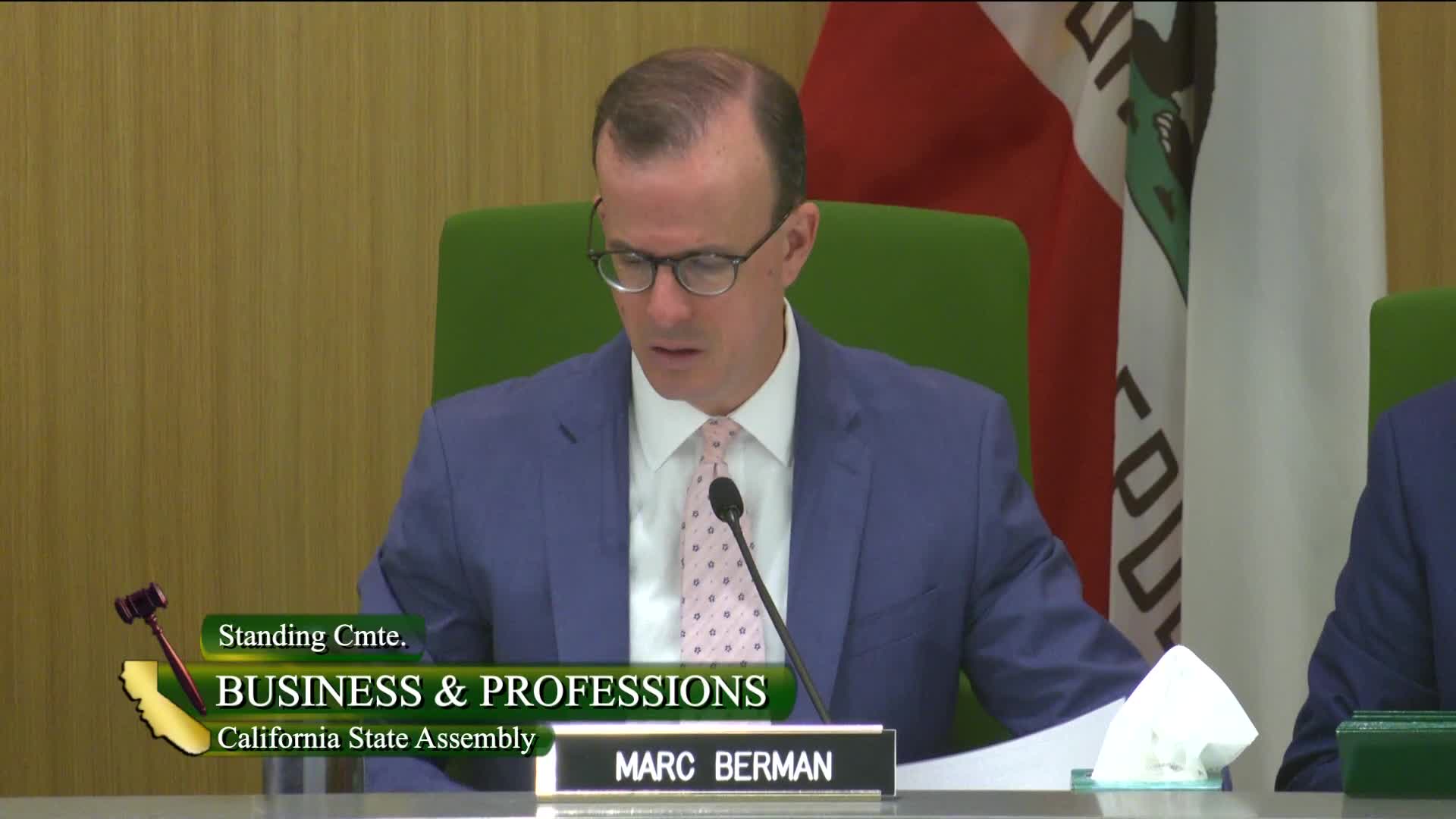
Assembly committee hears AB 260 to protect medication abortion access, removes provider names from labels
Summary
AB 260 would shield California reproductive-health providers and pharmacies that legally dispense mifepristone from disciplinary action, require continued health-plan coverage and expand telehealth access; supporters said the bill responds to federal threats while opponents raised safety concerns about medication abortions.
Majority Leader Aguirre Curry introduced AB 260 to the Assembly Business and Professions Committee as a bill aimed at protecting access to medication abortion in California, including the drug mifepristone, and at shielding health-care providers from out‑of‑state enforcement or federal actions.
The measure would bar disciplinary action against clinicians, pharmacies, clinics and hospitals that lawfully dispense medication abortion; require health plans to continue covering medication abortion; permit removal of prescribing clinicians’ names from medication‑labeling where that is legally possible; and expand telehealth access for medication abortion services. Supporters framed the bill as a response to recent, heightened legal and enforcement risks following the Dobbs decision and recent federal reviews of abortion‑related approvals.
Supporters who testified included Angela Pontes of Planned Parenthood Affiliates of California and Dr. Michelle Gomez, a family medicine physician and assistant clinical professor at the UCSF School of Medicine. Pontes said AB 260 would safeguard providers and patients from federal interference and called removal of clinician names from prescription labels an additional safety step. Dr. Gomez described using telehealth for medication abortion during the pandemic and said telehealth is safe, effective and expands access for people who live far from clinicians or who face transportation or caregiving barriers. She cited lawsuits brought against New York clinicians whose names appeared on medication bottles as evidence that California providers could face similar legal risk.
Opponents included Greg Burr of the California Family Council, who urged a “no” vote and argued the bill would remove safeguards from dispensing abortion pills. Burr cited an analysis he described as a large insurance‑claims study and said the data showed higher complication rates than clinical trials indicate; he warned that removing in‑person dispensing requirements and provider names would reduce transparency.
Assemblymember Bauer‑Kahan spoke in support of AB 260 on public‑safety and access grounds and urged colleagues to protect clinicians and patients. Majority Leader Aguirre Curry closed by asking for an aye vote.
Votes at a glance
When the committee later took votes, AB 260 was passed by the committee and referred to the Committee on Appropriations for further consideration. (The committee recorded the vote on the floor during the hearing; a roll‑call record is on the committee’s official minutes.)
Why this matters
Supporters said AB 260 responds to an immediate policy risk: legal efforts and administrative actions outside California that could chill clinicians from providing medication abortion or that could impose licensing or criminal jeopardy on clinicians who provide care to Californians or patients coming from other states. Opponents said the bill cuts safety safeguards and reduces transparency about who prescribes abortion medications.
The committee hearing included both clinical testimony about telehealth safety and policy arguments about provider protections and transparency. The bill’s provisions on removing clinician names from prescription labels and on mandatory health‑plan coverage were frequently cited by supporters as critical protections; opponents focused on safety and oversight of the dispensing process.
Next steps
AB 260 passed out of the Business and Professions Committee and will go next to the Committee on Appropriations for further consideration and potential fiscal analysis.