Get Full Government Meeting Transcripts, Videos, & Alerts Forever!
Get email alerts on the School Funding And Budget topic
No spam. Unsubscribe anytime.
Philadelphia leaders warn of looming school budget shortfall as district reports student gains and new programs
Summary
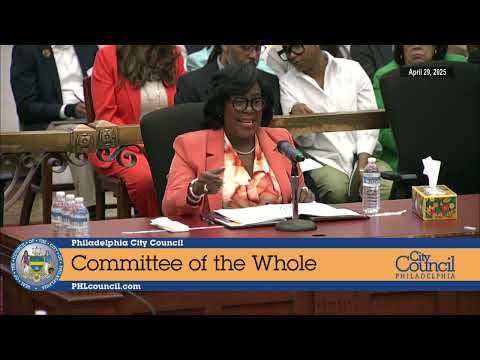
Philadelphia officials used a Committee of the Whole public hearing to outline recent gains in the School District of Philadelphia and to warn that the district faces a multiyear operating shortfall unless additional state and local dollars are secured.
Philadelphia officials used a Committee of the Whole public hearing to outline recent gains in the School District of Philadelphia and to warn that the district faces a multiyear operating shortfall unless additional state and local dollars are secured.
Mayor Cherelle L. Parker and School District leaders told council members the city has expanded after-school and extended-year programming, launched a municipal-employment pathway with Community College partners and seen measurable student achievement and attendance improvements — but that those gains rest on fragile revenue assumptions.
The mayor and district leaders presented program and performance data while underscoring the need for continued city and state support as the district prepares its fiscal 2026 operating and capital budgets, which remain subject to council approval this spring.
Mayor Cherelle L. Parker said the city and district are expanding supports for students and families and highlighted the mayoral administration’s role in funding those efforts. "I am proud to state for the record that our spring break camp that concluded a little more than a week ago was a great success with almost 1,660 students enrolling and a utilization rate of almost 90%, mister president," Parker said. She told council the administration intends to expand the current extended-day/extended-year pilot from 25 schools to 40 schools next school year and to grow long-term property tax support for schools as part of a five-year plan.
Board of Education President Reginald L. Streeter and Superintendent Tony Watlington Sr. presented district results they said show early academic progress and improved attendance. Watlington said, in the 2024–25 year the district’s enrollment rose for the first time in a decade, "our student enrollment increased this year for the first time in a decade by 1,841 students," and that the number of students attending 90% of the year has risen by more than 3,500 students.
District leaders described a suite of initiatives now in place or expanding next year: a network of 25 extended-day/extended-year pilot schools (20 district, five charter) that added roughly 7,000 seats for before- and after-school care and vacation programming; a City College for Municipal Employment (CCME) pilot with Community College and workforce partners that the mayor called a national first for municipal career pipelines; and curriculum upgrades in reading, math and scheduled next year for science.
At the same time district financial staff told council the district faces a structural operating gap once federal COVID-era relief funding ends and absent further state and local revenue. Chief Financial Officer Mike Herbstmann said the district expects to run a modest deficit this fiscal year and projected a substantially larger shortfall next year that would require using fund balance to avoid program cuts. Herbstmann described the near-term plan as using some reserves to "get through this year, with no impacts to people and programs that are working," while pressing for state and local revenue to stabilize finances in future years. He said the governor’s budget proposals are incorporated into current projections and that the county’s fiscal outlook would worsen if those proposals are reduced.
Council members pressed the administration and district on specifics: how much the city and commonwealth must provide, the impact of a proposed state cap on cyber-charter payments, the district’s five-year outlook for operating and capital deficits, and how labor negotiations might be handled amid constrained resources. Herbstmann told council that the governor’s proposed cyber‑charter cap would reduce district charter payments by about $70 million but that some offsetting changes would lower net impact to roughly $50 million in the district’s modeling. He also warned that the district’s fund balance would be materially reduced by planned deficit coverage and that, absent new recurring revenue, multi‑year operating shortfalls and a growing capital backlog remain risks.
Board and district officials also described ongoing work on facilities and school space planning. The board directed the district last year to complete phase 8 of a facilities master plan with a robust community engagement process; Watlington said the district is on schedule to deliver draft recommendations in the fall and final recommendations to the board in December. The facilities work aims to right‑size school buildings, expand pre‑K and advanced course access, and address long‑deferred repairs, but district and board leaders warned that new or renovated buildings alone do not guarantee higher achievement without stable staffing and programming.
Board members described Project RISE, the charter‑school oversight reexamination, and said the charter office is running a request‑for‑proposal process to identify an external partner to redesign charter accountability measures. Peng Chao, chief of the charter schools office, told council the process emphasizes transparency, continuous monitoring and supports for charter leaders.
Council members repeatedly asked about staffing in areas such as special education, school counselors and mental‑health supports. Deputy Superintendent Jermaine Dawson and other district leaders said counseling coverage and tiered mental‑health services have expanded and that the district is implementing a mix of counselor staffing, a STEP support program and third‑party telehealth supports in school buildings. District staff agreed to provide a written breakdown of counselor and other support‑staff positions and vacancies by school.
Several council members also pressed for more detail on when and how the district would engage communities if school repurposing or closures are proposed, and Watlington said any such process will include public and school‑level engagement and will be rolled out after the testing season.
The hearing continues the council’s budget review schedule: the district presented a lump‑sum budget earlier this spring, and the District and council will return to votes on the operating and capital budgets in May. Board and district officials repeatedly urged state lawmakers to accelerate adequate funding, noting the district’s reliance on a mix of state, city and federal funds and the long lead time required to close funding gaps.
Council President Kenyatta Johnson convened the hearing and emphasized that council and the administration must work together with the school board and state leaders to secure sustainable funding and protect programs. Watlington and board leaders said they will return written responses to several council requests for school‑level budget detail, staffing counts and additional data requested during the hearing.
The Committee of the Whole continues its budget hearings before the council’s May adoption deadlines.