Get Full Government Meeting Transcripts, Videos, & Alerts Forever!
Get email alerts on the School Buses Zero Emission topic
No spam. Unsubscribe anytime.
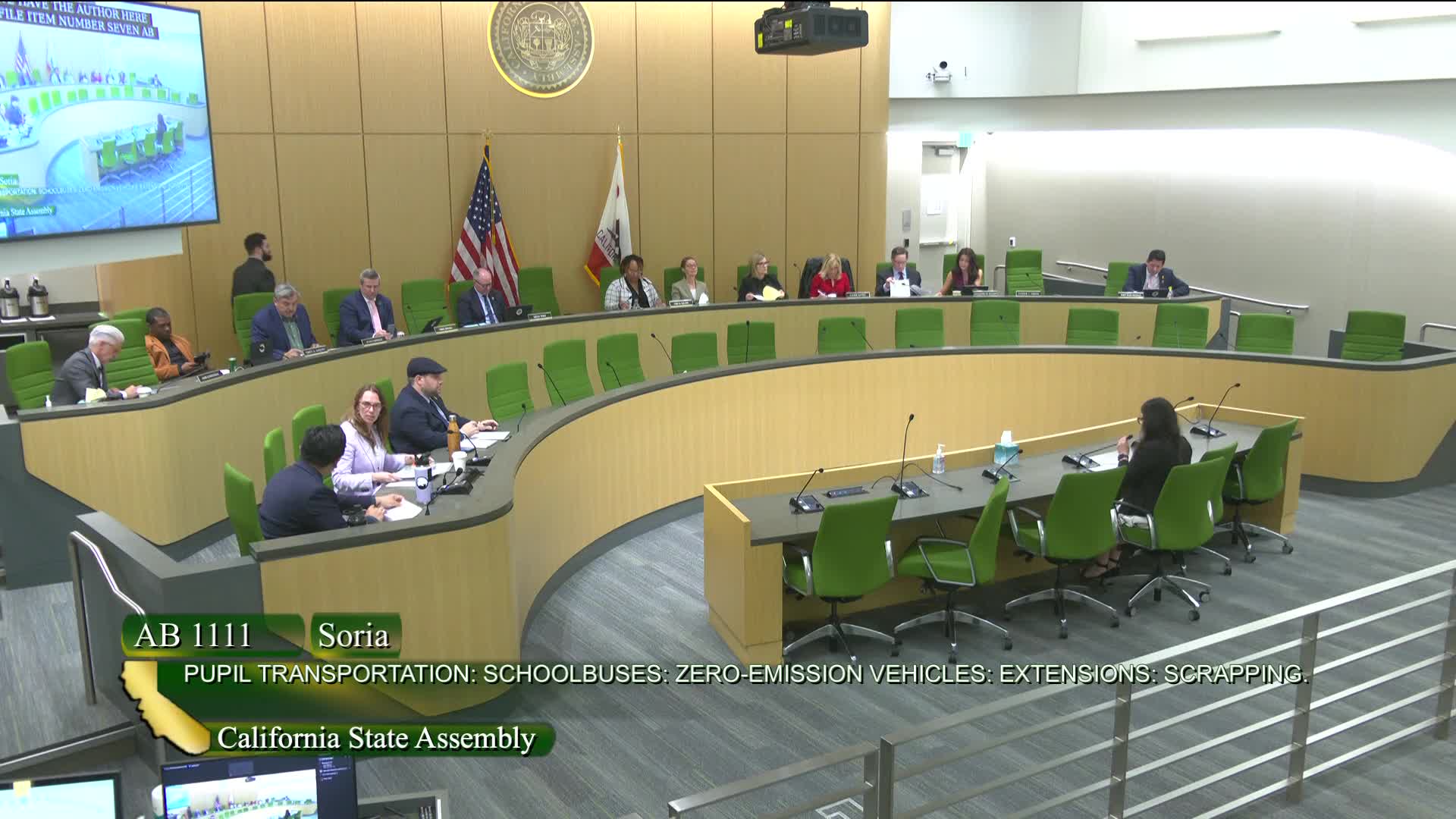
Panel advances bill to give small, rural districts more flexibility on zero‑emission school bus mandate
Summary
AB 1111 passed to Appropriations with amendments that expand waiver considerations to include infrastructure feasibility and allow bus transfers between districts; authors and district board members said the changes respond to rural districts' operational and cost challenges.
Assemblymember Soria introduced AB 1111 to add flexibility to California’s zero-emission school bus mandate. The bill, as amended, would allow additional consideration of electrical-infrastructure feasibility when evaluating waiver requests to the California Air Resources Board (CARB) and would modify an incentive program to permit transfers of buses between districts struggling to meet the mandate.
District representatives testified to operational challenges with current electric school bus technology: Renee Nash, a school board member from Eureka Union School District, said some electric buses she oversees have experienced charging and range problems and that rural districts face terrain, climate, and weight-limit constraints that complicate electric adoption. Beth Albiani of Elk Grove Unified said electric buses work for short routes and special-education needs but reported longer downtime for EV buses, greater replacement costs for batteries, and higher per-bus costs versus conventional buses. Industry groups (Advanced Energy United, CalSTART, California Electric Transportation Coalition) said they were reviewing committee amendments and appreciated the committee’s effort to focus the bill.
The committee passed AB 1111 as amended to Appropriations. Members said they seek to preserve the state’s emissions goals while making room for small and rural districts with unique operational challenges.