Get Full Government Meeting Transcripts, Videos, & Alerts Forever!
Get email alerts on the Early Intervention topic
No spam. Unsubscribe anytime.
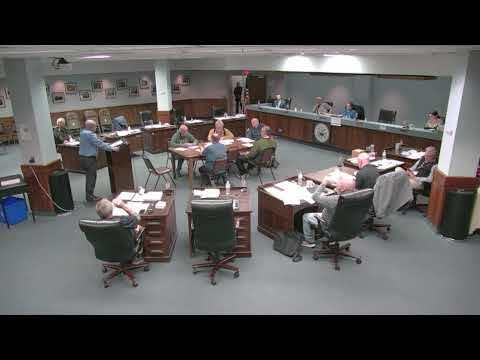
Seneca County officials propose hiring speech and physical therapists to address Early Intervention shortages
Summary
Seneca County public health officials told the Health & Human Services Committee they face a near-term shortage of Early Intervention providers and proposed hiring county speech-language and physical therapists; the Board of Health urged the county to move sooner rather than wait for the 2026 budget.
Seneca County Public Health Director Scott told the Health & Human Services Committee that the county is facing a shortfall of Early Intervention (EI) service providers and recommended adding county-employed clinicians to fill gaps that private contractors are no longer meeting. The Board of Health unanimously urged Scott to “move this forward sooner” and asked him to bring formal job descriptions and budget numbers to the full board.
The program serves children 0–3 with developmental delays and disabilities and connects families to speech, physical and occupational therapy, among other supports. Scott said speech-language services represent the largest need: "I will tell you right off, speech is the largest need. 80 percent of kids who are evaluated need speech." He told supervisors that, currently, 38 children are qualified for speech services but only three are receiving full services from licensed speech-language therapists; 21 are receiving partial substitute support from special-education teachers and 19 of those 21 are also qualified for special education. For physical therapy, 24 children are qualified and 14 are receiving services; 10 are on a waiting list.
Scott outlined three options: do nothing and hope private capacity returns; refer families to outside providers (which he said would shift burdens to families that often cannot travel or pay); or hire county clinicians. He said a year‑end regulatory change now permits the county public health director to serve as the required clinical supervisor, which makes hiring in-house clinicians feasible.
Scott gave preliminary cost estimates based on conservative billing assumptions. He said a full-time speech‑language therapist position would likely be near cost-neutral in the first year (an estimated net of roughly $4,300 in revenue over expense using conservative visit counts), while a full-time physical therapist position would likely add roughly $16,000–$17,000 annually to the county cost. Using average program size figures (the county averages about 65 children in EI), Scott said adding both positions would amount to an average additional cost of less than $200 per child annually. He also flagged startup needs: one or two vehicles for staff travel and modest supplies; he suggested one vehicle might be purchased this fiscal year by transferring existing early intervention transportation funds.
The committee heard that workforce trends—aging providers, longer and more costly education for therapists, low Medicaid reimbursement and lengthy state contracting (six to 12 months for new providers to enroll with the state)—have reduced local private capacity. Scott said the county is already not meeting the state requirement to begin services within 30 days when a child qualifies because providers are unavailable.
Board of Health members present voted unanimously at their meeting to urge quicker action; Scott said he will prepare civil‑service job descriptions, refined cost estimates that separate near‑term county cash flow (Medicaid/escrow lag) from annualized costs, and a plan for a personnel resolution to return to the board next month. Supervisors who spoke during the meeting expressed support for pursuing options that would accelerate services to the south end of the county, which staff said is harder to staff through private providers.
The health department will return with a firmer financial analysis and proposed job descriptions for committee and board consideration. If the board approves hiring, Scott said the county could use a mix of county‑employed clinicians and program revenue (Medicaid and escrow reimbursement) to cover a substantial portion of the cost over time.
The Health & Human Services Committee discussion also noted that preschool and school special‑education programs ultimately bear higher downstream costs if delays are not addressed in early childhood.