Get Full Government Meeting Transcripts, Videos, & Alerts Forever!
Get email alerts on the School Safety Residency topic
No spam. Unsubscribe anytime.
Residency and school safety update: cameras, dispatcher changes and 38 residency investigations this year
Summary
District security staff reported new safety measures and an active residency-investigation caseload: camera additions, a door‑labeling system for first responders, a pending change to the district call center vendor, and 38 residency cases handled this school year.
District security and residency staff described a series of safety and residency efforts and their operational impact.
Carlos (security and climate specialist and residency investigator) told the board the district has been working with police, fire and the bus company to add cameras and speed enforcement for cars that fail to stop for buses. He said administrators attended multi-day school-safety training through Western Connecticut State University and that the district is labeling doors inside and outside buildings with a system that helps first responders identify entry points more quickly.
Carlos said the district is replacing an out-of-state call center vendor (based in Ohio) with a new firm in New Jersey effective July 1; he reported current emergency call handling takes about a minute and the district's goal is to reduce that to 20–30 seconds. He also said the district turned on daytime door alarms at schools to notify staff when exterior doors open during school hours and to tie those alarms to the appropriate administrators.
On residency work, Carlos reported 38 cases this year. He explained his investigations typically include multiple surveillance visits (a minimum of four, not on consecutive days), checks in PowerSchool and other records, and careful scheduling so that findings are lawful and defensible at hearing. He described the due-process timeline in residency hearings: families have 10 days to request a hearing after a district notice, the hearing officer has 10 days to issue a decision, and families have 20 days to appeal to the state; the district reported no cases were appealed to the state this year.
Why it matters The measures seek to reduce emergency-response time, improve incident monitoring, and ensure residency determinations follow due process; the residency caseload and procedures have budget and legal implications for student assignments and transportation.
Provenance (transcript evidence) - Topic introduction (safety/residency): "Before I start, speaking about residency, I just wanna highlight a couple of the, things that I've been doing, working along with the police department and fire department to keep our schools safe." (transcript s=2342.365) - Dispatcher timing and vendor change: "So as of July 1, it's gonna be a different company out of New Jersey. Right now, it takes about a minute, which is still too long. My goal is to get that done anywhere between 20 to 30 seconds." (transcript s=2752.4302 to s=2774.21) - Residency caseload and process: "This year, we had a total of 38 cases... The cases that I work, they take I have to do at least 4 visits for surveillance... When we send the letter out telling the family that we do not we believe that they don't reside in town, at that point, they have 10 days to ask for a hearing, and we have 10 days to set up that hearing... that family has 20 days to appeal to the state." (transcript s=2862.58 to s=3102.8499)
Speakers (attribution whitelist) - Carlos — Security and Climate Specialist / Residency Investigator (district staff) (speaker identified in transcript as "Carlos"). - Miss Borges (Superintendent) — Superintendent (praised the work and referenced staffing and training). - Board members (various) — offered questions and praise during the update.
Clarifying details extracted from the meeting - Residency caseload this year: 38 reported cases (source: Carlos). - Minimum surveillance protocol: at least 4 visits; visits cannot all be consecutive; visits may begin as early as 06:30 for certain schools (source: Carlos). - Due-process timeline: family has 10 days to request hearing after notice; district has 10 days to set hearing; hearing officer has 10 days to issue decision; family has 20 days to appeal to state (source: Carlos). - Call-center vendor change: current vendor in Ohio; new vendor out of New Jersey effective July 1; current average call handling ~1 minute; district target 20–30 seconds (source: Carlos). - PowerSchool used as a data source for residency checks (source: Carlos).
Proper names and systems referenced - PowerSchool (student information system) - Western Connecticut State University (training partner)
Community relevance - Geographies: All Stratford schools; bus routes and roadways near school drop-off/pick-up. - Funding sources: district capital and operational budgets for cameras and security staffing; no new dedicated state funds mentioned for these items. - Impact groups: students, families under residency review, bus drivers and school resource officers.
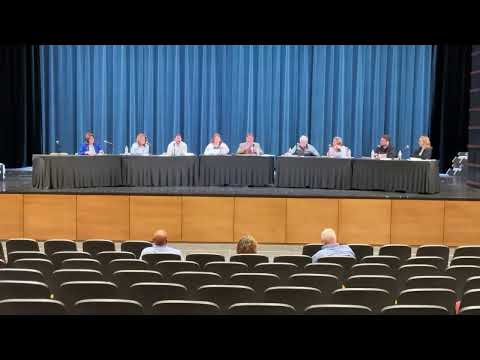
Meeting context The residency and safety update prompted follow-up questions from board members about response times, surveillance methods, and how the office coordinates with police dispatch; administrators praised Carlos for operational improvements and noted full staffing of security/climate specialist positions was recently achieved.