Get Full Government Meeting Transcripts, Videos, & Alerts Forever!
Get email alerts on the Housing topic
No spam. Unsubscribe anytime.
Advocates urge council to fund municipal vouchers, Rise Up cash program and keep transitional wellness center open
Summary
Dozens of residents and student groups used public comment to press the council to protect low-income households at risk from federal funding cuts, asking the city to fund municipal housing vouchers, continue the Cambridge Rise Up cash assistance program and keep the transitional wellness center open.
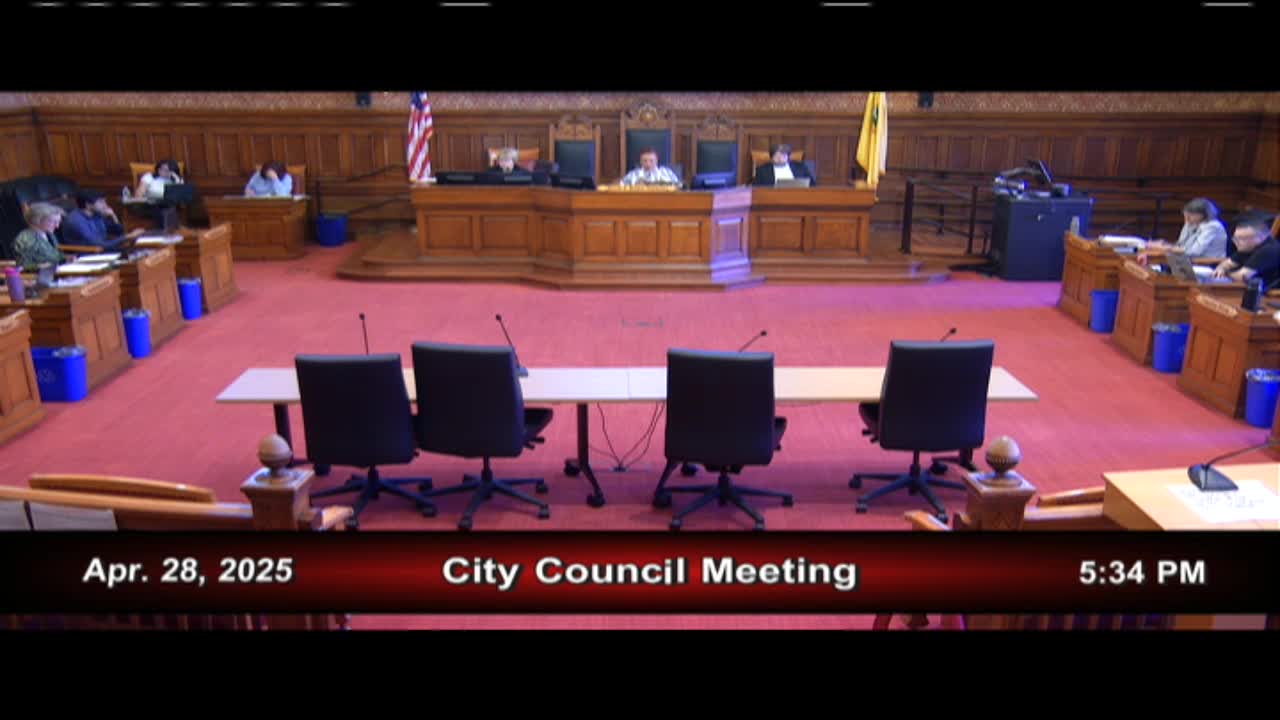
Public comment at the April 28 Cambridge City Council meeting was dominated by housing advocacy: speakers asked the council to use local funds to shore up programs threatened by federal cuts, arguing the city can afford modest tax adjustments to preserve services.
Speakers and requests: A series of speakers, including tenant advocates and student groups, asked the council and city manager to protect four specific programs and populations: emergency housing vouchers for formerly homeless residents, 42 mixed‑status families in Cambridge Housing Authority housing, the Transitional Wellness Center shelter beds, and Cambridge Rise Up cash assistance serving roughly 1,923 low-income families.
Popular pitch and cost estimate: Several speakers urged modest property tax increases to cover the gap. Alexandria Durant told the council, "A modest increase in property taxes, costing homeowners only $76 extra on their tax bill per million dollars could generate $9,000,000 to fully fund Cambridge Rise Up and the Transition Wellness Center." Other speakers repeated similar estimates and said a municipal voucher program could be seeded to protect households losing federal support.
Why it matters: Advocates described an urgent need stemming from federal funding changes that could displace vulnerable residents and close low‑threshold shelter beds. They urged the council to treat these as budget priorities and to consider forming a municipal voucher program to respond quickly to emergent housing loss.
Council response and next steps: Public comment closed on a 9-0 vote. The council heard related budget deliberations that evening; several members said they were open to discussing revenue scenarios during upcoming finance hearings. The public's appeals set the stage for budget committee testimony and staff follow-up. The council did not adopt a funding appropriation during the April 28 meeting.
Context: Commenters included tenants, community organizers, students and members of Cambridge Housing Justice Coalition and CHOW (Cambridge Housing Affordability Organizers). They cited prior council goal statements prioritizing affordable housing and asked the council to align the FY2026 budget with those goals.