Get Full Government Meeting Transcripts, Videos, & Alerts Forever!
Get email alerts on the Youth‑wellness‑coalition topic
No spam. Unsubscribe anytime.
Madison Heights Community Coalition presents youth survey data; student leaders outline prevention work
Summary
The Madison Heights Community Coalition presented results from the Michigan Profile for Healthy Youth and introduced its Youth Wellness Council, which highlighted marijuana use, mental‑health indicators and upcoming youth training and service activities.
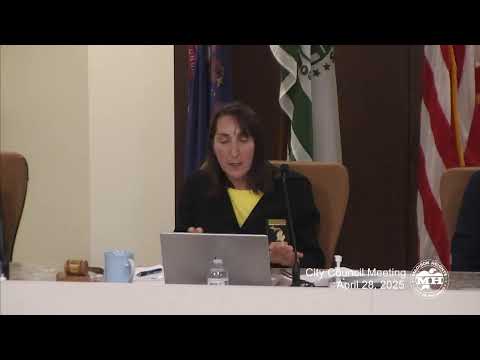
At a Madison Heights City Council meeting, the Madison Heights Community Coalition presented survey findings on youth substance use and mental health and introduced the student leaders of its Youth Wellness Council.
Kimberly Heisler, the coalition’s executive director, summarized district and county survey results drawn from the Michigan Profile for Healthy Youth (administered to 7th, 9th and 11th graders). Heisler said 11.6% of Madison Heights 9th and 11th graders reported past‑30‑day marijuana use, compared with 8.6% reported for Oakland County. “We know using marijuana is harmful,” Heisler said while noting lower perception of harm among Madison Heights students.
Heisler told the council the coalition uses perception‑of‑risk measures as an important indicator: 38% of Madison Heights 9th and 11th graders said using marijuana is harmful, compared with 47% countywide. She also cited middle‑school (7th grade) perception figures: 54% of Page Middle School students said marijuana use is harmful compared with 60.7% of Oakland County seventh graders. Heisler said roughly 350 Madison Heights students' responses were included in the local sample, versus 7,526 in the county dataset.
The coalition also shared mental‑health measures. Heisler said 38% of Madison Heights 9th and 11th graders reported feeling so sad or helpless for two weeks or more that they stopped doing usual activities; 18% of those students said they had seriously considered attempting suicide, compared with 15.6% countywide. Heisler said the schools asked the coalition not to share data on suicide attempts.
The council heard from student members of the Youth Wellness Council, who described meetings, outreach and recent activities. Chloe, the middle‑school YWC president, said members begin meetings with “Pows and Wows” — short check‑ins to name one difficult and one positive item that occurred that week — and learn mental‑health skills. Grace, vice president, described a bake sale the council ran to raise money for a local animal shelter; the students matched proceeds with local donors and used the funds to purchase supplies from the shelter’s wish list.
Student intern and YWC president Jordan Aaron said six students will attend CADCA’s mid‑year conference this July for training on substance‑use prevention and community leadership. The coalition asked the city and residents to support youth programming and noted concerns about local cannabis retail density (Heisler said Madison Heights has three dispensaries with two more proposed) as a factor shaping youth perception and availability concerns.
The presentation was informational; no council action was tied to the report. Council members praised the students and thanked the coalition for data collection and youth programs. Heisler said the coalition collects local survey data, runs prevention and leadership programs, and plans community outreach and fundraising to expand the Youth Wellness Council’s work.