Get Full Government Meeting Transcripts, Videos, & Alerts Forever!
Get email alerts on the Public Art topic
No spam. Unsubscribe anytime.
Artist proposes large floral mural on Granary building; committee flags ivy and brick concerns, no formal vote
Summary
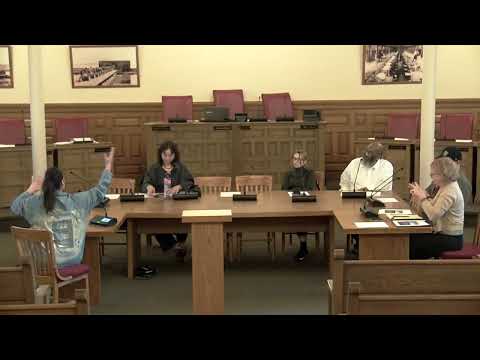
An artist presented plans for a large floral-and-hummingbird mural on the side of a Granary building in Syracuse; committee members praised the design but raised concerns about ivy damage and brick condition. The meeting lacked a quorum, so no formal approval was taken.
An artist showed a mural design for the side of a building at the Granary in Syracuse during a Syracuse City committee meeting; the design features oversized flowers, hummingbirds and preserved sections of exposed brick intended as a photo opportunity, but committee members urged inspection and possible masonry work because existing ivy may have compromised the wall.
The artist, Jacqueline, said the mural would be painted on “the other side of Inspire on the Granary,” that she plans to leave some raw brick exposed to preserve the building’s history and that the daisies in the design are “secretly for my nana.” She described using primer and spray paint for the floral areas and an exterior primer/paint on the upper sky section so the piece reads from the nearby highway.
Committee members commended the design but repeatedly raised questions about the condition of the wall where the ivy was removed and about how the artist would prepare the surface. One committee member asked, “Are you gonna do any kind of treatment on the parts that you’re painting?” and warned that “when you pull the ivy off, it might pull some brick to be frank in the more dense areas.” Another committee member noted that brick can have a glaze that, if compromised, “then the brick is like, and then it’s a different surface basically,” and recommended consulting a mason or using mortar and primer to stabilize damaged areas.
Jacqueline told the committee she intends to remove the remaining ivy herself and, if necessary, contract masonry help. She said the building owner has a personal contractor she could contact and that she would notify the committee if she encounters structural issues requiring a different approach: “If I felt like, oh, you know, how you were saying, like adjusting things, that would be something that I would record, let you guys know along the process.” She also said she would use more durable metallic paint in areas where older gold spray paint had faded.
Committee members and the artist discussed technical details including: leaving patches of raw brick for historic texture, using primer and exterior paint on cement portions of the wall, possible use of mortar to fill loose areas, and renting a lift to reach upper sections. The artist said the owner of the building supported the mural and that the insurance company had previously required removal of ivy because of concerns about foundation damage.
Because the meeting did not have a quorum, the committee did not take a binding vote on the mural. A member informally nominated Emmanuel as chair for the meeting and members indicated assent, but the artist and committee acknowledged that formal approval would await a future meeting with a quorum. The meeting concluded with a formal motion to adjourn that was seconded and carried.
The artist said she is eager to proceed if the technical checks and any necessary masonry work are manageable: “I’m so excited. I hope this is a go. I’m really excited to do this.” The committee agreed to follow up; one member said she would “be in touch tomorrow, Jacqueline” to coordinate next steps and timing for a formal vote.
Notes: no funding sources, permits, or specific timeline for installation were discussed during this meeting. Any required building repairs, structural inspections, or permits were described as possible next steps but were not specified or scheduled.