Get Full Government Meeting Transcripts, Videos, & Alerts Forever!
Get email alerts on the Transportation Safety topic
No spam. Unsubscribe anytime.
West Warwick to receive final Safe Streets for All safety action plan; adoption would allow grant applications
Summary
A consultant told the West Warwick Town Council that a final roadway safety action plan under USDOT's Safe Streets for All program will be delivered soon; adoption would let the town compete for implementation grants but state jurisdiction of many roads could affect which projects the town pursues.
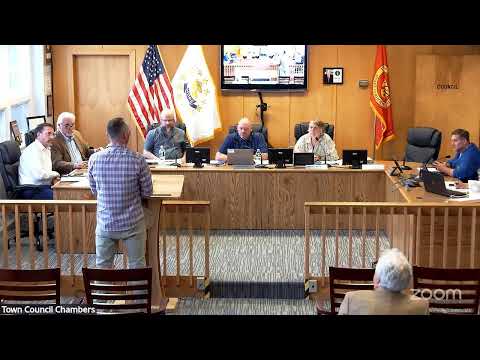
Eric Weiss, a transportation planner with Bowman, told the West Warwick Town Council on April 22 that the town will soon receive a final roadway safety action plan developed through the federal Safe Streets for All program.
The plan, built from a five-year crash dataset covering Jan. 1, 2019, through Dec. 31, 2023, applies the U.S. Department of Transportation's "safe system" approach and highlights locations, countermeasures and priorities the town could adopt to reduce fatalities and serious injuries. "Safe Streets for All is a grant program out of United States Department of Transportation," Weiss said, describing the federal program behind the plan.
Why it matters: adoption of the safety action plan would make West Warwick eligible to apply for competitive Safe Streets for All implementation grants, which Weiss said typically range from $2.5 million to $25 million; the program requires a 20% local match in this funding round. The plan therefore could unlock larger projects described in the document, from low-cost signal improvements to higher-cost roadway work, if the town pursues funding and wins awards.
Weiss described three analytic products the team used: a baseline crash "heat map" showing fatal and serious-injury crashes; a statewide "high-risk network" that identifies road characteristics linked to future crashes; and a combined high-injury network that merges the two. The consultant also provided charts showing that most severe crashes in West Warwick occur weekday afternoons and that crashes affecting pedestrians and bicyclists are more likely to cause serious injury. The consultant said the plan places special emphasis on vulnerable road users.
The plan's recommendations incorporate both data and public engagement. Weiss said the team conducted outreach at a farmer's market, interviewed stakeholders (including patrol officers and food pantries) and used a statewide survey with ZIP-code tracking to isolate local responses. He said the draft includes site-by-site observations with recommended countermeasures and cost estimates, and that the task force prioritized locations using a vote of criteria that included whether a location is under local control.
The consultant described the list of USDOT "proven countermeasures" that informed recommendations and gave examples: improved crosswalk visibility and retroreflective signal backplates. Weiss said some countermeasures are low-cost; his presentation cited studies showing pedestrian-visibility upgrades can reduce pedestrian injury crashes by as much as 40 percent.
Council members and staff asked how state-owned roads would be handled. The consultant said many high-risk intersections statewide are on state roads and that towns commonly prioritize projects they control because state projects require additional coordination and permitting. He said RIDOT has been reviewing plans and that RIPTA and RIDOT have negotiated a memorandum of understanding to include state agencies in the process rather than setting up an adversarial review. "We asked the task force to vote on the criteria'one of the criteria was is this intersection or roadway under local control," Weiss said.
On timing and next steps, Weiss said the project team is waiting for comments from RIDOT and the state's statewide planning office before finalizing the plan; he estimated the final version could be ready in about one to two weeks but cautioned the schedule depends on those reviews. He added that adoption by the town is optional and not a commitment to build projects: "You're not making any commitment at all," he told the council, but he said the plan provides a roadmap for where to focus safety work and helps the town apply for funding.
The consultant also warned the implementation grants are competitive and nationwide; he said there is not a guaranteed set-aside by state. "It will be competitive," he said, and noted municipalities will compete for roughly half a billion dollars available in the implementation round nationally.
The council did not take action to adopt the plan at the April 22 meeting; Weiss asked for the town to review the final plan once RIDOT and statewide planning submit comments so West Warwick can decide whether to adopt and pursue implementation funds.
Ending: The final safety action plan and the town's decision on adoption are expected to be presented to the council after the consultant receives RIDOT and statewide planning comments. If the town adopts the plan, it would be eligible to apply for Safe Streets for All implementation grants that require a 20% local match and are awarded competitively.