Get Full Government Meeting Transcripts, Videos, & Alerts Forever!
Get email alerts on the Mandatory Reporting Resolution topic
No spam. Unsubscribe anytime.
Senate rejects resolution urging mandatory-reporting requirement for public officials
Summary
The North Dakota Senate voted down House Concurrent Resolution 3,037, a nonbinding measure urging next session to consider making public officials mandatory reporters, after floor debate about scope, training needs and unintended consequences.
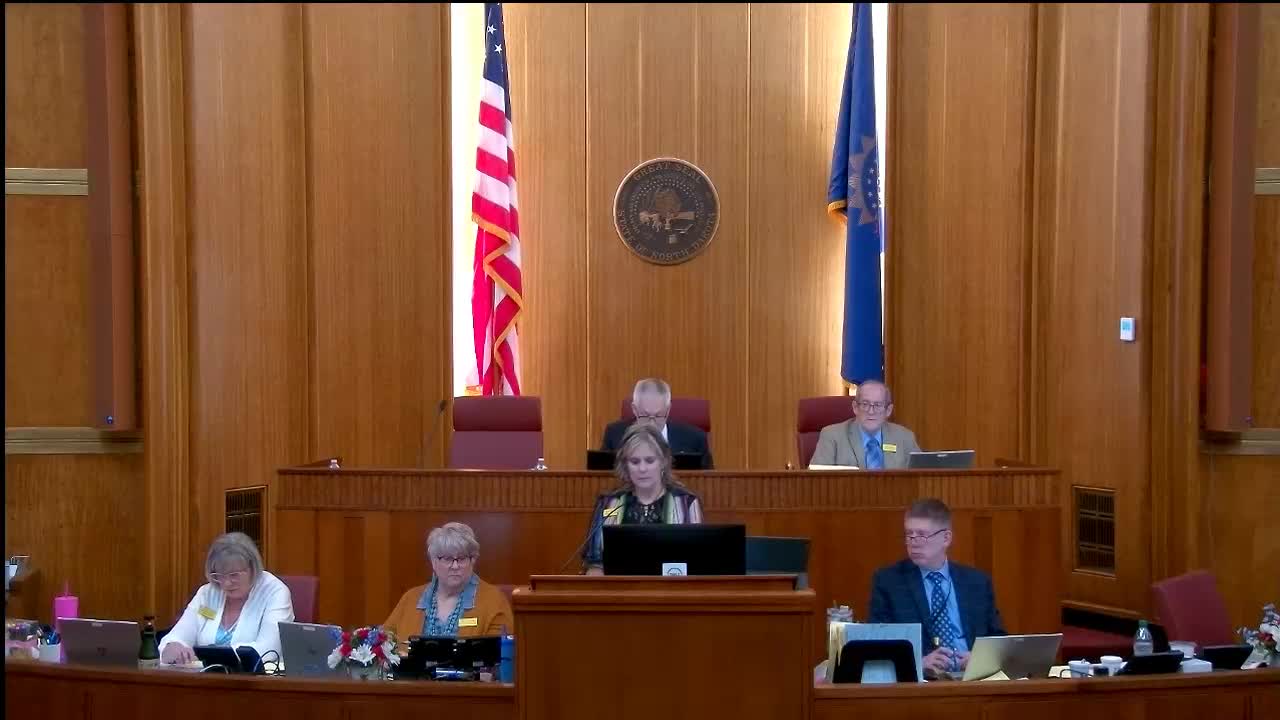
The North Dakota Senate on Friday rejected House Concurrent Resolution 3,037, a nonbinding measure urging the Seventieth Legislative Assembly to consider requiring public officials to be mandatory reporters of child exploitation and abuse.
Supporters said the resolution signals concern about child exploitation; opponents said making all public officials mandatory reporters would be broad, impractical and risk swamping child-protection systems. The chamber voted by voice; the presiding officer announced that the resolution failed.
The resolution had been placed on the floor after a motion to suspend the rules. Senator Sarah Klein moved that the resolution be printed and placed immediately on the calendar; that motion was adopted. Debate followed from both sides of the chamber.
Senator Bridal, a vocal opponent on the floor, described the proposal as a political response to prior misconduct and argued the change would be “a political knee jerk reaction that accomplishes absolutely 0.” Bridal said many mandated reporters in current law are professionals who encounter children in an official capacity—nurses, doctors, social workers, counselors and clergy—and asked senators to consider differences in exposure and training before expanding the class of mandated reporters.
Senator Rohrs and others raised statutory and procedural concerns. Rohrs cited the language of North Dakota statute he referenced on the floor and noted that current law requires reports to the Department of Health and Human Services or its authorized agent when knowledge arises in an individual’s official or professional capacity. He warned that adding elected officials could create duplicate reports and could “bog down” child-protection workers with repeated notifications of matters already reported.
Several senators who are licensed social workers or otherwise subject to mandatory-reporting laws emphasized the need for training. Senator Mather, who identified herself as a licensed social worker, said mandated reporters must complete hours of training when relicensing and that legislators would need similar training to distinguish cases properly.
After debate the Senate proceeded to a voice vote on final passage. The presiding officer announced, “Nay. House Concurrent Resolution 3,037 has failed.” The motion to suspend rules that brought the resolution to the floor had been sponsored by Senator Klein; no formal recorded roll-call on final passage was taken in the transcript provided.
The resolution was nonbinding: it urged the next standing legislative assembly to consider a statutory change but did not itself create a reporting obligation. Opponents repeatedly emphasized that existing law and reporting channels—local law enforcement, the BCI and the Attorney General’s office, and DHHS—already handle mandated reports.
With the resolution defeated, senators left open the option of statutory proposals in the next session to address concerns about child exploitation, but no further action on this resolution was recorded on the floor during the session excerpted here.