Get Full Government Meeting Transcripts, Videos, & Alerts Forever!
Get email alerts on the Camp Rebuild topic
No spam. Unsubscribe anytime.
Ventura County planning commission approves major modification to Camp Hess Kramer rebuild with conditions encouraging local nonprofit use
Summary
Ventura County Planning Commission on Thursday approved a major modification to Conditional Use Permit LU10-0069 for Camp Hess Kramer, certifying a mitigated negative declaration and adding a condition encouraging use by Ventura County nonprofit organizations.
Ventura County Planning Commission on Thursday approved a major modification to Conditional Use Permit LU10-0069 for Camp Hess Kramer, a Wilshire Boulevard Temple Camps property in Malibu, certifying a mitigated negative declaration and adding a condition that encourages use by Ventura County nonprofit organizations.
The action applies to case PL21-0051, which requests phased reconstruction and continued operation of the camp following extensive damage in the 2018 Woolsey Fire. County case planner Noah Torres described the request as “a major modification to conditional use permit LU10Dash0069.”
The modification authorizes rebuilding camp buildings, vehicle and pedestrian bridges, outdoor activity areas, and infrastructure such as water, wastewater, electrical and storm drainage systems. The applicant requested a 20-year extension of the current CUP — from its expiration in 2034 to 2055 — and the permit will retain previously approved population limits.
Why it matters: Camp Hess Kramer has hosted outdoor education, recreational programs and nonprofit partners for decades. The commission found the project consistent with applicable coastal- and overlay-zone findings after environmental review; the decision allows the owner to rebuild on place while imposing mitigation measures and operational conditions intended to limit environmental and public-safety impacts.
The planning staff’s environmental review identified both restoration and impacts. Torres told commissioners the project site encompasses about 187 acres and that restoration work along Little Sycamore Creek would cover roughly 2.87 acres and about 4,309 linear feet of creek corridor. He said the rebuild would result in approximately 2.75 acres of permanent impacts to environmentally sensitive habitat areas (ESHA) and about 5.026 acres of temporary ESHA impacts, along with about 0.5 acre of permanent impacts to waters and wetlands and 8.93 acres of temporary impacts to waters and wetlands. The plan also calls for removal of 88 protected trees and encroachment into the protection zone for roughly 172 additional protected trees.
The applicant’s agent, Ginger Anderson, told the commission she and the design team coordinated extensively with county staff and emergency services and said, “We are confident through all of this coordination and collaboration that the Woolsey Fire rebuild project is a quality project for the county of Ventura.” Doug Lynn, the camp’s executive director, said most of the camp’s use is by nonprofit organizations and that the property historically hosted thousands of children a year for outdoor education and nonprofit programs.
Fire and safety questions were central to the hearing. Commissioners asked whether Ventura County Fire reviewed the plans, how fire water and pumps would be provided, whether on-site tanks and hydrants will be required, and whether evacuation procedures and restrictions during high fire danger are part of the conditions. Staff and the applicant said the county fire department reviewed the project and that the permit includes standard fuel-modification and fire-protection conditions; staff said there are 24 conditions applied by Ventura County Fire. Torres and applicant representatives said the camp will rely on on-site tanks, hydrants, backup generators and a “specialized system” for water pressure in uphill areas; they also said construction will have to meet current building-and-safety and fire-hardening codes when building plans are submitted. Staff said an evacuation plan was not specifically listed among the permit conditions, and the applicant said its operations include evacuation procedures and that American Camp Association accreditation standards require an evacuation plan.
Commissioners clarified that the rebuild does not seek to raise the previously approved population capacities: staff identified a maximum overnight population of 557 and a maximum daytime population of 657 as the limits carried forward from the prior permit. Parking remains at the 48 spaces established under the earlier variance. Staff also noted that not all third-party or nonprofit uses are treated the same in the permit: programs that operate within the camp’s normal population and schedule (for example, recurring outdoor-education groups) are not considered “third-party events,” whereas larger gatherings that would exceed normal population or involve amplified outdoor activities would be classified and limited under the third-party-event rules.
Public comment was strongly in favor of rebuilding. More than two dozen speakers — including former campers, longtime staff, nonprofit partners and neighbors — described personal ties to the site and the camp’s role hosting outdoor education, homeless youth programs and other nonprofit activities. Several public speakers emphasized the camp’s role serving underserved youth and nonprofit partners such as Camp Harmony and LA County outdoor-education programs.
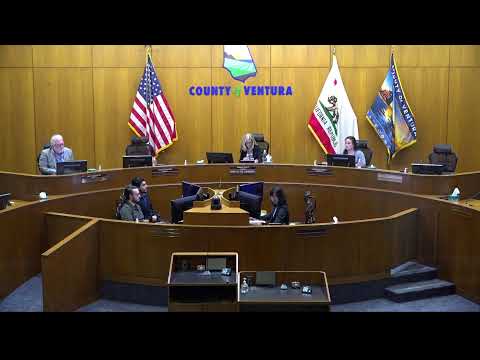
After discussion, Commissioner Maria Garcia moved to approve staff recommendations and the errata memo and to add language encouraging use by local nonprofits; Commissioner Boydston seconded. Staff read the change into the record: “Use of Camp Hess Kramer by Ventura County nonprofit organizations will be strongly encouraged.” The commission voted 3-0 (Commissioner Boydston: yes; Commissioner Garcia: yes; Chair Kesely: yes) to certify the mitigated negative declaration, adopt the required discretionary findings, grant the major modification to CUP LU10-0069, authorize the requested deviation for outdoor lighting standards, and incorporate the project-specific mitigation and conditions described in the staff report.
What the approval requires next: the permit approval includes exhibitized conditions (mitigation measures, habitat monitoring, construction- and operation-level controls, and coordination with state agencies); final building and fire-safety plans must still be submitted and approved by the county building and fire divisions. The county will also transmit materials exchanged with the California Coastal Commission and state agencies; staff reported receiving comments from the California Department of Fish and Wildlife and Caltrans and said the Coastal Commission had no further questions after an exchange earlier in the week.
The commission’s approval preserves the camp’s location and permitted scale but allows the owners to replace destroyed and damaged structures, rebuild infrastructure, and proceed with creek restoration subject to the mitigation measures and conditions of approval. The record shows the permit extension and phasing plan are intended to enable reconstruction focused initially on Lower Camp, with hilltop work occurring in later phases as financing and phased plan approvals are completed.
Votes at a glance: Planning Commission approval (PL21-0051) — motion by Commissioner Maria Garcia; second by Commissioner Boydston; vote 3-0; outcome: approved. Adopted items: certify MND; grant major modification to CUP LU10-0069; extend permit through 2055; adopt mitigation measures and conditions including county fire requirements and project-specific biological and stormwater controls; add staff language encouraging Ventura County nonprofit use.
This decision is subject to any administrative review paths in county code and the usual timelines for appeals or filings with the Coastal Commission where required.