Get Full Government Meeting Transcripts, Videos, & Alerts Forever!
Get email alerts on the Public Safety Technology topic
No spam. Unsubscribe anytime.
Mankato council hears strong public opposition and mixed survey results on proposed ALPR, AI video and trailer cameras
Summary
City staff summarized 30 days of public comment on proposed Milestone AI video upgrades, Axon and Flock automated license‑plate readers and mobile trailer cameras; residents voiced privacy, civil‑liberties and environmental concerns and the council requested revisions to draft policy and further review.
The Mankato City Council held a public hearing on proposed public‑safety technology upgrades — Milestone video system AI tools, Axon automated license plate readers, Flock fixed ALPR cameras and mobile trailer surveillance cameras — and listened to more than a dozen residents who expressed privacy, civil‑liberties and environmental concerns.
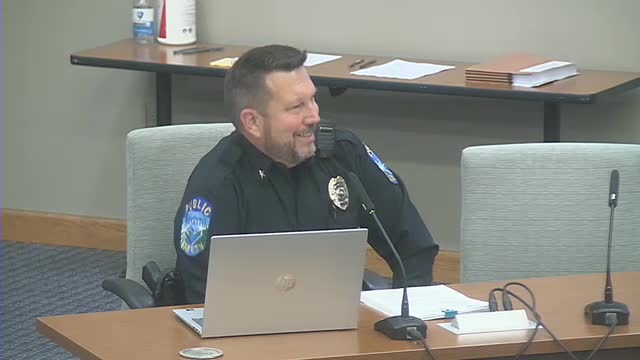
Director Jeremy Clifton summarized an Every Voice Mankato public comment period held March 25–April 23 and the staff packet. Clifton said 62 responses were recorded on the survey portion: 49 of 62 respondents said improving community safety through new initiatives and technologies was at least somewhat important; 42 of 62 were at least somewhat supportive of using advanced technology for safety; and 46 of 62 would at least somewhat agree with investing in new technologies to keep Mankato safe. He reported sentiment percentages for individual proposals: Milestone enhancements ~41.9% positive; Axon ALPR ~55% positive; Flock fixed ALPR ~54.2% positive; mobile trailers ~45.8% positive. Staff also logged at least 34 emails (to the date of the summary), at least two voicemails and additional comments on the Every Voice portal, and noted many emails with similar content originating from a single domain.
Clifton emphasized restrictions in draft policy and state law. He said access to recorded data would be limited by individual logins and passwords with electronic audit trails; staff access would be authorized only for legitimate law‑enforcement purposes and most uses would require a case number. He said the technology could not be used to track a person or a vehicle without a judge‑signed warrant and the systems would be subject to a biannual independent audit. “You can only access these databases for legitimate law enforcement purposes only,” Clifton said. He also cited Minnesota law governing ALPR use and told council that staff were seeking to purchase the equipment with state public‑safety aid funds.
City Manager Susan Arnds reiterated the city’s policy 4.14 on immigration‑related actions and said officers “should not detain any individual for any length of time for a civil violation of federal immigration laws or a related civil warrant.” She cited federal regulation 8 CFR 287.7, saying a detainer alone does not authorize local detention absent a warrant or probable‑cause affidavit.
During the public hearing, speakers repeatedly objected to the technologies. Chris Shane Stedt opened with a quotation and asked the council to forego the equipment, saying local assurances cannot prevent federal reuse of shared data. “Those who would give up essential liberty to purchase little temporary safety deserve neither liberty nor safety,” Stedt said. Other residents raised similar themes: potential sharing with a nationwide Flock network, the possibility of access by federal agencies such as ICE, documented bias and accuracy issues with AI systems, and uncertain environmental impacts of AI processing. One commenter said more respondents opposed the proposals than staff’s summary indicated.
Council members pressed staff on specific points. Council member McLaughlin asked whether active tracking in real time would require a warrant; Clifton said active tracking while pursuing a suspect requires an active criminal investigation and a judge‑signed warrant, while retrospective searches for recorded footage in response to a reported crime do not. Council members asked how other agencies use the technology; Clifton said staff had reviewed other agencies’ policies and would mirror language that had proven effective. Council member Metler asked who would perform the required audits; Clifton said the audits would be independent and conducted every two years, and Rampart Audit LLC could be among the firms considered.
Several speakers urged the council to reject the technologies outright or to delay any purchase. Speakers also requested environmental impact information about AI computing. Supporters and some survey respondents cited faster investigations, criminal deterrence and efficiency.
Council members did not vote on any purchase or ordinance. Instead the council asked staff to return with modifications to the draft policy and further analysis and suggested the item be discussed in a future council work session before any formal action. City staff said they would use the public comments to revise policies, consider more frequent auditing and provide clearer explanations of data‑sharing and access rules before any procurement or activation of systems.