Get Full Government Meeting Transcripts, Videos, & Alerts Forever!
Get email alerts on the Panhandling Right Of Way topic
No spam. Unsubscribe anytime.
Council rejects motion to schedule public hearing on ‘unlawful transfer’ right-of-way ordinance
Summary
A City Council motion to direct the city manager to schedule a public hearing on an ordinance that would ban passing goods or money to people from vehicles in travel lanes failed after councilors debated constitutional concerns and traffic-safety evidence.
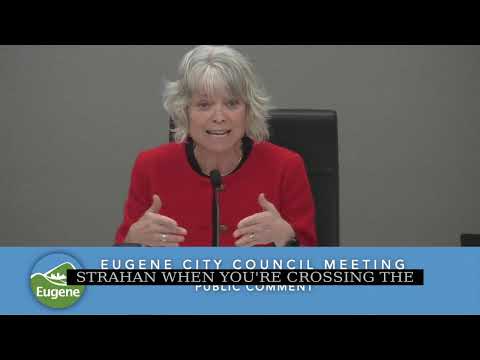
A motion to direct the city manager to schedule a public hearing on an ordinance prohibiting the passing of goods or money from vehicles in travel lanes failed at the April 28 Eugene City Council meeting, with the vote counted at 3 in favor and 5 opposed.
Councilor Clark moved the procedural motion to send the ordinance to a public hearing. Councilor Clark said the public hearing would be the “next logical step before we have a final discussion about it” and that taking the hearing first would save a later work session.
The debate centered on whether the ordinance — described by some councilors as aimed at unsafe conduct in travel lanes and by others as a repackaged anti‑panhandling law — is a proper use of council time and whether it would survive constitutional review.
Councilor Zelenka opposed the motion, saying the measure would be unconstitutional. “The reason I opposed this before, and said that was unconstitutional, is because it's well established Oregon law that anti panhandling laws are unconstitutional in Oregon,” Zelenka said. He argued the draft ordinance was “clearly targeted at homeless people panhandling” and that similar laws had been struck down in court.
Councilor Groves, speaking in support of pursuing the ordinance, cited data he said from Portland and emphasized pedestrian fatalities involving people experiencing homelessness: “Portland's actually collected data on the number of, homeless people involved in vehicle pedestrian accidents. … We have a high percentage of vehicle fatalities with pedestrians, and they're almost all in corridors where we have larger populations of unhoused people.”
Councilor Kyshynsky expressed skepticism that the activity targeted by the ordinance had led to serious injury crashes in Eugene and suggested other traffic‑safety priorities such as speeding and red‑light running might warrant more attention. Councilor Keating said he was likely to support the ordinance but opposed bypassing parts of the normal process, noting several councilors had not participated in prior work sessions on the topic.
When the council voted, the motion failed, 3–5, meaning the council did not direct staff to immediately schedule a public hearing on the proposed “unlawful transfer on vehicular portions of the right of way” ordinance.
Council members did not take final action on the ordinance itself during the meeting; the motion before the council was procedural (to schedule a hearing). The transcript does not record a later hearing date or an adoption vote for that ordinance.
Given the constitutional concerns and the disagreement among councilors about the scope and priority of the proposal, the ordinance’s future depends on whether supporters return with a revised draft or pursue further study and additional work sessions before bringing it back to the council.
Votes and formal actions
Motion: Direct the city manager to schedule a public hearing on an unlawful transfer on vehicular portions of the right-of-way ordinance. Mover: Councilor Clark. Second: not specified in the transcript. Vote: 3 yes, 5 no. Outcome: failed.