Get Full Government Meeting Transcripts, Videos, & Alerts Forever!
Get email alerts on the Public Safety Unarmed Response topic
No spam. Unsubscribe anytime.
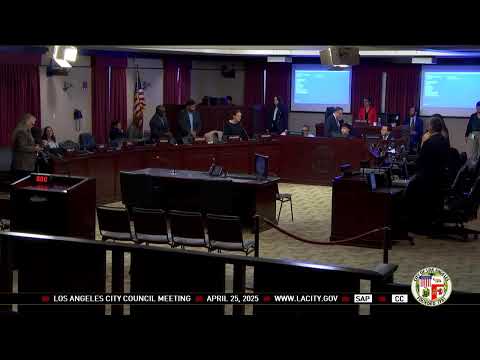
City Council honors year-old unarmed crisis response program after 6,000-plus dispatches
Summary
Councilmembers recognized the city’s Unarmed Model of Crisis Response (UMCR) for a year of operations, citing data from providers: roughly 6,000 calls handled, an average on-scene cost of $35, and backup requested from police on about 4% of calls.
The Los Angeles City Council recognized the first year of the city’s Unarmed Model of Crisis Response (UMCR), a network of community-based teams that respond to selected nonviolent crises without uniformed police officers.
Why it matters: Council leaders described UMCR as an alternative public-safety response designed to reduce traumatic outcomes and to deploy clinicians, crisis specialists and peer responders to incidents where a nonarmed approach is appropriate.
What council heard: Councilmember Blumenfield and Councilmember Eunice Hernandez led the presentation on the council floor, calling UMCR “a program born in community.” Hernandez cited program statistics: an average on-scene response cost of $35, more than 6,000 calls responded to in the program’s first year, and about 4% of calls that required LAPD or other law-enforcement backup.
Program providers and examples: Vanessa Willis of the City Administrative Officer’s office introduced provider representatives from Penny Lane Centers, Exodus Recovery and the Alcott Center. Exodus responder Kiara Long described night-shift work and said she had been dispatched to more than 200 calls. Penny Lane’s Azad Abed Steven recounted a neighborhood de-escalation involving a combat veteran living on a sidewalk; the account emphasized mediation, neighbor education and connection to services. Alcott Center representative Ashley Yusufu said UMCR has helped increase housing placements and diverted thousands of calls away from law enforcement.
Costs and funding: Alcott Center’s remarks cited an annual UMCR budget of approximately $14,000,000 and contrasted that figure with the LAPD budget figure referenced on the council floor. Presenters and councilmembers framed the program as both a fiscal and a public-safety intervention.
Council response: Multiple councilmembers — including Marquise Harris-Dawson, Raman, Soto-Martínez and Nazarian — praised the program’s outcomes and urged continued institutional support and expansion. No formal vote or policy change was recorded during the recognition; the session served as a public acknowledgment and status update.
Next steps: Councilmembers urged continuing funding and integration of UMCR models across the city and requested ongoing reporting from the CAO and provider partners.