Get Full Government Meeting Transcripts, Videos, & Alerts Forever!
Get email alerts on the Climate Action Plan topic
No spam. Unsubscribe anytime.
Planning Commission reviews draft Climate Action Plan update; questions raised about remodel performance rule and implementation details
Summary
Commissioners and public discussed the city’s draft Climate Action Plan update, including emissions targets, EV charger goals and a proposed building performance measure that would affect substantial residential remodels. Commissioners asked for clearer definitions and cost/implementation details; the item was a study session with no formal vote.
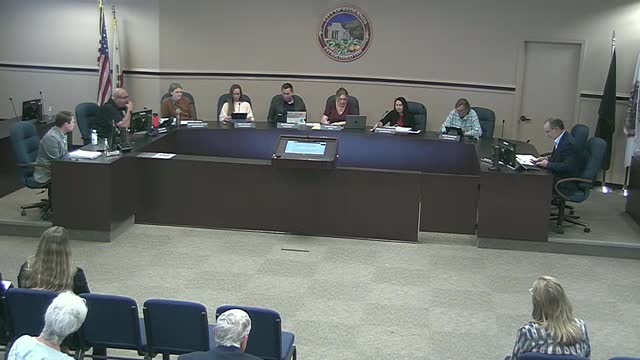
The Redlands Planning Commission held a study session April 22 on the draft Climate Action Plan (CAP) update, reviewing proposed greenhouse gas reduction measures, community outreach results and next steps toward a final CAP and accompanying CEQA analysis.
Consultant Diana Bosca (presentation delivered on behalf of the consultant team) summarized the update’s purpose: to track progress toward the city’s 2030 and 2050 greenhouse gas targets set in the 2017 CAP and to update the targets and strategies. The consultant presented a preferred strategy intended to reduce per‑capita emissions toward a target of 1 metric ton CO2e per capita by 2050, and to achieve substantial quantitative reductions by 2030 and 2050. Staff noted public outreach included two workshops and an online survey that produced 115 responses; the in‑person workshop had six attendees, the online workshop had two, per staff’s summary.
The consultant explained the preferred strategy groups measures across transportation, built environment, solid waste, water/wastewater and carbon sequestration. Examples with quantifiable targets included an EV charger goal of about 760 public chargers by 2030 and 3,300 by 2050, pedestrian/bicycle network improvements and an aim to recover 20% of currently disposed edible commercial food for redistribution. The presentation also identified large potential reductions from building energy measures and from transportation strategies.
Commissioners concentrated detailed questions on BE2C, a proposed building performance standard that would require an energy‑savings score for existing residential buildings undergoing substantial remodels. Commissioners asked how “substantial remodel” would be defined in practice and how the energy score would be measured and enforced. During the meeting the director read a municipal code definition staff had on hand that described a “substantial remodel” as a replacement or substantial modification of structural, electrical, plumbing or mechanical systems that requires a permit and may require tenants to vacate for at least 30 days; staff said the definition may need refinement for CAP implementation. Several commissioners expressed concern about cost burdens and potential unintended consequences for homeowners, and requested examples and clearer thresholds before a code amendment would be pursued.
Other topics raised in the meeting and public comment included the importance of public transit and partnerships (several speakers recommended engaging SBCTA and local institutions for commuter programs), tree canopy funding and planting logistics, and the need for incentives for electrification and energy efficiency. Public commenters and community organizations (including Accelerate Neighborhood Climate Action, ONCA) urged rapid action and highlighted additional supporting strategies—such as community choice aggregation, single‑use plastic reduction, and community gardens—that they want prioritized in implementation.
Staff said the CAP update is on an accelerated schedule: staff and the consultant will post a public review draft and initial study (CEQA) in May, and the city council is tentatively scheduled to consider the CAP in a June hearing. Commissioners used the study session to provide written and verbal comments for staff and consultant consideration; no recommendation or binding action was taken at the Planning Commission level because the item was a study session.