Get Full Government Meeting Transcripts, Videos, & Alerts Forever!
Get email alerts on the Comprehensive Plan Community Profile topic
No spam. Unsubscribe anytime.
Pocomoke planning panel says consultant—ommunity profile understates local growth, asks for more local trend data and outreach
Summary
At a Pocomoke City planning commission work session, commissioners and staff criticized the consultant raft community profile for overemphasizing slow growth, urged more local trend analysis (employment, housing, business openings) and recommended wider public engagement before the comprehensive plan is finalized.
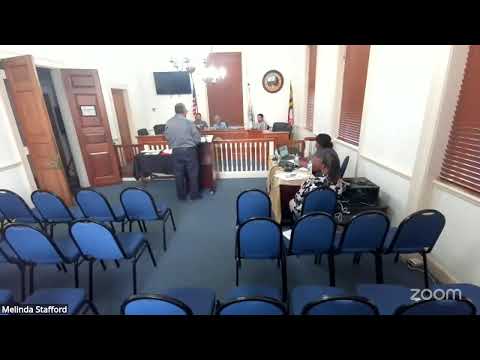
At a Pocomoke City planning commission work session, commissioners and staff reviewed the consultant raft comprehensive plan and criticized its community profile for overemphasizing slow or declining growth while underrepresenting recent local gains.
The criticism focused on the consultant—xecutive summary and the community profile chapter, which several participants said relied heavily on county- and state-level comparisons and U.S. Census tables without offering local trend analysis on employment sectors, business openings and permits, or other metrics the commission considers crucial.
"A lot of the data concerning me has changed since when we did the census," said Speaker 4, a planning commission participant, noting residents and workforce shifts and urging the plan to reflect recent local changes. Speaker 2, identified in the meeting as the staff presenter, said he had reviewed the chapter and distributed written comments to the commission and the consultant.
Commissioners pointed to several specific shortcomings they want fixed before the draft is released widely. They asked for:
- Local trend lines (multi-year series) for employment by industry, business license issuances, single-family building permits and school-enrollment changes so readers can see whether recent changes represent short-term variation or sustained trends. - Contextual comparisons to similarly sized towns (for example, Snow Hill and Berlin) rather than direct comparisons to Worcester County and Ocean City, which commissioners said distort the city—ontext because Ocean City is an outlier in countywide growth. - Corrections and clearer labeling for tables that meeting participants flagged as mislabeled, and better explanation of where the consultant used county- or state-level proxies versus city-specific data.
Commissioners noted concrete figures from the draft that they said needed clearer context: the plan reports a median household income of $30,909 in the city versus $57,474 for Worcester County, and the draft notes commuting patterns and a rising share of residents working outside the county. Several participants argued the plan should show how those figures have changed over time and what local factors (for example, the presence of Hardwire LLC or proximity to Wallops Flight Facility) mean for the local economy.
Several speakers urged that the city solicit additional local input and data. "I just wish that we could have still put something out so we could get more accurate numbers," Speaker 4 said, referring to using a local survey to supplement census data. Speaker 2 said the consultant raft had been circulated and that he would relay the commission's direction to request more localized trend analysis and to avoid framing the city primarily as declining compared with Ocean City.
Participants also discussed a draft job posting for the city manager and noted early interest: Speaker 4 said the posting had attracted 10 applicants within two weeks. The commission viewed the manager recruitment and the comprehensive plan as connected: language in the plan that better markets Pocomoke—ity could help recruitment and economic development efforts.
The planning commission asked staff to request revisions from the consultant that emphasize city-specific trend data, correct labeling errors, and provide a clearer presentation of local strengths. Staff also proposed additional public outreach: post drafts on the city website and use scheduled public meetings and hearings later in the process to gather broader community feedback.
The commission did not adopt any formal ordinance or take a vote at the meeting; members framed these items as guidance to staff and the consultant and asked for revised drafts ahead of the next scheduled work session.
Looking ahead, staff said the consultant will be asked to incorporate the commission's comments and to present a revised community profile that includes recommended local trend measures and improved comparisons. The commission also discussed scheduling broader public engagement before the plan advances to formal hearings.