Get Full Government Meeting Transcripts, Videos, & Alerts Forever!
Get email alerts on the Parking Permits topic
No spam. Unsubscribe anytime.
Encinitas council sends proposed residential permit-parking rewrite back to staff after public hearing
Summary
After a lengthy public hearing with residents and experts, the City Council directed staff to revise the proposed residential permit-parking ordinance and return with updated draft language and a process for zone-specific resolutions.
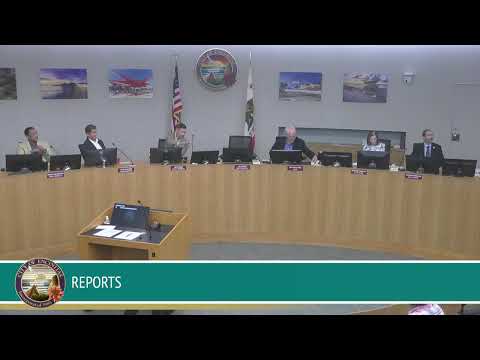
Encinitas City Council on the night reviewed a draft rewrite of the city's residential permit-parking (RPP) program and municipal code (Ch. 14.41) and, following extensive public comment, directed staff to revise the ordinance and bring a refined proposal back through the Mobility & Traffic Safety Commission before returning to council.
The draft ordinance under consideration would create a uniform process for establishing permit zones, require a resident petition threshold to trigger study, set a target occupancy threshold for instituting an RPP zone, and modernize permit issuance and enforcement (including an automated license-plate-based permit system). Dixon Resources Unlimited consultant Ben Verdugo summarized the changes and said staff recommends a minimum zone size, a 51% petition threshold to trigger a parking occupancy study, and a 70% occupancy target that would justify a zone study and council consideration.
Public comment at the hearing was extensive. Residents from existing Zone D and other neighborhoods urged changes: lowering the occupancy trigger well below 70% to reflect quality-of-life impacts (one speaker recommended 50%), narrower definitions for key terms such as “resident” and “residential permit parking zone,” clearer rules for including apartment complexes, limits on guest-pass duration and serial use, and stronger petition and ballot procedures for multi-unit properties. Speakers also requested clearer standards for proof of residence, better documentation of existing grandfathered zones, and a stronger “good neighbor” policy tied to enforcement and revocation.
Council discussion highlighted the community input and the practical need to move toward a digital permit management system. Council members asked staff to preserve protections for the current grandfathered zones while revising the code and to prepare sample resolutions for each existing zone so the council can adopt specific, zone-level details (fees, guest-pass durations, limits) without reworking the ordinance each time. Staff said automated, plate-based permitting and outsourced enforcement using LPR (license-plate recognition) vendors are feasible but carry procurement and budget implications; a software/implementation budget item in the range of six figures will be required if council wants to move quickly to a virtual permit model.
Action and next steps: Council voted unanimously (Deputy Mayor Lyons absent) to refer the draft ordinance back to staff to incorporate the public and council comments, to return the refined draft to the Mobility & Traffic Safety Commission, and then to council with a recommended ordinance and sample zone resolutions. Staff was asked to explicitly address: definitions (resident, zone, quality-of-life), guest-pass limits and anti-abuse measures, petition procedures for multi-unit properties, options for outsourcing enforcement, and cost estimates and schedule for moving to an automated permit platform.
The council did not adopt new fees or zone-specific rules at the meeting; those are to be developed and returned for public review and formal action.