Get Full Government Meeting Transcripts, Videos, & Alerts Forever!
Get email alerts on the School Nursing topic
No spam. Unsubscribe anytime.
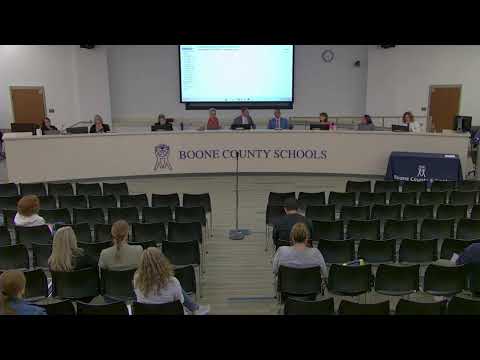
Boone County school nurses urge board to preserve full-time health clerks amid staffing cuts
Summary
Several Boone County Schools nurses told the board during public comment that cuts to health clerk hours threaten student safety and the ability to manage chronic medical needs such as diabetes and daily medications.
Several Boone County Schools nurses told the school board during the meeting’s public-comment period that proposed staffing cuts that reduce health clerks to part time will threaten student safety and the district’s ability to manage chronic medical needs.
At the microphone, Amy Schroeder, an RN with the district for 11 years, said her building logged 12,491 first-aid visits last year — an average of about 70 per day — and described the health clerk as the school’s primary health-care provider when a nurse is not present. “At a minimum, we will see one diabetic child six times in a day,” Schroeder said. “If their blood sugar drops too low, it becomes a potential medical emergency.”
The nurses said health clerks perform or support tasks that require hours of training and steady coverage: giving time-sensitive medications, supporting students with G-tubes, catheter care, and responding to seizures, allergic reactions and asthma attacks. Lisonbee Coleman, a district nurse for six years, told the board that district RNs already cover multiple schools, CPR training and other demands, leaving health clerks to run first-aid rooms. “We need a nurse in every building, which we do not have,” Coleman said. “Please don’t take our health clerks away and take the ability of the principals to pull them from the first-aid room.”
Veteran nurse Carol Dwyer said she manages five current diabetic students at her elementary school and oversees dozens of daily and emergency medications. “There’s no way I could do that without health clerks running things while I was doing the big things at the other schools,” Dwyer said. She said the clerks’ duties include reviewing field-trip paperwork for hundreds of students and checking whether each child has medication or health conditions that supervisors must know about before departure.
Speakers asked the board to recognize health clerks as a distinct allocated position in the staff-support category and to preserve consistent, full-time coverage of first-aid rooms. Several nurses warned that cutting those hours would expose staff to professional risk and could reduce access to school for medically complex students who require immediate RN intervention. The board did not take immediate action during the public-comment period.
The concerns followed earlier administrative updates during which the superintendent discussed federal ESSER funds, curriculum purchases and other budget items; nurses said those funding conversations should include maintaining on-site health support. The board agreed to move on to the agenda after public comment, without proposing immediate changes to the staffing plan.
For now, nurses asked the board to review staffing decisions with the scale of daily medical needs in mind. They encouraged board members to spend a day in a school health office to see the scope of the work before approving cuts.