Get Full Government Meeting Transcripts, Videos, & Alerts Forever!
Get email alerts on the Livestock Ordinance topic
No spam. Unsubscribe anytime.
Madison County planning bodies pause review of change that would allow livestock on R‑1 lots under 2 acres
Summary
Madison County planning officials on a joint record paused action on a proposed change to two sections of the county zoning ordinance that would remove language limiting livestock on R‑1 lots smaller than two acres.
Madison County planning officials on a joint record paused action on a proposed change to two sections of the county zoning ordinance that would remove language limiting livestock on R‑1 lots smaller than two acres.
The issue reached the commission after a special‑use permit application by the Fuchs family seeking to keep goats on an R‑1 parcel under two acres. Mr. Nichols, planning staff, told the commission the proposal "came to us as a result of a, an application for a special use permit by the Fuchs family, for a handful of goats on their R 1 zoned property, which was less than 2 acres," and that staff had prepared a report recommending striking the restriction but that the commission should deliberate.
Why it matters: The change would affect many small residential lots across the county, drawing competing concerns about property rights, the preservation of rural/agricultural culture, enforcement capacity and costs for families and the county.
Commissioners and residents voiced sharply different views during public comment and deliberations. Some commissioners emphasized property‑rights expectations tied to longstanding zoning: "This proposal abandons that," Commissioner Jim Smith said, describing the 1974 ordinance as the point at which buyers accepted limits on certain uses. Other commissioners, and several residents, urged planning staff to find a path that preserves youth agricultural programs such as 4‑H and Future Farmers of America (FFA) while avoiding a regulatory burden on families.
Residents who spoke at the meeting urged allowances for educational projects and homesteading. Jennifer Mazares, who identified herself as a homeschooler, said the planning work should remember "there's a large homeschooling population in this county" and urged inclusion of non‑school youth programs alongside 4‑H and FFA. Renee Phillip, a former USDA employee and agriculture teacher, suggested an alternative: limit the number of animals by acreage (for example, a cap on poultry or goats) so small parcels could keep modest flocks without a special permit.
Enforcement and costs were central concerns. Commissioners discussed that animal welfare and care enforcement often falls to the animal control officer and that state law constrains what local zoning can require about animal care. The current special‑use permit (SUP) fee — cited at $500 during discussion — was described as potentially prohibitive for a youth project. Commissioners suggested a lower administrative fee or an administrative exemption for documented educational projects to avoid the full SUP process.
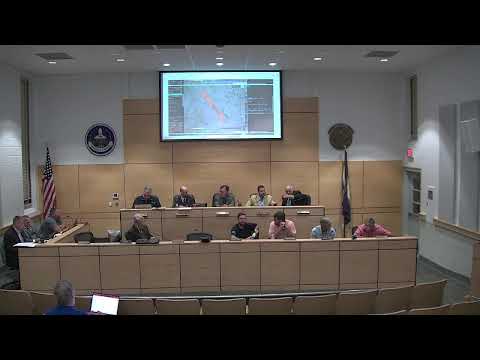
After public comment and deliberation the Planning Commission voted to table the zoning text amendment (case number ZOA‑05‑25‑03) for further study and outreach so the proposal can be refined and the county can identify an enforceable, administrable approach. The motion to table was made by Commissioner Pete Elliot and seconded by Commissioner Nathan; the commission recorded a unanimous vote in favor of tabling the item. The board later accepted the Planning Commission's recommendation to continue study and public outreach.
What's next: Staff and the commission will further develop options discussed at the meeting, including (1) an administrative exemption or simple, low‑cost certification path for youth educational projects, (2) numeric limits tied to parcel size, or (3) retention of the current SUP requirement. The applicant’s pending SUP remains subject to procedural deadlines under county rules and may proceed to the Board if not withdrawn.
Ending note: Commissioners asked staff to prepare clearer language and cost estimates and to publish proposals for public review before any ordinance change is returned to the commission.