Get Full Government Meeting Transcripts, Videos, & Alerts Forever!
Get email alerts on the Health Department Funding Cuts topic
No spam. Unsubscribe anytime.
Milwaukee Health Department: federal grant terminations put neighborhood nursing, shelter upgrades and community health worker work on hold
Summary
City health officials told the committee that federal terminations of CDC‑awarded funds have paused multiple programs — including community health workers, a neighborhood nursing pilot, and shelter isolation upgrades — and staff are pursuing alternatives while awaiting court outcomes.
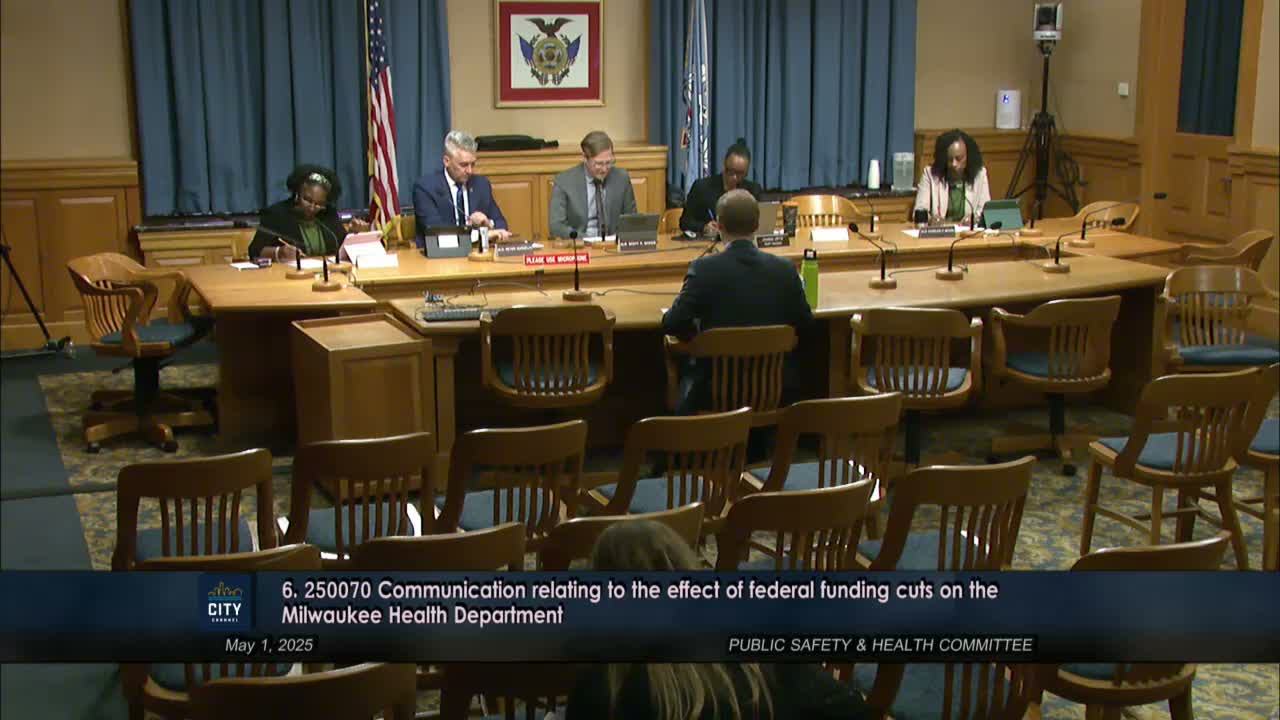
A Milwaukee Health Department official, identified in the meeting as Jeff Shepinski, told the committee the department received federal and state notices terminating a set of CDC‑related grants and that the terminations have put several projects on hold.
Shepinski said one directly awarded CDC Disparities Grant had about $2,400,000 remaining through May 2026 and that those dollars were largely intended to fund community resilience projects: community health workers, a neighborhood nursing program and shelter improvements to enable isolation for people with COVID‑19 at two shelters (the Salvation Army and the Milwaukee Women’s Center). He said the shelter projects were at a late stage — design and HVAC equipment had been procured — but work is paused.
“We were working on training up and putting community health workers out into the city,” Shepinski said. “That work is on hold, so we’re not canceling it. It’s important to us. We’ll … find a new way to do it.” He said about $1 million of the disparity grant had been planned to cover the initial year of the neighborhood nursing program. He added that nationally the administration’s termination affected an estimated $200 million in COVID funding.
Committee members asked about the likely number of people affected and alternative funding sources. Shepinski said the disruptions could affect “on the order of hundreds of people” in shelters but that department staff are working with the budget office, comptroller, city attorney and state partners to evaluate options. He said the department’s remaining grant balance across roughly 45 active grants is about $25,000,000 and that staff have been assessing risks and prioritizing which funds would force serious operational decisions if cut.
Alder Brigales and others asked whether private-sector or state funds could replace the gap. Shepinski said estimates for the shelter gap were “a hair over $350,000,” and that the department was exploring block grant funds, city capital funds and other sources while awaiting federal‑court outcomes on related restraining orders. He said the department hopes a favorable court ruling would restore funding to the prior timeline.
Alder Geragos moved to hold the item to the call of the chair for possible future updates; the committee approved the motion by voice consent with no objections.
Shepinski and committee members requested follow-up briefings as the department refines contingency plans and pursues other funding sources.