Get Full Government Meeting Transcripts, Videos, & Alerts Forever!
Get email alerts on the Public Safety topic
No spam. Unsubscribe anytime.
Supervisor Dorsey proposes changes to Homicide Reward Fund to pay for information that leads to charges, accept anonymous tips
Summary
Supervisor Matt Dorsey introduced legislation to change San Francisco’s Homicide Reward Fund so rewards may be paid when information leads to filing of criminal charges (not solely on conviction), allow anonymous tipsters to receive rewards while preserving confidentiality, and remove automatic disqualification based on prior criminal history.
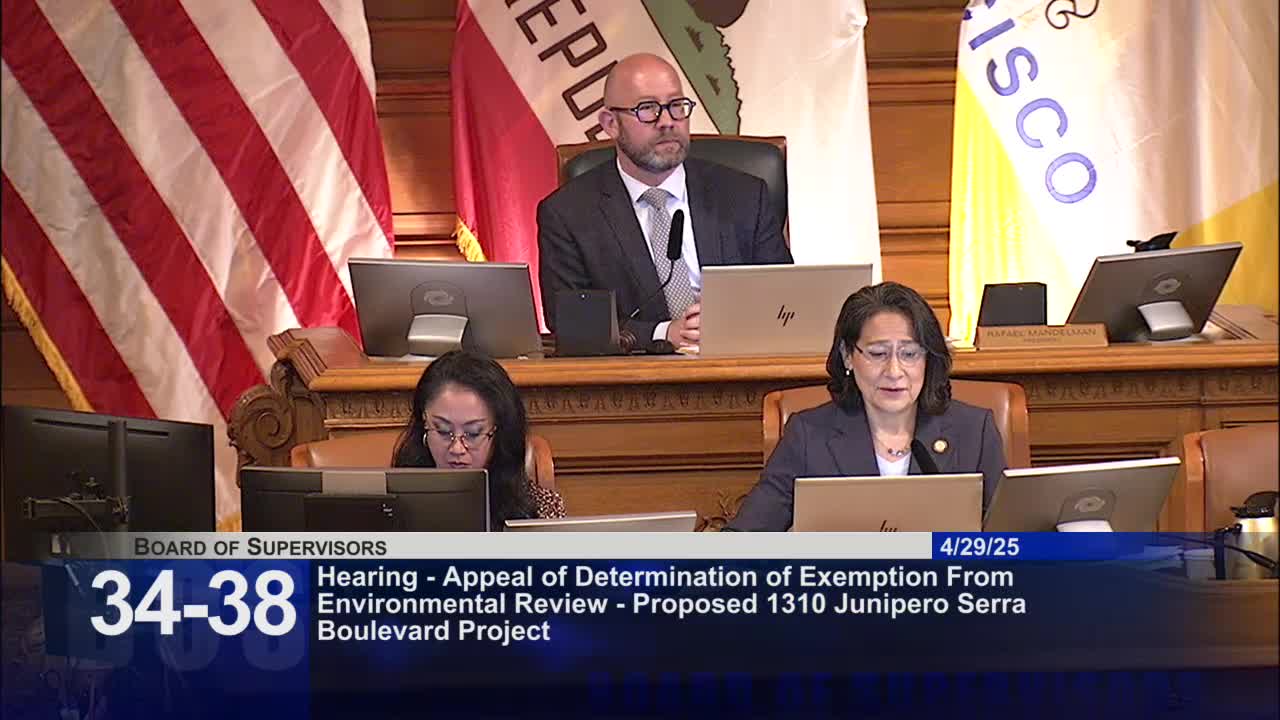
Supervisor Matt Dorsey introduced an ordinance at the April 29 Board of Supervisors meeting seeking to modernize San Francisco’s Homicide Reward Fund.
Dorsey said the fund, established in 2016 to incentivize information that helps solve homicides, has not paid a reward in more than a decade and that eligibility restrictions are discouraging potential informants. The ordinance would: permit reward payments when information leads to the filing of criminal charges (instead of requiring a conviction), allow anonymous tipsters to receive rewards while protecting their confidentiality, and remove automatic disqualification based solely on a prior criminal record. The measure would also retain a prohibition on payments for knowingly false information.
Dorsey said the proposed changes were prompted in part by advocacy from victims’ families, naming Paulette Brown, whose son was murdered in February 2006, as a persistent advocate for reform. Dorsey said he was also acting following a resolution from the San Francisco Police Commission urging the board to update the fund’s policy.
The ordinance was formally introduced for consideration and will be scheduled for committee hearings and a subsequent board vote per the typical ordinance process.
Speakers and advocacy: During public comment Paulette Brown attended the meeting and her presence was noted by the board. Brown has been a frequent presence at police commission hearings pressing for changes to the reward policy. Dorsey credited her work in explaining the need to modernize the program.
Next steps: The ordinance was submitted for consideration; committee referral and hearing dates will be set under the board’s regular legislative process.