Get Full Government Meeting Transcripts, Videos, & Alerts Forever!
Get email alerts on the Budget Finance topic
No spam. Unsubscribe anytime.
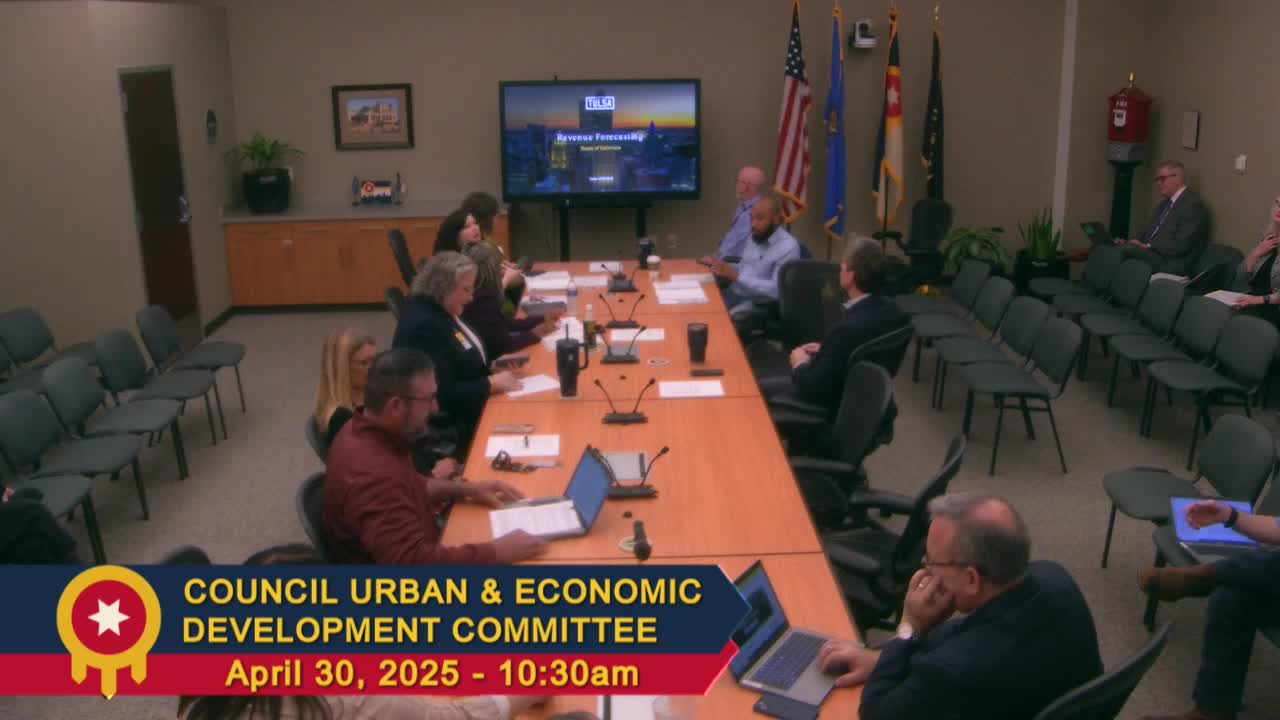
Finance staff present FY25–26 revenue forecast; council asks follow‑up on tourism and events
Summary
City finance staff presented revenue forecasts for FY25–26 using national and local data models, projecting modest tax growth and lower interest income compared with the prior year; councilors asked for more analysis on hotel/motel trends tied to event calendars and arts sector volatility.
City finance staff presented revenue and forecasting trends used for the FY25–26 budget and described methodology and assumptions behind projections for sales and use taxes, franchise fees, interest income and hospitality taxes.
A budget office presenter said the city uses Forecast Pro for major accounts, Federal Reserve and Moody’s analytics to set assumptions, and local inputs such as population growth to refine projections. Staff presented a proposed all‑tax total of approximately $471.2 million — a 1.6% increase over the current estimate — driven largely by modest national GDP growth projections and local population increases. The presenter cautioned that interest income is highly volatile and that the Federal Open Market Committee outlook affects projected interest earnings: the city’s modeling showed a significant drop in interest income versus the current estimate because analysts assumed several rate cuts. The presenter summarized: “We’re proposing to look at about 471,200,000.0. That’s a 1.6% growth rate for all taxes.” (Attribution: budget staff presenter.)
Councilors asked targeted questions. One councilor asked why Route 66’s centennial and America 250 events did not show a larger hotel/motel tax increase; staff replied there was at least one large event that occurred last year and will not return this year, which offsets other gains, and staff said they would confer with Visit Tulsa for finer adjustments. Councilor Decker noted that the arts and culture sector’s revenue streams and event scheduling are volatile and flagged the potential for contraction that could affect hospitality receipts. Councilors also discussed the city’s multifamily inspection program and the relationship between enforcement and zoning decisions (this part of the conversation tied back to earlier land‑use discussion).
Staff said historical forecasting performance has been reasonably accurate (within a few percentage points in most years), but reiterated the largest forecast uncertainties are interest earnings and large one‑time event calendars. Staff committed to providing a copy of the forecast materials to council members and to follow up with Visit Tulsa on event impacts and with the finance team if further sector adjustments are warranted.