Princeton elementary teams place at state Future Problem Solving; Johnson Park invited to world finals
Summary
Students from Princeton Public Schools competed at the Future Problem Solvers of New Jersey state bowl; Johnson Park’s junior team won and was invited to the world finals in Bloomington, Indiana in June.
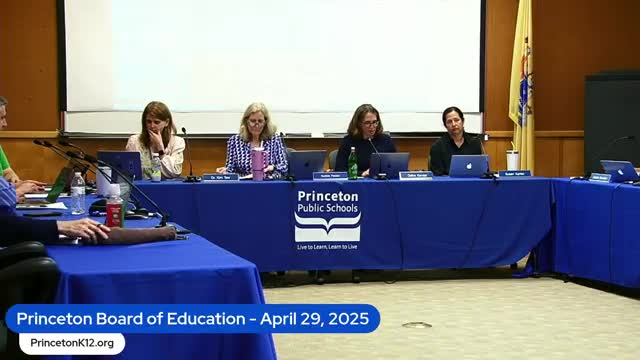
Students from Princeton Public Schools told the Board of Education that district teams advanced to and placed at the Future Problem Solvers of New Jersey state bowl, and one team earned an invitation to the international finals.
At the April meeting, Jenna Peluso, the district’s QUEST coordinator and a Johnson Park teacher, described work by K–5 students who took part in the Future Problem Solving program, which teaches a six-step critical-thinking process and offers global and community project tracks. Peluso said all four Princeton elementary schools fielded teams this year and that eight teams — 26 students districtwide — competed at the state bowl in March.
Peluso said Johnson Park’s junior division team took first place in its bracket on a topic about nanotechnology and was invited to the world finals in Bloomington, Indiana, in June. Peluso added that the district supported teams traveling together to the competition and noted the program’s emphasis on collaboration, research and communication skills.
Students who presented at the meeting described their projects and what they learned. Caitlin Phan, a fifth-grade student from Johnson Park, told the board that she learned communication and time-management strategies while preparing for the contest and said “it was nice to see all our efforts pay off.” Modj Tahal, a fourth-grade student from Littlebrook, summarized her team’s community project to reduce single-use plastics and said her team used a survey and research to inform student outreach at Littlebrook.
Peluso said future problem solving runs in all four elementary schools: Johnson Park’s team is restoring trails and addressing invasive species; Riverside’s group helps new students transition into school; Littlebrook’s team conducted a survey and education campaign on plastics; and other schools ran playground-behavior and community-action projects. Peluso provided a slide deck and a QR code with links to the program resources and invited board members and the public to follow the teams’ progress at the world finals.
The student presentations were part of the meeting’s first public items; the board did not take formal action on the program itself during the session.
Board members thanked the students and Peluso and asked to be updated on results from the June competition.