Get Full Government Meeting Transcripts, Videos, & Alerts Forever!
Get email alerts on the Early Childhood Home Visiting topic
No spam. Unsubscribe anytime.
Salt Lake County health officials outline home‑visiting programs aimed at preventing child maltreatment and improving school readiness
Summary
Health department officials told the County Council about three home‑visiting programs that serve new parents and young children, described funding sources and capacities, and asked the council to continue support for the evidence‑based models.
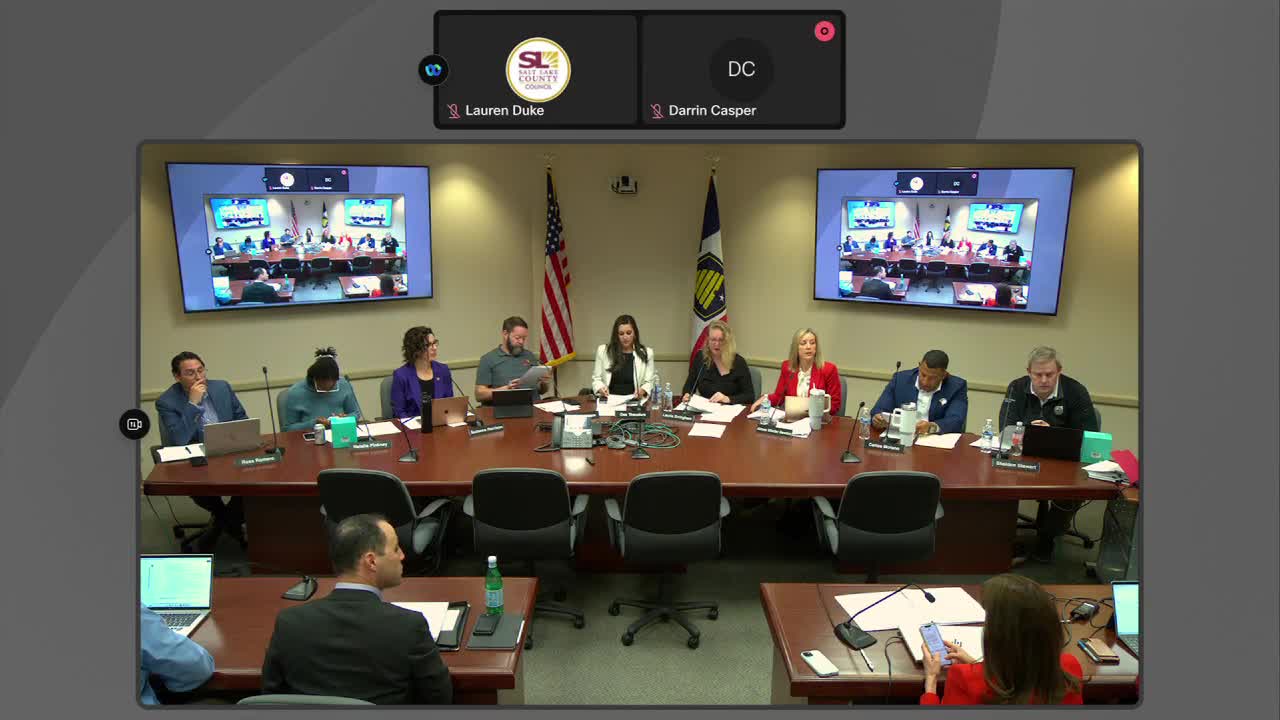
Salt Lake County Health Department staff presented an overview of the county’s home‑visiting programs to the County Council during the April 29 meeting, describing program models, funding sources and measurable outcomes.
The presentation summarized three programs: Nurse‑Family Partnership (NFP), Parents as Teachers (PAT) and an early childhood targeted case management (TCM) Medicaid service. County health staff said the NFP program serves first‑time moms with visits from registered nurses from pregnancy through the child’s second birthday; it currently has eight home visitors and a nursing supervisor and is funded roughly half by Intermountain Primary Promise and half by the federal Maternal, Infant, and Early Childhood Home Visiting (MIECHV / “McPhee”) grant. PAT, described as an education model delivered by parent educators, serves pregnant people and children up to age five and is funded primarily by the McPhee grant plus small local prevention funds. The TCM program is a Medicaid benefit that provides home nursing assessments and referrals and serves about 3,500 clients a year.
Health staff gave several program capacities and performance figures: the county can serve about 200 families through Nurse‑Family Partnership and about 80 families through Parents as Teachers; PAT currently employs about 10 parent educators and one supervisor; NFP employs eight home visitors. Presenters highlighted examples of outcomes commonly documented in research and locally, including reduced substance use during pregnancy, improved birth outcomes, improved school readiness, and economic self‑sufficiency. Staff cited a range of published return‑on‑investment estimates and said early childhood investments commonly deliver several dollars of benefit for every dollar invested.
Council members pressed presenters on outreach and capacity. Health staff said referrals come from community health centers, OB providers, school alternative programs, and internal Medicaid case management; they also work with other PAT programs and early childhood partners when county programs are at capacity. The department said it planned an expansion of PAT staffing tied to increases in state McPhee funding and that the PAT program requires about two years of engagement to show model outcomes.
Speakers noted individual recognition: a county home visitor, Alina, was named one of five home visitors of the year nationally; staff said her retention rate with families is around 96%, compared with an average retention that they cited as 36% for similar programs nationally. Council members thanked staff and sponsors for bringing the briefing to the work session.
County staff asked the council to continue supporting the programs and to consider the programs as preventive investments that reduce later health, education and criminal justice costs. The presentation closed with an offer to coordinate further briefings or site visits for council members.
The council did not take formal action on funding at the meeting; staff said some program growth depends on state grant allocations and county budgeting processes.
The County Council will receive further budget and program updates as staff pursue the expanded PAT slots and continued MIECHV funding.