Get Full Government Meeting Transcripts, Videos, & Alerts Forever!
Get email alerts on the Land Bank Budget topic
No spam. Unsubscribe anytime.
Greater Syracuse Land Bank says proposed cut would deplete reserves and slow projects
Summary
The Greater Syracuse Land Bank told the City Council that a proposed reduction in city funding would force use of reserves and could slow demolitions, maintenance and site-assembly work that supports new homebuilding and delinquent-tax collections.
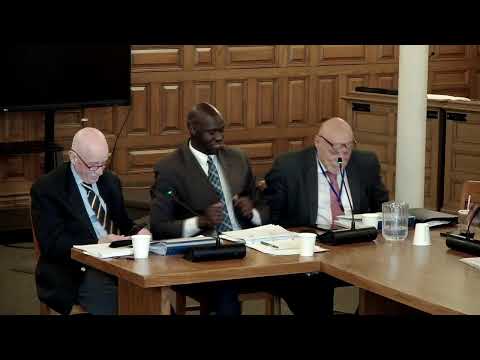
Caitlin Wright, executive director of the Greater Syracuse Land Bank, told the Syracuse City Council that the land bank is budgeted for $750,000 from the city this year and that the organization needs roughly $2,000,000 a year to operate.
Wright said the land bank holds about 800 properties in its inventory — roughly 150 structures and about 650 vacant lots — and that it costs about $2 million annually to carry the organization before capital projects such as demolitions or renovations are counted. "We have an inventory of about 800 properties, they have to be maintained, and it costs about $2,000,000 a year just to keep the land bank running," Wright said.
The land bank receives additional, project-specific grant awards from Onondaga County, New York State and federal sources, Wright said, but those grants usually fund specific capital work (for example, demolitions) and "zero out" in the year they are spent. She said the land bank historically generates roughly half of its operating revenue from sales of real estate and relies on city and county support for the remainder.
Wright said the land bank has sold almost 1,500 properties since it began and estimated that restored properties now generate about $2.6 million a year in local property taxes once they return to the tax rolls. She also said the land bank's site-assembly work — combining lots and preparing shovel-ready parcels — has enabled it to secure more state grant funding than other land banks in New York.
Council members asked how long the land bank could operate at a reduced funding level. Wright said the organization currently has enough cash on hand to cover about nine months of operating expenses; if city funding remains at $750,000, she said the fund balance would decline and would likely cover an estimated five to six months by the same time next year. "If we're funded at this level of $750,000 I would expect this time next year, we will have used up a bit of that fund balance," Wright said.
Council members also asked about the land bank's policy for buyers who do not complete required renovations. Wright described the land bank's use of a development-enforcement mortgage at closing and a fee schedule introduced in April 2019 for deadline extensions: $250 per month for owner-occupants and $500 per month for investors. She said the land bank offers no-fee extensions in documented hardship cases and has worked during the COVID pandemic to grant relief when delays were outside buyers' control.
Wright said the land bank has taken down about 650 buildings to date and that the number of vacant buildings in the city has fallen roughly 44% since the land bank began. She said about 10 of the 150 structures in the land bank's inventory are currently occupied; the land bank is offering relocation assistance in four cases.
On legal exposure related to recent changes in state law that created a claims process for former owners, council members asked whether the city has spent any of the contingency funds budgeted for potential claims. Wright and council staff said they would consult the Corporation Counsel office; the council packet shows a special-object appropriation called the "Land Bank Seizures Fund" with $300,000 budgeted last year and $100,000 budgeted for fiscal year 2026.
Councilors asked for additional detail about vacant lots and site locations. Wright said about half of the 650 vacant lots are already buildable and that the land bank will provide a map of vacant lots to the council. She described active site-assembly contracts and contingent conveyances to nonprofit builders — for example, Habitat for Humanity and other local developers — who must secure state construction financing before title is conveyed.
Council members and staff reiterated that the land bank's role in accepting tax-foreclosed properties has helped make the city's threat of foreclosure real, increasing delinquent-tax collections compared with historical levels. Wright said the land bank acquires foreclosed properties from the city for a nominal price, performs cleanup and code work, places properties on the market, and retains sales proceeds to fund operations.
No formal vote or ordinance was taken during the briefing. Councilors requested additional follow-up materials: a map of vacant lots, clarification from Corporation Counsel about the status of legal claims and any expenditures from the seizure contingency, and further details on average holding times for properties and development timelines for sites under contract.
The meeting concluded after additional brief questions and acknowledgement of ongoing cooperation between the city and the land bank.