Get Full Government Meeting Transcripts, Videos, & Alerts Forever!
Get email alerts on the Transportation topic
No spam. Unsubscribe anytime.
Payson council debates Beeline Bus infrastructure project; directs water contribution cap and seeks other funding sources
Summary
Council discussed a multi-segment street and utility project tied to a FTA 5339 transit grant. After debate, council directed that the Water Enterprise Fund contribution not exceed $400,000 and that remaining funding come from other eligible sources; council also discussed rebidding options and the project’s scope.
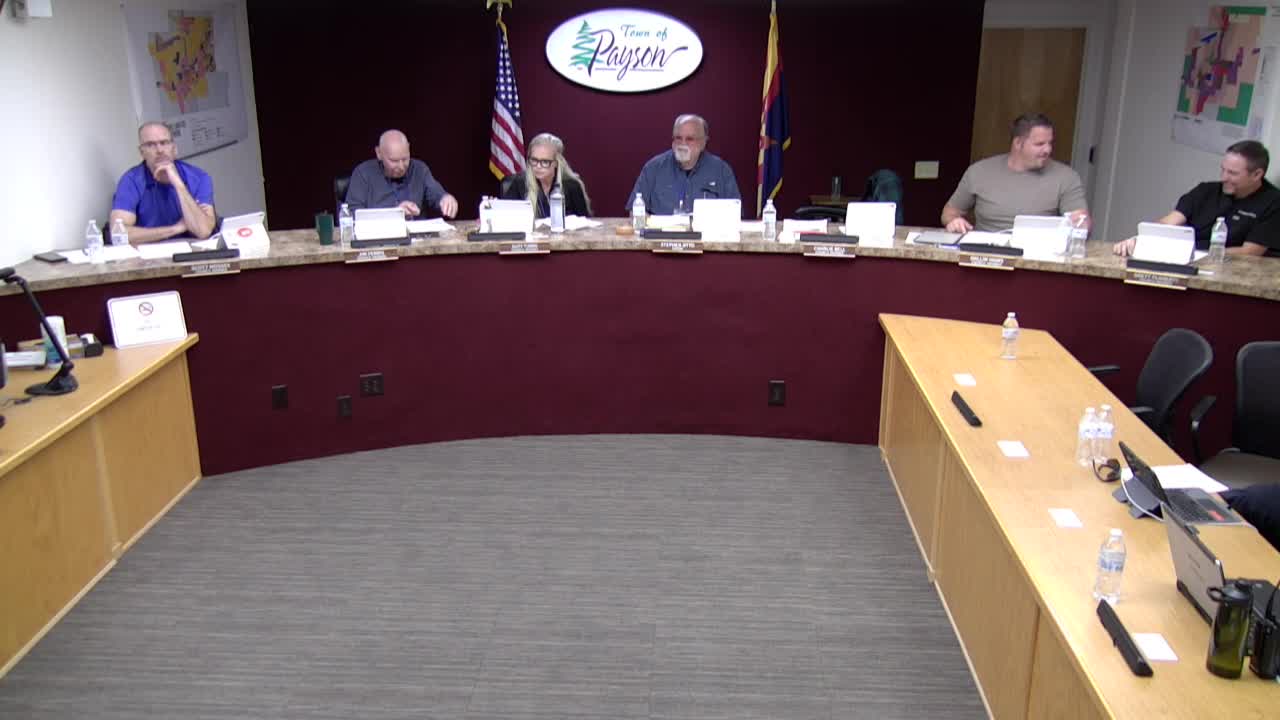
The Payson Common Council spent substantial time April 23 reviewing contracts and funding for the Beeline Bus Route project, a multi‑segment streets and infrastructure package linked to federal transit grants (FTA 5339) intended to improve curb, sidewalk and drainage near bus stops.
Staff briefed the council that the project originated from grant-eligible transportation improvements and that the town had previously invested about $500,000 in design. The original scope covered multiple short segments — including Colcord, Longhorn, McLean and areas near the Payson Event Center — and last month staff proposed a project budget in the range of roughly $6.8 million to $7.15 million. Staff said the town had applied for and was offered extension on the grant timeline and that construction buy-in and costs increased substantially since the earlier design estimates.
Christine (staff), Bill Clemens (acting town engineer) and Tanner Henry (water department staff) explained the cost breakdown staff used: mobilization, traffic control, earthwork, asphalt, storm drains, sidewalks and water improvements such as valves and sleeves. Staff reported strong initial interest from vendors (about 469 views, 16 downloads of documents) but said the solicitation produced a single bid. The procurement produced one responsive bid from a contractor (DBA) for the full package, plus a project management/inspection contract with CEI. Staff noted Davis-Bacon wage requirements for federal transportation grants and said those wages have risen about 33% since 2022, increasing labor costs.
Tanner Henry and the water department clarified that water requested work — pipe, valves and appurtenant work — originally itemized at about $310,130 represents water’s direct, requested portion. Staff later presented a different allocation showing water‑related items and a larger water-associated subtotal; that difference prompted debate about whether the water enterprise should subsidize general street reconstruction costs. Council members argued over precedent: some said utilities have historically paid only for appurtenant water work, while others favored a broader shared‑cost approach because the improvements would extend system life and benefit the community.
Council weighed options: (1) proceed with contracts as awarded and use available funds (including HEERF and general fund) to bridge any gap; (2) reduce the town’s water contribution to only the water‑requested work; (3) rebid the project; or (4) forfeit the grant and stop the work (forfeiting design costs). Members also discussed transit ridership and whether the town’s operating of the transit service is the right policy choice; staff noted the town’s transit system enables access to grant programs.
After extended discussion and an executive-session legal review, council returned and adopted a funding direction. The council directed that the water enterprise fund’s contribution toward the Beeline project shall not exceed $400,000 and that any remaining funding gap be covered from other eligible sources (staff identified HEERF or other eligible town funds). The council did not provide a final contract approval to proceed with construction at this meeting but gave staff that funding direction and asked whether staff should rebid if needed. Council members also requested clearer cost breakout documentation before final procurement.
Staff said rebidding is possible because a two-year extension on the grant was confirmed, giving additional time to rebid if council desires. Staff also noted that stopping the project now would forfeit roughly a half‑million dollars already spent on design.
The item remains before council for follow‑up: staff will return with a refined funding plan, documentation of water-requested vs. street reconstruction costs, and recommendations on whether to proceed with the current low bidder or rebid.