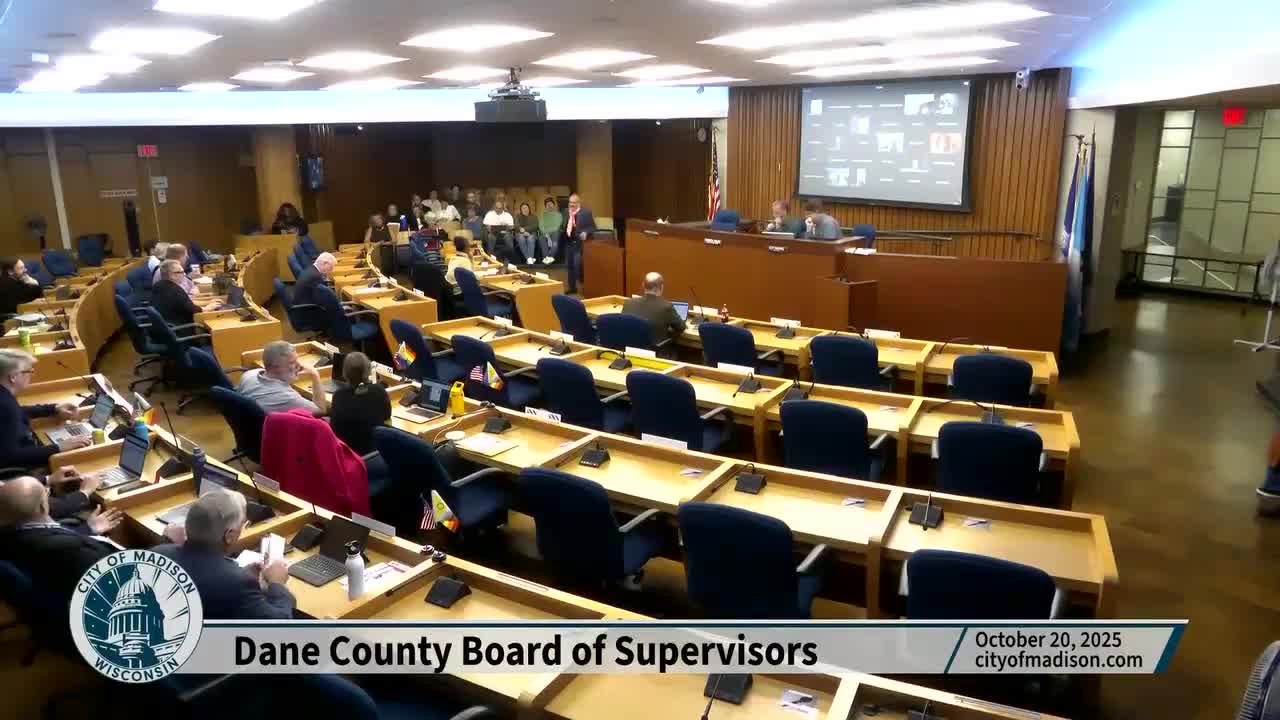
Dane County public hearing draws broad opposition to proposed 4% cuts to human services
Loading...
Summary
Dozens of nonprofit leaders, service providers and residents urged the Dane County Board of Supervisors to reject a proposed 4% reduction to purchase-of-service (POS) contracts in the county executive’s draft 2026 budget, warning it would reduce crisis, mental-health and shelter capacity across the county.
Dozens of nonprofit leaders, service providers and residents urged the Dane County Board of Supervisors at a public hearing to oppose a proposed 4% cut to purchase-of-service (POS) contracts in the county executive’s draft 2026 budget, saying the reduction would destabilize crisis and shelter programs the county relies on.
Speakers described how POS agencies deliver crisis calls, mobile response and shelter operations countywide and cautioned that the combination of a blanket 4% cut, a freeze on unit reimbursement rates and removal of the county’s 1/12 payment method would create cash-flow and staffing crises for smaller nonprofits.
Advocates said the cuts would reduce access to community-based crisis interventions and shelter capacity at a time demand is increasing. Ashley Baker, a Dane County resident and Journey Mental Health employee, told the board, “The proposed 4% cuts in this budget will have a devastating impact not only on the individuals currently served, but also on those who will need services in the future.” Sarah Henriksen, a licensed clinical social worker and supervisor in Journey Mental Health’s emergency services unit, described the unit’s 24-hour crisis line, mobile crisis teams and co-responder work with police and CARES and said the services seek “safety with the least restrictive intervention possible.”
Speakers described concrete operational risks. Jill Pfeiffer, executive director of Briarpatch Youth Services, said a shift to a fee-for-service reimbursement model and a 4% cut could force agencies to front hundreds of thousands of dollars each month and imperil smaller providers. Nicole Wright, Journey’s chief clinical officer, said eliminating the 1/12 payment approach would “create cash flow challenges that many organizations simply cannot withstand.” Several speakers said workforce shortages remain a risk even after recent investments: CEO Tanya Lutman Schuh said a prior county wage increase allowed Journey to “fully staff the crisis unit,” but she warned an additional reduction of roughly $300,000 in the agency’s budget would cut call-center workers and mobile crisis staff.
Multiple speakers tied proposed POS cuts to broader costs to the county. Brad Shlu, Yahara House clubhouse director and long-time Journey employee, said POS programs bring in Medicaid and other reimbursements and argued cutting mental-health funding weakens revenue-generating services; he cited figures in the proposed cuts including about $1,250,000 targeted at mental-health programs and nearly $1,000,000 at prevention services. Jake Rogers, a lifelong Dane County resident, contrasted the draft budget’s allocation to the sheriff’s office (about $140,000,000 cited by a speaker) with roughly $10,000,000 planned for affordable housing and urged reallocations toward housing and prevention.
Unhoused-services providers and advocates said the proposed cuts threaten operations for a new trauma-informed men’s shelter and for overflow capacity. Tori Koppmueller, who has worked in homeless services for more than 20 years, said the purpose-built shelter under construction has 250 beds but that point-in-time counts already exceed that capacity; she warned without additional operating funds and an overflow shelter “we will likely be forced to discontinue many of the best practices implemented since the pandemic.” Several speakers asked the board to support amendments to restore funding; one public commenter referenced amendments to add $900,000 for shelter operations and $600,000 for overflow capacity proposed by supervisors on the dais.
Other public commenters urged the county to maintain or increase other programs: Phil Sanna urged continued support for the county conservation fund amid state and federal cuts, and several speakers representing community-based sexual- and domestic-violence response programs warned that reduced POS funds ripple into hospital and criminal-legal costs.
The hearing included repeated appeals to avoid short-term balancing that shifts burdens to nonprofits and vulnerable residents. Jerry Paredes Vasquez, CEO of YWCA Madison, asked the board to weigh “who benefits, who’s burdened, who does not have a voice at the table” when deciding cuts. Brenda Conco of Madison Street Medicine urged matching city shelter commitments and funding for overflow and lawful sleeping locations to avoid deaths or severe cold-weather injuries.
The public hearing concluded after several hours of testimony; supervisors paused for questions and then adjourned the meeting. Supervisor Erickson moved to adjourn and Supervisor Udell seconded; the chair called the voice vote and declared the meeting adjourned until the board’s Oct. 23 meeting.
The board will next consider budget amendments and votes in committee and on the floor; public commenters urged supervisors to reject the blanket 4% cut, preserve the 1/12 payment method, and restore targeted funding for crisis response, shelters and POS agencies that serve people with severe mental illness, people experiencing homelessness and other vulnerable groups.