Get Full Government Meeting Transcripts, Videos, & Alerts Forever!
Get email alerts on the Heat And Cold Mortality Tracking topic
No spam. Unsubscribe anytime.
Residents urge committee to track heat- and cold-related deaths, citing local impacts on unhoused and low-income neighborhoods
Summary
Several public-commenters asked the Community Health Committee to prioritize creation of a heat-related deaths tracker (and to include cold-related deaths), citing rising extremes, local urban heat islands in District 2 and immediate neighborhood encounters with people in distress.
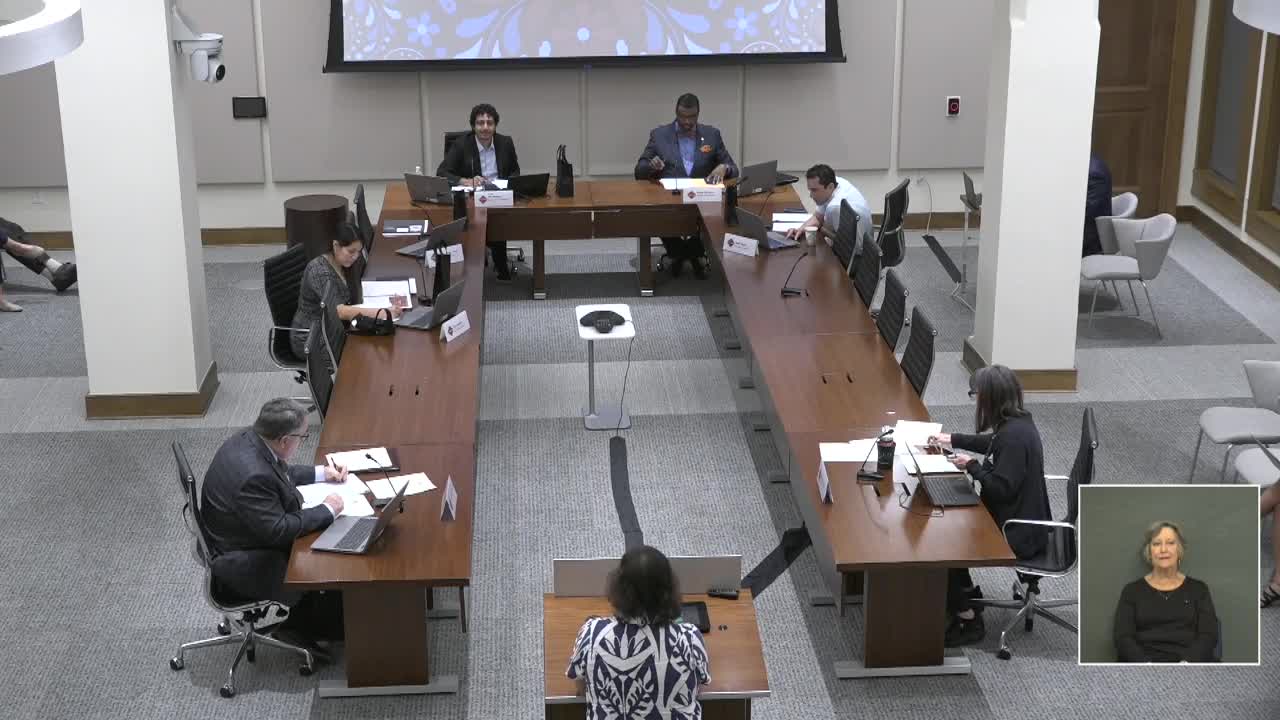
Three community members used the public-comment period at the Oct. 23 Community Health Committee meeting to press the panel to develop better tracking of temperature-related deaths and illnesses.
Diana Lopez, who identified ties to a workers'union and said she lives in District 2 near downtown, told the committee the city needs an interagency, community-linked system to track heat-related deaths and illnesses so resources and funding can be directed to neighborhoods most at risk. "By being able to have accurate data, it ensures that the proper resources, the proper funding, the proper solution is being brought to the neighborhood," Lopez said, adding that urban heat islands and local unhoused residents increase vulnerability.
Erica Alvarado, who identified herself as a District 2 resident and as working for Southwest Workers Union, said the committee had previously voted to continue work on a CCR to track heat-related deaths and asked that the committee maintain urgency. "The need to have heat related deaths tracked and transparently reported to the public is very important," she said.
A third commenter, Molly, asked the committee to track cold-related deaths as well, saying that extreme cold for people without shelter can be dangerous at higher-than-expected temperatures and citing a local death to illustrate the point.
Committee staff noted the comments and invited consideration of the topic for future agendaing; no formal action or vote occurred during the public-comment period. Speakers requested continued attention to data collection and interagency collaboration to identify and support residents at risk during heat and cold episodes.