San Antonio committee backs update to local film incentive, including 10% base rebate and local-hire uplifts
Loading...
Summary
The Community Health Committee voted to approve updates to the San Antonio Film Incentive program that raise the base rebate to 10%, add uplifts for hiring San Antonio residents and veterans, expand eligibility to commercials, and add a workforce-development requirement; the program remains funded from a $250,000 hotel-occupancy-tax allocation.
The San Antonio Community Health Committee on Oct. 23 approved recommended updates to the city's film incentive program intended to make San Antonio more competitive as state-level film funding grows.
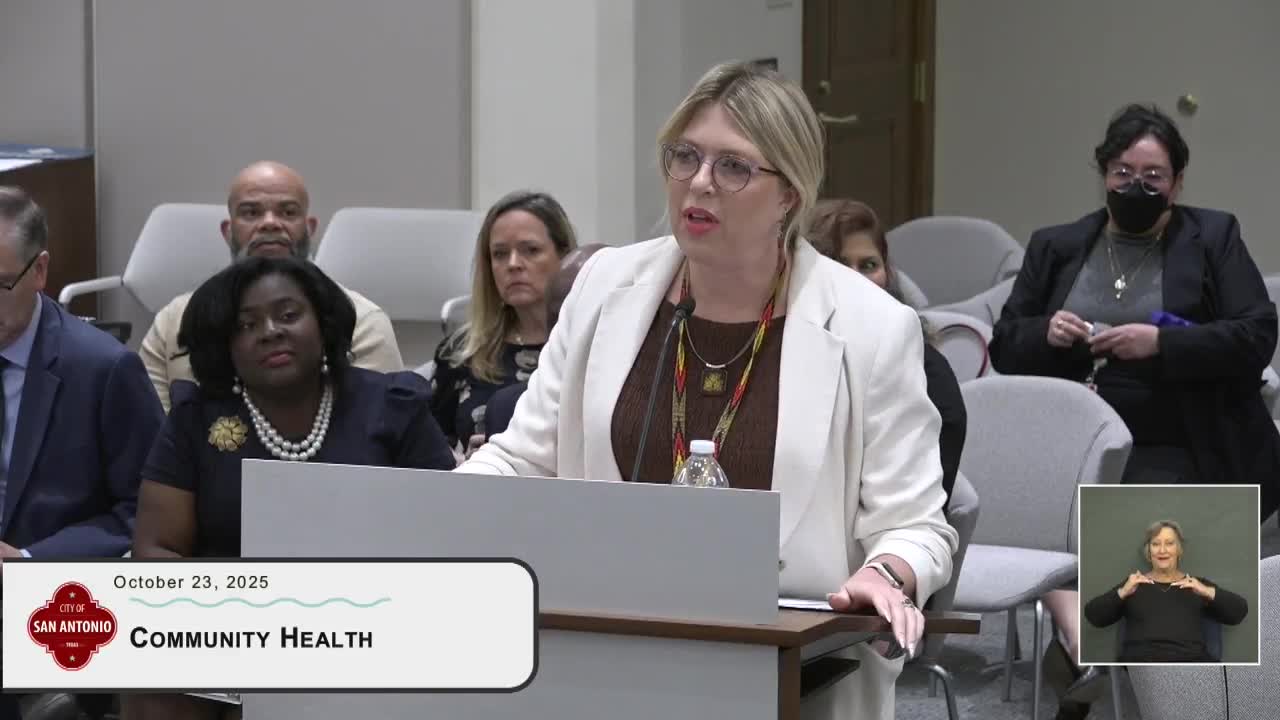
Crystal Jones, a representative of the San Antonio Film Commission (part of the Department of Arts and Culture), told the committee the commission wants to rename and revise the program to "San Antonio Film Incentive," raise the base rebate from 7.5% to 10%, and add two 2-percentage-point uplifts tied to local hiring and veteran hiring. Jones also proposed expanding eligibility to include commercials and adding a workforce-development condition to incentive payments.
The change matters because the state has substantially increased film incentive funding in recent legislative cycles, Jones said, and local rebates influence whether productions choose to shoot here. Jones noted San Antonio's program is funded from hotel-occupancy-tax revenue and budgeted at $250,000 a year; the proposed changes do not increase that pot but would provide productions access to a higher per-project rebate.
Committee members who spoke during the discussion praised the proposal and asked about implementation details. Council Member Marina asked about local production infrastructure and whether the city can support studio development; Jones said San Antonio currently lacks large studio facilities and is exploring how to use the state's media production development zone designation in future fiscal planning. Councilor Heather White and others asked about streamlining the application, marketing coordination with Visit San Antonio and economic development, and how the award process works. Jones described the application as a short, two-page form asking for production spend, hires, locations and contacts.
Jones told the committee the program has supported eight projects since its 2017 launch (with a pause during the pandemic) and has handled four projects in the current fiscal year. She said those four projects are estimated to produce about 216 local hires and roughly $600,000 in local spend. Jones also said the state program requires a production-scale spend (her presentation referenced a $3,000,000 threshold for the state rebate) and that a competitive local rebate can help San Antonio attract more work.
After discussion, the committee moved to approve the recommended changes and recorded the motion as passed. The transcript does not record a named mover or a roll-call tally; the committee chair called for and received a voice vote in favor.
What the update would change: the policy as presented would increase the base municipal rebate to 10% (from 7.5%); add a 2% local-hire uplift when productions exceed the minimum San Antonio resident hire level; add a 2% veteran-hire uplift tied to San Antonio veterans; expand eligibility to include commercials (with standard exclusions such as news, talk shows, infomercials); and require productions seeking reimbursement to demonstrate a workforce-development activity with a local higher-education partner before the city issues final rebate payments.
The commission framed workforce-development requirements as a condition on final payment: productions would demonstrate internships, panels or other direct learning opportunities with local institutions (UTSA, Alamo Colleges, UIW and others mentioned) before rebate checks are issued. UTSA enrollment in film-related programs was noted in the presentation as roughly 300 students in the most recent year.
Committee members asked about competitive cities: Jones said Houston moved to a 10% rebate earlier in the month, Austin is at 2.5%, and other Texas cities are considering or expanding their programs, making now the time to update San Antonio's rules.
The committee sent the recommended amendment forward to city council for formal consideration on Nov. 6. Implementation and marketing would begin if council approves the ordinance or administrative change. The motion to approve at the committee level carried by voice vote; no formal roll-call tally appears in the committee transcript.